Metal Roofing Alliance Member
TVA Preferred Partners Network
10,000+ Metal Roof Jobs
Nashville, TN
Licensed & Insured
BBB A+

Open 8am–8pm
(615) 649-5002Schedule Your
Appointment
Appointment
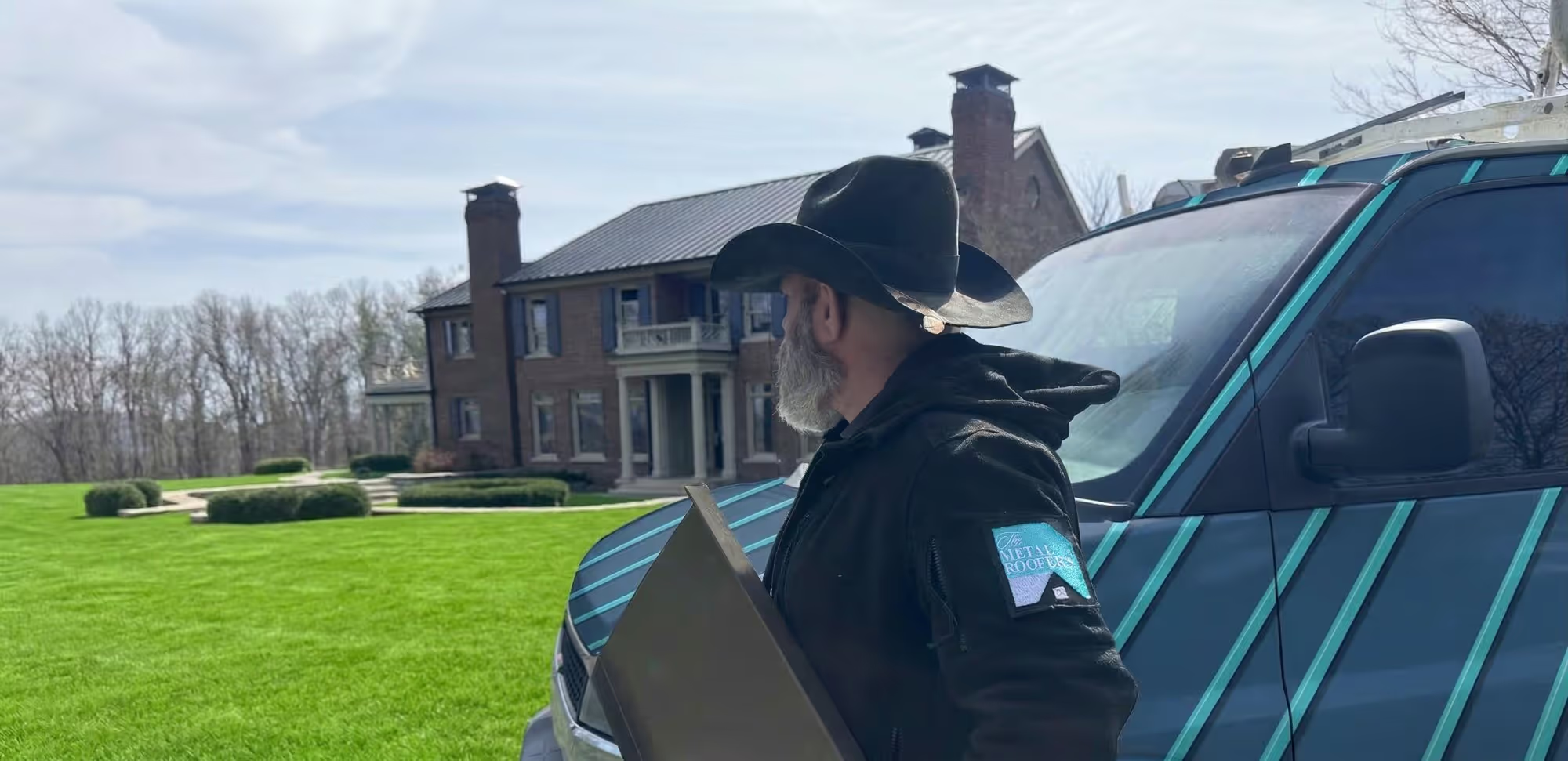

The Metal Roofers is a family-owned metal roofing contractor in Nashville, Tennessee (TN License #75515), serving Middle Tennessee since 2003 with 1,000+ metal roofs installed and a 4.9-star rating across 150+ Google reviews. Metal roof installation is the core of the business, from standing seam, metal shingles, exposed-fastener, copper, and zinc systems to silicone roof coating restorations for commercial and aging metal roofs, plus custom flashing and trim, repairs, and inspections across 30+ Middle Tennessee cities.
The right metal roofing system for a Nashville property is decided by roof slope, complexity, exposed versus concealed fasteners, curb appeal, and neighborhood requirements. Hover or tap any card, or any part of the roof, to see where each system lives on a Middle Tennessee home.
The premium concealed fastener system for Nashville homes. Clean vertical seams, 50 to 70 year field life.
Standing seam roofingLeaks, fastener backout, pipe boots, flashing and storm damage. 10,000+ metal roof repairs since 2003.
Metal roof repairsPremium architectural metal for porch roofs, dormers, valleys and historic details, brake formed in our Nashville shop.
Copper roofingPractical ribbed panels for barns, workshops, garages and simpler Tennessee rooflines where budget matters most.
Exposed-fastener roofingThe durability of metal with a slate, shake or tile look. Built for HOA neighborhoods and historic style homes.
Metal shingle roofingSeamless aluminum, steel and copper gutters sized for Tennessee rain, installed by roofers.
Metal guttersSilicone restoration that extends the life of metal and low slope roofs at 40 to 51% of replacement cost.
Roof coatingsThe Metal Roofers builds and services commercial and low-slope roofs across Nashville and Middle Tennessee, including standing seam metal, PBR and R-panel, TPO, EPDM, and roof coatings. Commercial roofs are not just larger residential roofs. They protect tenants, inventory, equipment, employees, patients, churches, schools, offices, restaurants, warehouses, and capital budgets, so the right roof may also involve drainage correction, repair planning, inspection reports, or maintenance documentation. Start with the service that matches the decision you are trying to make.

Per Square (100 sq ft) · Installed · Middle Tennessee
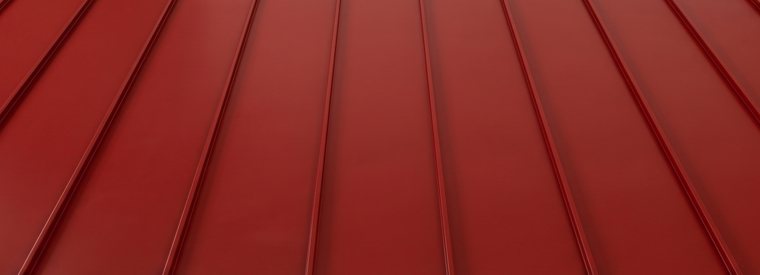
Standing seam pricing depends on the panel profile, seam type, roof pitch, trim density, material selection, finish, access, and roof complexity. A straightforward snap-lock standing seam roof on a simple gable is not priced the same way as a mechanically seamed system on a lower-slope roof with valleys, chimneys, skylights, and custom copper details. Much of the price is installation labor. Each panel is formed to length, set on concealed clips, and locked or mechanically seamed one joint at a time, and every ridge, valley, and chimney detail is finished with custom bent flashing.
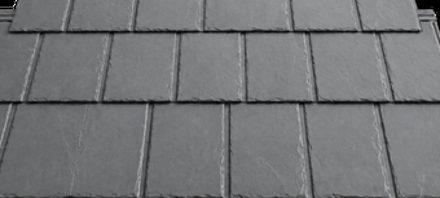
Metal shingle pricing depends on the profile, metal type, deck condition, underlayment strategy, visible roof areas, and the amount of detail work around dormers, valleys, hips, gables, and roof transitions. A front-slope accent application is a different project from a full-home metal shingle installation. Installation time drives the number. Metal shingles go on as hundreds of small interlocking pieces, each fastened by hand and cut to fit around dormers, hips, and valleys, so a detailed roof takes more crew hours per square than long panel systems.
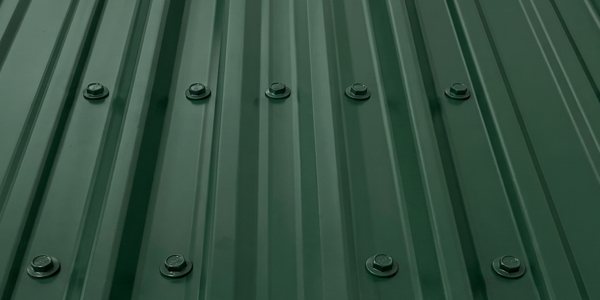
Exposed-Fastener is usually the lower-cost path into metal roofing, especially on simple roof layouts, shops, garages, barns, and utility structures. The final price still depends on slope, access, tear-off, trim, fastener type, sealant requirements, and how many penetrations or transitions the roof has. The install method keeps the price down. Long factory cut panels are screwed directly through the face into the framing in overlapping runs, which takes fewer steps and less crew time per square than any concealed fastener system.
%20-%20frame%20at%200m9s.jpg)
Coating prices depend on whether the roof qualifies for restoration, how much cleaning and preparation are required, how seams and fasteners are treated, whether ponding water exists, and which coating chemistry fits the roof. A coating should be priced as a restoration system, not as paint. The price stays low because nothing is torn off. The crew cleans and preps the existing roof, seals every seam and fastener, and applies the coating in fluid layers, so you are paying for restoration work instead of a new roof.
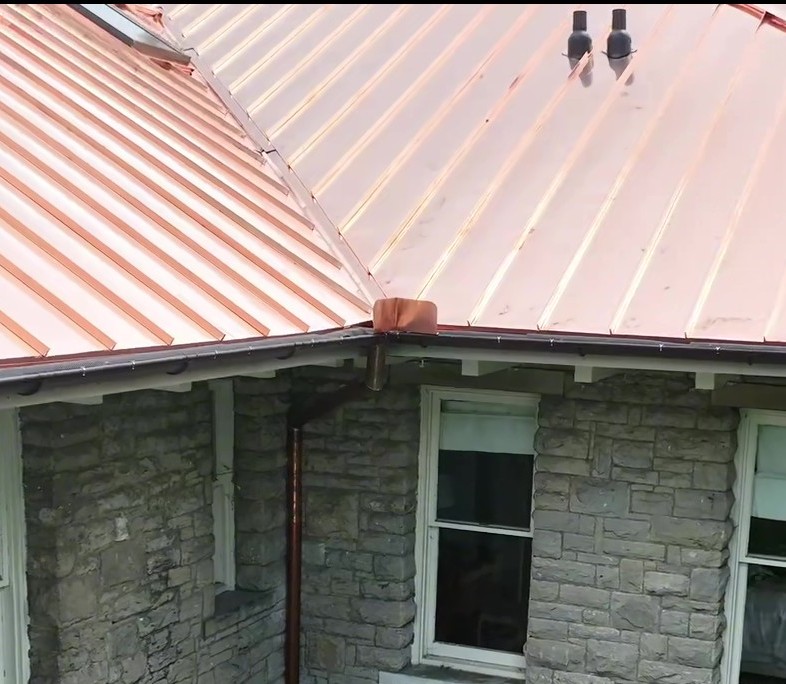
Copper pricing depends on the seam style, sheet weight, roof complexity, accent scope, and the copper market itself, since copper is a traded commodity and every quote tracks the metal price on the day it is written. Chimney caps, valleys, dormers, bay window caps, and half-round gutters are priced per element. The price reflects the craft. Panels and accents are fabricated in our own shop from 16 oz and 20 oz sheet, then fitted, locked, and soldered by hand with concealed fasteners, which is why copper roofs are still working after a century.
Repairs are priced the same way. A diagnostic visit is $250, most metal roof repairs cost $150 to $1,000, the median repair is about $500, a skylight reseal is $495, and rotten decking is $75 per sheet. See the full 2026 metal roof repair price list.
✦ Reviewed by The Metal Roofers Technical Team


.avif)
1-story ranch · ~30 sq · standing seam
.avif)
2-story, complex · ~45 sq · standing seam
The Metal Roofers — Nashville, TN


25–35 sq · Donelson, Antioch
40–55 sq · Green Hills, Belle Meade
55–70 sq · Rural Middle TN
In Nashville’s historic overlays, HOA neighborhoods, and design-sensitive communities, a metal roof is reviewed as part of the whole house. Approval usually depends on the roof profile, color, gloss level, seam visibility, street-facing roof planes, and whether the finished roof looks appropriate for that specific home. Metro Nashville’s Historic Zoning inspection guidance says roofing materials are common review items after a Preservation Permit has been issued, so the roof should be documented before the project is treated as ready to install.

Submittal packet — A strong submittal gives the board the information it needs before the roof becomes a question mark. The packet should include product cut sheets, panel profile details, finish information, color selections, and any supporting manufacturer documents that explain what the proposed system will look like once installed.

Context visuals — A small color chip or panel sample does not show how the roof will sit on the house. Photos, marked-up elevations, nearby examples, and simple visual references help show whether standing seam, metal shingles, copper, or another profile belongs on the property.

Detail notes — Many roof approval concerns are really detail concerns. Seam height, fastener visibility, vent placement, ridge treatment, gutter color, edge trim, gloss level, and copper placement should be explained clearly so the board can review the finished intent instead of guessing from a sample.

Traditional streets — Traditional streets usually need a roof that respects the original roofline. Metal shingles, darker low-gloss finishes, and carefully selected trim details often create a smoother approval path than a bright or highly reflective long-panel roof.

Modern additions — Standing seam often works best where the architecture already supports clean vertical lines. Rear additions, porches, accessory structures, and contemporary renovations can be strong candidates when the seam profile and color are handled with restraint.

Color matching — The roof should respond to the brick, siding, stone, trim, shutters, windows, gutters, and neighboring homes. A color that looks sharp on a sample can look too loud once it covers the largest visible surface on the house.
Universal · All boards

Modern · Low gloss
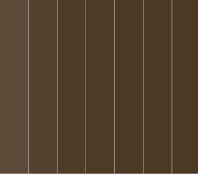
Historic · Traditional
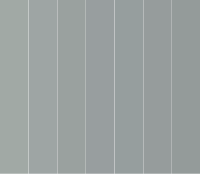
Farmhouse · Cottage
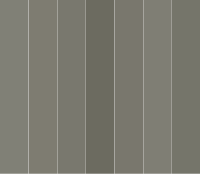
Aged patina · Muted
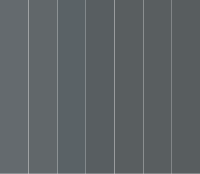
Classic · Neutral
Accent · Living patina
The roof, façade, street visibility, and likely review concerns are evaluated before the final system and color are selected.
Product documents, profile information, color selections, finish details, and supporting visuals are assembled into a cleaner board-ready packet.
The submittal goes in with the roof profile, color, and design intent already explained, which helps reduce avoidable back-and-forth.
If the board asks for changes, the most common revisions involve color, gloss, visibility, profile, or trim details.
Once approval is secured, the project can move into scheduling, material planning, and installation.
Often, yes. Most reviews focus on gloss level, color harmony, and visibility from the street. When the profile and color align with neighborhood character and details are clean and low-gloss, boards are receptive. We prepare the packet and handle revisions to streamline approval, so you don't have to become an expert on architectural review processes.

For Metro Nashville and Davidson County, the adopted residential design criteria list a 115 mph wind design speed. That does not mean every metal roof is automatically “rated to 115 mph.” It means the roof system should be selected and installed so the panels, clips or fasteners, seams, edge metal, and flashings are appropriate for the building, the roof height, the slope, and the exposure of the property.
A standing seam roof on a sheltered Green Hills home is not the same wind problem as a metal roof on an exposed ridge, open lot, lake-adjacent property, commercial building, or barndominium. The contractor should be able to tell you the panel profile, seam type, clip or fastener pattern, edge detail, and manufacturer-tested uplift information for the system being installed. A serious answer is not “this roof is wind rated.” A serious answer is “this specific roof assembly is being installed for this specific roof condition.”
A properly built residential metal roof is much quieter than the barn tin roof stereotype. The useful number is interior rain noise in dBA, not whether the roof is “metal.” Published comparisons cite rain on asphalt shingles at about 46 dBA, rain on a metal roof over a complete residential roof assembly at about 52 dBA, and rain on metal over open framing, such as a barn or shed, at about 61 dBA. For context, a whisper is about 30 dBA, rainfall is around 50 dBA, normal conversation is around 60 dBA, and sound above about 86 dBA can become harmful with exposure.
For a Nashville home, the roof assembly matters more than the panel alone. Solid decking, underlayment, attic insulation, ceiling drywall, roof slope, and whether the metal is over living space, a porch, a garage, or open framing all affect sound. A finished home with decking and insulation should not sound like an open-frame barn; if it does, the issue is usually the assembly, not simply the metal.
Hail can dent metal, so the honest answer is yes: large enough hail can leave cosmetic marks. The better question is whether hail damage is cosmetic or functional. Cosmetic damage means the panel may show dents or surface marks. Functional damage means the roof has cracked, split, opened, punctured, or lost its ability to shed water properly.
The main roof-impact standard homeowners hear about is UL 2218. It rates roofing products from Class 1 to Class 4 using steel-ball impact testing. Class 4 is the highest rating. To achieve Class 4, the roof covering is tested with a 2-inch steel ball dropped from 20 feet. The tested product must show no tearing, fracturing, cracking, splitting, rupture, crazing, or opening during the test. The Metal Roofing Alliance explains that Class 4 is a resistance rating, not a claim that the product is “hail proof.”
The full UL 2218 impact table is useful: Class 1 uses a 1.25-inch ball dropped 12 feet, Class 2 uses a 1.5-inch ball dropped 15 feet, Class 3 uses a 1.75-inch ball dropped 17 feet, and Class 4 uses a 2-inch ball dropped 20 feet, with Class 4 producing about 23.71 ft-lbf / 32.12 joules of impact energy.
Some insurance carriers may recognize impact-resistant roofing more favorably, especially when the installed roof has Class 4 documentation, but the outcome depends on the carrier, policy, product, and paperwork. A contractor should not promise a premium reduction. A contractor should provide the product information, impact-rating documentation, photos, invoice, and final project paperwork so the homeowner can ask the insurance carrier directly. The safest wording is that a qualifying impact-rated metal roof may help with insurance conversations, not that it automatically lowers premiums.
Metal roofing is usually more expensive at installation, especially standing seam and metal shingles. The better comparison is ownership cost. A homeowner should compare service life, storm resilience, maintenance, repairability, replacement cycles, heat performance, curb appeal, and how long the home will be owned. Classic panel may be the lower-cost metal option on simple buildings. Standing seam usually costs more because it removes the exposed screw field from the main weather surface and creates a more controlled long-term system. Metal shingles can cost more than asphalt, but they may be the better fit when a home needs metal performance without changing its traditional look.
Absolutely. Standing seam is solar-friendly, clamps attach to seams with no new roof penetrations. We coordinate layout and service clearances with your solar installer to preserve your warranty and roof integrity.
Metro Nashville defines normal maintenance repairs to include repairs to an existing roof that do not exceed 33 percent of the roof area. Larger residential roof work can move into permit procedures depending on the scope. Metro also adopted the 2024 International Codes for plans and applications submitted after July 16, 2025. The practical answer is that the permit path should be verified before scheduling the job, especially for full replacements, commercial roofs, structural changes, historic overlays, and larger scopes.
A reflective metal roof finish can reduce roof-surface temperature, but color alone is not the whole answer. The U.S. Department of Energy says a reflective roof can stay more than 50°F cooler than a conventional roof under the same summer conditions, reducing heat flow into the occupied space. For a Nashville home, the complete assembly matters: roof color, finish chemistry, attic insulation, soffit intake, ridge exhaust, underlayment, tree shade, roof orientation, and attic air movement all affect how the house performs in summer.

Total cost over 30 years: lifespan, storm resilience, energy & resale math for Middle Tennessee.
Spring checklist: fastener & valley checks, tree-limb clearance, gutter flow, dry-in kit.
PVDF color chips vs. brick & siding combos in East Nashville, Green Hills, Franklin & Mt. Juliet.
Which profile suits historic streets vs. modern additions, plus HOA pointers & pitch rules.
Balance soffit + ridge, attic temps, and why proper airflow protects decking & paint.
UL 2218 Class 4, documentation tips for potential premium credits in Tennessee.
Nashville's top commercial contractors: a deep dive on The Metal Roofers & how to choose the right crew.
Tennessee home photos: standing seam, classic panels & metal shingles, plus color tips for brick & siding.
Do TN insurers discount metal? Yes, up to 35%. How to document & file for premium credits.
What to ask, what to verify, and red flags to avoid when hiring a metal roofing crew in Tennessee.
The full playbook for replacing asphalt shingles with a metal roof: tear-off, cost, and timeline.
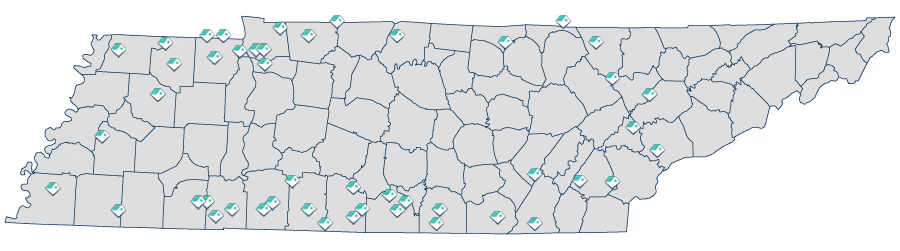
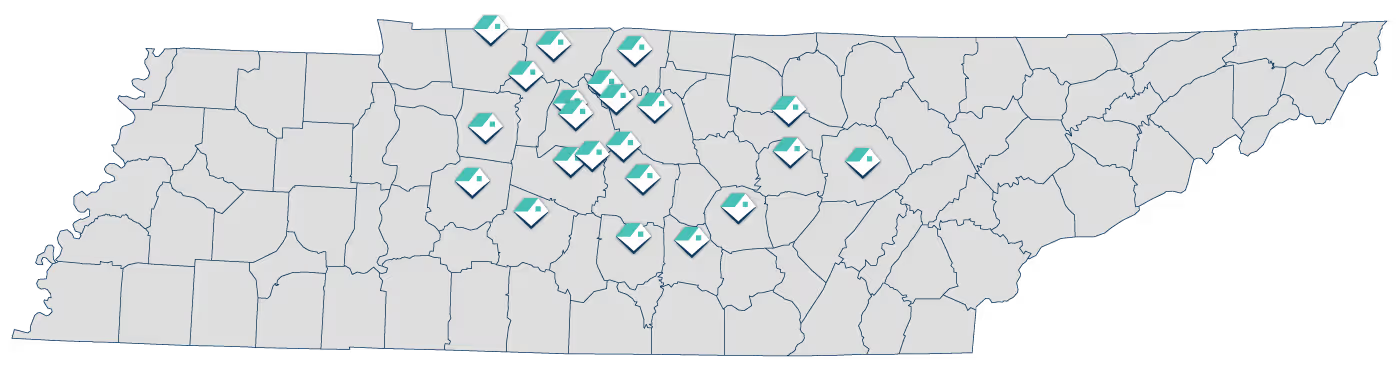
Every pin on this map is a completed project by The Metal Roofers: a new metal roof installation or a metal roof repair on a Middle Tennessee home, barn, church, or commercial building. This is not the complete list of homes we have worked on, just a sample pulled from our job records, and most of the pins you see are complete metal roof installations. Zoom in to your neighborhood and you will likely find our work close by.
Pin locations come from our completed job records. The Metal Roofers, TN License #75515, Nashville, Tennessee.

I wanted something for the long term. I wanted something that would look good, and I didn't want to have to worry about leaks or problems or issues, so I chose The Metal Roofers after doing a bunch of research online to see who is well recommended, and I found that The Metal Roofers had the highest scores. I also called the metal roofers association to get a recommendation, and your company popped up at the top of the list, so that actually made the decision pretty easy. I considered a number of different roofs, asphalt, other kinds of steel shingles, but I went with the metal roof, standing seam, because I thought it looked the best. Great reliability, I like the color choices. It was the best decision for me for the long term. I think I'll get good resale value out of it if I go to sell it at some point. Mitch was extremely helpful in answering all my questions and really helped guide me through the process: figure out what the right roof was, the right gauge of steel, the right type of color. I really appreciated his sort of hands-on help and his patience with me. I just appreciated all the communication and progress updates along the way, because I was out of town for a good part of it, so it was great to be out of town, out of state, and not have to worry about anything. They were very upfront, they were on time, they kept the work sites super clean, they did everything they said they were going to do when they said they were going to do it. So, great experience for me, so I would strongly recommend The Metal Roofers.
I had the neighbor of mine put on a 30-year Timberline roof, which I took off. Didn't last 15 years for me, didn't last 12 years for him. So I started getting estimates. I've seen some of their work and I was impressed. The quality's there. They had everybody else beat that I had estimates from, so I just chose them. I think they've done an awesome job. My house is warmer, it's going to help with the heating bill. They were honest, on time, they had the price and the quality. The installers, they had been doing this and you could tell. It was real easy. Every time they picked the phone up, if you needed something, they were there, and just great people to work with. I'm very proud of my project here that they done. I mean, all you have to do is look at the roof. I would highly recommend anyone looking for metal roof, gutters, whatever, to choose The Metal Roofers.
So I think when we were looking for roofs, you know, we could go with the same asphalt roof, but I think what was important is this is our forever home, and so why not put a forever roof on that as well. Of course we wanted to get a couple of different estimates. We had The Metal Roofers out first, and then the second company that came out, it was quite higher than what The Metal Roofers gave us. We can't be comparing apples to apples, and Mitch came back out, he gave us another estimate, explained to us the differences in the types of roofs. We found that you were just so super honest and genuine and patient overall as we worked through the process, and ultimately The Metal Roofers was the best value for the product that we received. When you get great customer service and you get a great product and you feel like the person that you're working with is trustworthy, genuine, and honest, that's what we found in The Metal Roofers. Communication was always frequent. Any time I had a question and I reached out, we didn't have to wait too long to get a response. I would totally recommend The Metal Roofers just based off their professionalism, for their speed of service, and for the quality. A roof is something that you have to purchase, not something that you necessarily want to do. I want a pool, and maybe we'll get that one day, but when you have to spend money on something that's a must-have, I mean, I feel like we spent our money with the right people to get the right product to make our home beautiful.


We would give them 10 stars if it were possible! The Metal Roofers are a reliable, detail oriented, friendly and family owned business with tons of skill and many years of experience. We had many challenges in dealing with our home owners insurance, but they worked with our adjusters and smoothed out the entire process. The work was completed on time, and their cleanup left no debris in our yard. We are extremely happy with the quality and overall new look of our brand new steel roof, and highly recommend The Metal Roofers for your next roofing repair or replacement. Don't waste your time with any other contractors! Thank you to The Metal Roofers!!!

I hired The Metal Roofers to replace my house and carport roof. Given the increase in storm activity in middle Tennessee choosing metal seemed the safest choice. They were easy to deal with, from original estimate to my eventual selection. The installation was professional and thorough. I am confident that I'm safe for anything Mother Nature throws at me!
The Metal Roofers serves Nashville and more than 30 cities across Middle Tennessee from our shop at 935 E Trinity Lane. Whether you need metal roof installation, replacement, or repairs, our crews handle homes and businesses across the region, and we do not add a distance surcharge for the drive.