Metal Roofing Alliance Member
TVA Preferred Partners Network
10,000+ Metal Roof Jobs
Nashville, TN
Licensed & Insured
BBB A+

Open 8am–8pm
(615) 649-5002Schedule Your
Appointment
Appointment
The Metal Roofers diagnoses and repairs commercial roof leaks across Nashville and Middle Tennessee, and every repair comes with a written report and photos of the source and the finished work. A commercial roof leak is a business problem before it is a roof problem. We stabilize active water entry and repair the system that caused it: metal and low-slope roofs, flashings, HVAC curbs, penetrations, gutters, coatings, and storm damage. This page explains how we find the leak, stop the water, document the condition, and make the right call between repair, maintenance, coating, and replacement.
✦ Reviewed by The Metal Roofers Technical Team
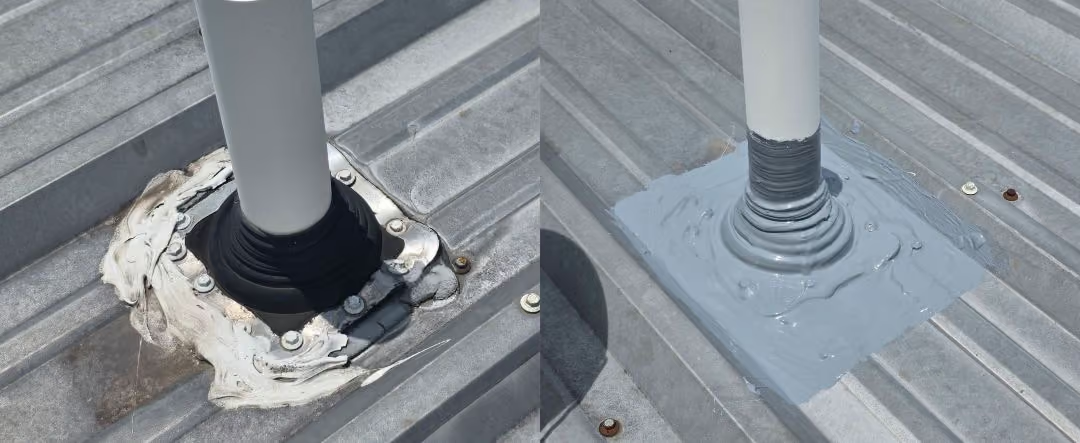
A repair that does not find the cause is not a repair. It is a temporary cover. Before any sealant comes out, we answer one question: what failed? Not just where is the stain? Water can enter the roof twenty feet from where it shows up inside, so the visible drip is where the search starts, not where it ends. If repair estimates are pointing toward replacement: Commercial Metal Roof Cost in Nashville: 2026 Pricing Guide.

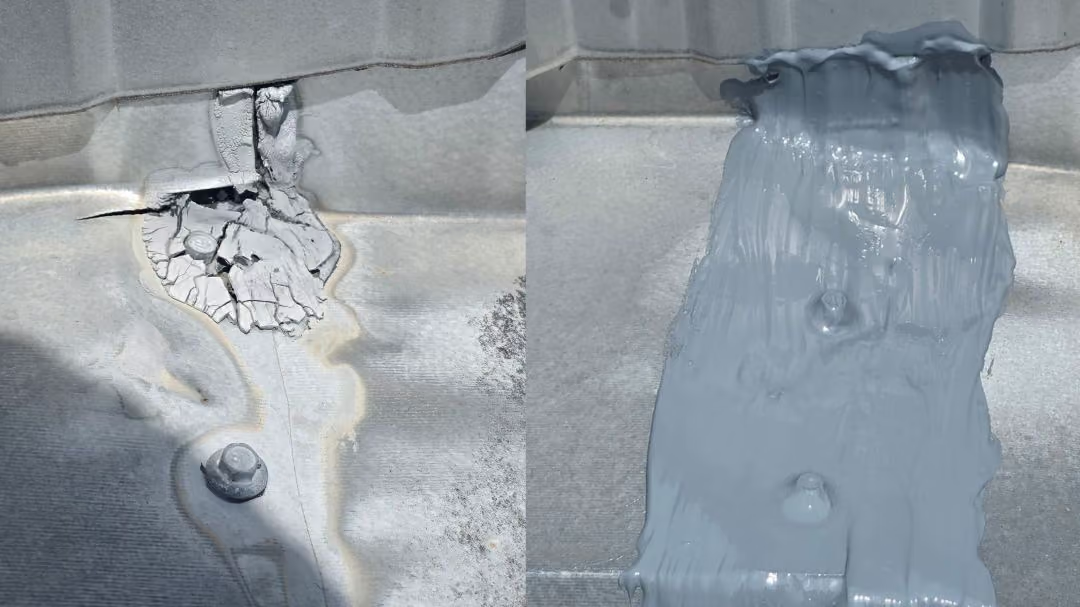
The fast version hides the symptom. Someone smears sealant over the stain's apparent location, coats around the unit, or drives a fresh screw and leaves. It stops the drip for a while because the surface looks sealed. Then the real failure, still untouched, opens again at the next wind-driven rain, and the owner pays a second time for the same leak.
The durable version traces the failure to its source, separates temporary stabilization from permanent repair, uses materials compatible with the existing roof, and checks the drainage path around the fix. It takes more attention up front and far less over time, because the leak is actually gone. A good repair leaves the roof stronger at the failure point than it was before.
Many Nashville commercial buildings are hybrids. One section may be standing seam. Another may be PBR or R-panel. A flat rear section may be TPO or PVC, and an older annex may be modified bitumen. Gutters, scuppers, curbs, edge metal, and wall transitions tie it all together. Commercial roof repair is not one repair method. It is knowing which method belongs on which part of the roof, and detailing every transition between systems correctly.
Picture a Nashville retail center with sloped standing seam at the front and a low-slope TPO section at the rear. The same storm hits both. The metal and the membrane have failed in completely different ways, and each needs its own repair method, materials, and detailing.
Standing Seam Section: the leak showed up over an office. The source was a cracked pipe boot, not the panels. The fix was a new boot and a rebuilt flashing detail at that one penetration, with the rest of the roof left untouched.
Low-Slope TPO Section: twenty feet away, the same building's flat TPO area was also wet. There the water was entering at an open seam beside a rooftop unit, a completely different repair, cleaned and heat-welded back together. One building, one storm, two roof types, two different fixes.
Temporary dry-in buys time and protects the interior, but it is not the fix. The permanent repair addresses why the water got in. Treating stabilization as the finished job is how a leak comes back at the next storm.
The open field of a roof matters, but it is rarely where the leak begins. The details at the edges, curbs, drains, penetrations, seams, and old repairs are where commercial roofs actually fail, and they are the first places a real repair looks.
Standing seam is built to move, and the repair has to respect that: end-lap resealing, seam correction, curb and pipe flashing, valley and ridge work, and rebuilding transitions where metal meets wall, membrane, or gutter. Driving screws through a floating panel in the wrong place turns a concealed-fastener roof into a new leak, so we work from the panel profile, clip system, and seam type before touching it.
Common on warehouses, shops, and agricultural buildings. These roofs leak through fasteners, panel laps, closures, ridge caps, and aged sealant. The key is pattern recognition: one bad screw is a small repair, but ten failed fasteners in one area means asking why. Was the panel overdriven, the substrate failing, the fasteners too short, or the washers aging across the whole assembly? Replacing one visible screw rarely solves a roof-wide problem.
Practical commercial panels on the right slope, with long runs and large surface areas, which means water can travel. A leak at one fastener may show up elsewhere, a side-lap issue may only appear in wind-driven rain, and a ridge closure may leak only in heavy storms. We review fastener lines, lap direction, sealant condition, alignment, and slope before recommending the fix.
TPO repair is about seams, punctures, flashings, drains, and rooftop equipment. Because the seams are heat-welded, a proper repair uses compatible TPO, correct cleaning, heat-welding, and probe testing. A small puncture can be patched locally; a seam problem across a larger area usually points to welding, movement, ponding, or age. Repairing the membrane without fixing traffic or drainage just invites repeat damage.
Common on restaurants and equipment-heavy roofs where grease, oils, and frequent traffic are concerns. PVC repair requires compatible materials and attention to contamination, so a repair near a grease vent is not treated like a clean office seam. The membrane may need cleaning, replacement of contaminated areas, reinforcement around equipment, or better service paths.
EPDM is a rubber membrane, so repairs depend on compatible primers, seam tapes, patches, and flashing methods. Leaks tend to show at seams, wall transitions, penetrations, shrinkage areas, punctures, drains, or old repairs. The repair should weigh membrane age, surface oxidation, seam condition, and whether the leak is localized or part of broader aging.
Modified bitumen repairs involve laps, punctures, granule loss, blisters, flashing, and old patch areas, with the method depending on the assembly and condition. Coated roofs are not maintenance-free either: they may need touch-up at seams, fasteners, curbs, and ponding zones. Coating should never hide saturated insulation, structural corrosion, or end-of-life conditions, so a coated-roof repair starts by asking whether the problem is in the coating or the roof beneath it.
When the failure is a single, isolated point, a cracked boot, one open seam, a punctured membrane, we repair that detail directly with compatible materials and leave the rest of the roof alone. The goal is a clean, lasting fix at the actual source, not a patch that hides it.
Most commercial leaks live at flashings: curb flashing around HVAC units, wall and parapet flashing, pipe and penetration flashing. We rebuild these details properly, with the right metal, membrane, or boot, so water is shed away from the opening instead of pooling at it.
Open end-laps and side-laps on metal, and failed welds or seams on membrane, are common leak paths. We correct metal laps and reseal where appropriate, and on TPO, PVC, and EPDM we re-weld or patch with matching material and probe-test the repair.
On exposed-fastener roofs, we replace backed-out, stripped, or undersized screws with correct oversized or gasketed fasteners, and address the pattern, not just one screw. Where panels are creased or holed, we repair or replace the affected panel sections.
On single-ply membranes, we clean, patch, and heat-weld TPO or PVC, or use compatible primers and seam tape on EPDM. Repairs are sized to the problem: a local patch for a puncture, broader work where seams or laps have failed across an area.
Where a roof surface is sound but worn, targeted coating-grade repairs at seams, fasteners, and curbs can extend its life. Where a section is beyond patching, we replace that section rather than coat over a failing assembly. Coating is a tool, not a way to hide a wet roof.
The right answer when the roof is otherwise sound and the problem is contained, a failed curb, a cracked boot, an open seam, a clogged drain. We fix the actual detail with compatible materials and leave the serviceable roof alone. A good repair is the most cost-effective path when the rest of the assembly still has real life left.
Often the smartest long-term answer. A scheduled inspection and maintenance program finds loose fasteners, opening laps, failing sealant, and clogged drainage before they become leaks. For an owner who wants to protect a roof and avoid surprise emergencies, maintenance usually costs far less than the damage it prevents.
Appropriate when a roof is aging and tired but still structurally sound and dry underneath. A restoration coating system can seal seams and details and add years of service, often at a fraction of replacement. It is not a fix for a wet, corroded, or end-of-life roof, and we will tell you honestly when a roof is not a coating candidate.
Sometimes the honest answer is that the roof is finished: widespread corrosion, saturated insulation, or failed seams across the field, past the point where repairs make sense. Repeated patching there only wastes money. When replacement is the responsible call, we say so plainly and help you plan it, rather than selling repairs that will not hold.
Warehouses and distribution centers have large low-slope roofs where ponding, seams, and skylights matter most, and where a leak threatens racked inventory. Retail and restaurants concentrate risk around rooftop HVAC, grease and exhaust vents, and constant service traffic, often over a space that has to stay open. Medical, dental, and office buildings cannot tolerate water over equipment, records, or ceilings, so a clean, fast repair matters. Churches and schools tend to have older roofs, additions stitched together over time, and tight budgets, so honest repair-versus-replacement guidance is critical. Industrial buildings add chemical exposure, heat, and heavy equipment, while multifamily and mixed-use buildings mean a leak in one unit affects the tenants below. Same company, same diagnostic process, a repair plan matched to the building.
Before we recommend a repair, we look at what the roof is protecting and how the space is used. A leak over an open retail floor, a commercial kitchen, a server room, or racked inventory changes the urgency, the access plan, and the right fix. Tell us what is under the leak; it shapes the repair as much as the roof itself.

We repair far more often than we replace. Most commercial leaks come from a specific failed detail, a curb, a boot, a seam, a drain, and the right fix is a targeted repair, not a new roof. We only recommend replacement when the roof is genuinely at the end of its life.
Yes. Finding the source is the core of what we do. Water often enters far from where it shows up inside, so we trace it from the interior evidence back to the actual entry point on the roof, using a detail-by-detail inspection and, where needed, moisture or thermal checks.
Standing seam and exposed-fastener metal, PBR and R-panel, TPO, PVC, and EPDM membranes, modified bitumen, and coated roofs, plus gutters, flashings, and drainage. We match the repair method and materials to the system you actually have.
We can usually stabilize an active leak quickly, temporary dry-in, covering a damaged section, or clearing a blocked drain, to stop water from entering and protect what is underneath. That buys time until the weather clears and we can make the permanent repair.
No. Stabilization stops the water and limits damage, but it is temporary. The permanent repair addresses why the water got in, the failed detail, so the leak does not come back at the next storm. We are always clear about which one we are doing.
It depends on the roof's age, how widespread the failure is, and how much serviceable life is left. A contained problem on a sound roof gets a repair. An aging but dry roof may be a coating candidate. A roof failing across the field may need replacement. We tell you honestly which one you are looking at.
A real repair rebuilds the failed detail with compatible materials so it sheds water the way the system was designed to. That holds. A smear of sealant over a moving seam or a wrong-material patch is what fails, and it is exactly what we avoid.
Yes. We repair low-slope metal and single-ply membrane roofs, including the seams, flashings, drains, and rooftop-equipment details where flat roofs most often leak. Drainage and ponding are a big part of what we check.
Usually, yes. We plan the work around how the building is used, retail floors, kitchens, medical spaces, and occupied units, so we can stop the leak and complete the repair with as little disruption as possible.
Yes. Every repair comes with photos of the source, the surrounding details, and the finished work, plus a written report. That gives you a clear record for warranty, budgeting, and any storm-damage or insurance claim.
We cover Nashville and Middle Tennessee, including Davidson, Williamson, and surrounding counties. If you are not sure whether you are in our service area, call us at (615) 649-5002 and we will let you know.
Tell us what you are seeing, where the water shows up, and what weather brings it on, and we will get on the roof, trace the leak to its source, and document what we find. Then we give you the honest call: repair, maintenance, coating, or replacement. Most commercial leaks are a repair, not a new roof. Call to schedule a commercial roof repair inspection.
(615) 649-5002Nashville & Middle Tennessee · 1,000+ Metal Roofs Installed · Licensed & Insured · BBB A+