Metal Roofing Alliance Member
TVA Preferred Partners Network
10,000+ Metal Roof Jobs
Nashville, TN
Licensed & Insured
BBB A+

Open 8am–8pm
(615) 649-5002Schedule Your
Appointment
Appointment

The Metal Roofers installs standing seam, flat seam, and batten seam copper roofs and shop-fabricates copper accents for Nashville homes, with 1,000-plus metal roofs installed since 2003. A complete guide to copper roofing for Nashville homes, the living patina, the century-long service life, standing seam and flat seam systems, accent applications, soldered joints, galvanic corrosion prevention, the real cost, where copper makes sense in Middle Tennessee, and why no other roofing material on earth ages as beautifully or lasts as long. Everything here draws on our own records: more than 10,000 metal roof repairs and 1,000+ metal roof replacements across Middle Tennessee since 2003.
Copper is the longest-serving roofing material in existence: a 100+ year service life is the documented expectation, and original installs are still working after centuries. Standing seam copper runs $3,000–$4,000 per square installed in Middle Tennessee, as of June 2026, with accent work from roughly $1,000 chimney caps to $6,000–$8,000 bay window caps. We install full standing seam, flat seam, and batten seam copper roofs, always with concealed fasteners, and fabricate accents in our shop: chimney caps, bay window caps, dormers, cupolas, valleys, counter flashings, half-round gutters, and downspouts, in 16 oz and 20 oz weights. It is the most expensive roofing material available, and the 100-year cost of ownership comes in lower than asphalt. Also called architectural copper, copper standing seam roofing, copper accent work, or custom copper fabrication.
✦ Reviewed by The Metal Roofers Technical Team
What makes copper different from steel, aluminum, zinc, and every other roofing material is not just longevity, it is the mechanism of its longevity. Copper protects itself. When exposed to air and moisture, it forms a patina, a thin, self-healing, chemically stable layer that shields the underlying metal from further corrosion. This patina is not a coating applied in a factory. It is not a paint system that can scratch, chalk, or fade. It is the copper itself, reacting with its environment, building its own armor, and getting stronger over time. The older a copper roof gets, the more protected it becomes.
Every other roofing material degrades with age. Asphalt loses granules. Steel relies on factory coatings that eventually chalk and fail. Painted aluminum fades. Wood rots. Clay cracks. Copper is the only roofing material that improves with exposure, developing a surface that is simultaneously more protective and more beautiful than the day it was installed.

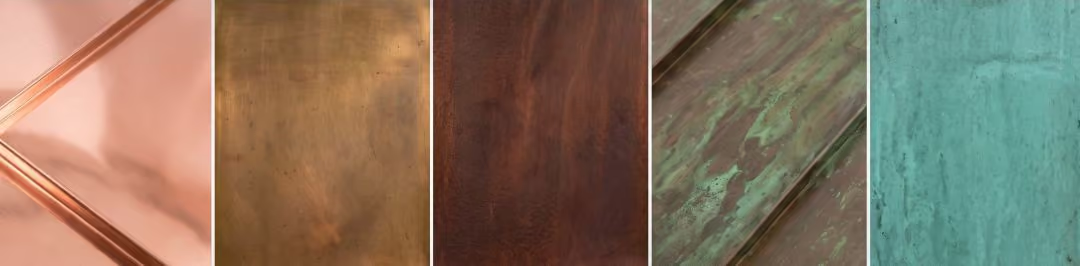
The copper arrives from the mill with a warm, reflective salmon-pink surface, the color of a new penny, luminous and unmistakably metallic. This is the shortest stage. Within days of exposure to Nashville air, the surface begins to shift.
The copper darkens to a warm, rich bronze. Think of an old penny that has lost its shine but gained character. This is the stage most Nashville homeowners live with for their first year. It is handsome, warm, and unmistakably copper. The oxidation process has begun but is still building its first protective layers.
The copper deepens through a series of russet and chocolate brown tones as the oxide layer thickens. This is the longest intermediate stage in Nashville's climate. The roof has a distinguished, aged-leather quality that pairs beautifully with brick, stone, and natural wood. The protective layer is now well established.
The first green tones begin to emerge, mixing with the remaining brown to create a complex, mottled surface. In Nashville's humid climate with regular rainfall and occasional thunderstorm-driven acid wash, this transition moves faster than in drier regions. Sections exposed to more moisture will green first: valleys, north-facing slopes, areas near downspout splash.
The signature color, the blue-green that defines historic copper roofs worldwide. In Nashville, expect 15–25 years for a substantially uniform verdigris, depending on orientation and exposure. This is the final equilibrium state. Once established, the patina is chemically stable and no further significant color change occurs. The roof has built its permanent armor. It will look essentially like this for the next century.
Yes. Chemical patination treatments using ammonium chloride or copper sulfate solutions can replicate 20 years of weathering in a day or two. Pre-patinated copper is also available from some manufacturers, arriving with a factory-applied green finish. However, artificial patination is as much art as science. Achieving even, natural-looking results across an entire roof requires experienced application. We can coordinate pre-patination or post-installation chemical aging for homeowners who want the mature look from day one.
Pre-patina is grown chemically, with acid-chloride treatments based on sal ammoniac, or copper-sulfate-and-ammonia solutions. They produce the same basic copper sulfate and carbonate as natural weathering, just on a schedule.
Clear coatings are acrylic-based with low chemical resistance, and they are not permanent. For a truly maintenance-free roof, natural or pre-weathered copper is the honest choice.
%20(4).avif)
The same raised-seam, concealed-fastener system used in steel standing seam, but fabricated entirely in copper. Panels interlock at raised seams that run vertically from eave to ridge. Concealed clips allow thermal expansion. No penetrations in the panel field. The standard for full copper roofs on residential and institutional buildings. Clean, architectural lines with the warmth and character that only copper provides.
%20(3).avif)
Individual copper pans (typically 18″ × 24″ or 20″ × 28″) are folded at the edges and interlocked with adjacent pans, then soldered at every joint. The result is a smooth, elegant surface with a subtle grid pattern, no raised seams, no visible fasteners. Flat seam is the traditional copper system for low-slope roofs, portico roofs, bay window tops, and historic restoration work. Every joint is soldered watertight.
%20(5).avif)
Similar to standing seam, but with a wood batten (a small strip of wood, typically 2″ × 2″) placed under each seam. The copper panels are folded over the batten, creating a more pronounced, rounded seam profile. Batten seam has deep roots in Southern and Colonial architecture. You see it on antebellum estates, courthouses, and churches throughout Tennessee and the Deep South. It adds dimension and shadow that standing seam does not.
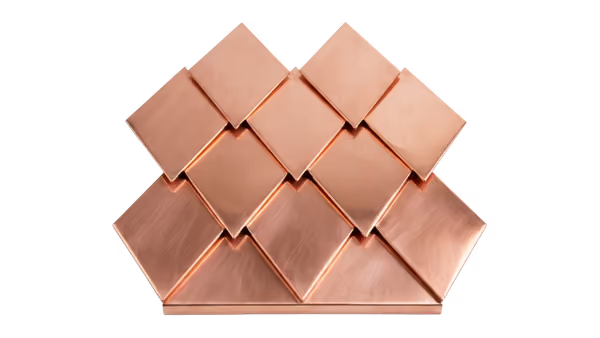
Individual copper pieces, diamonds, hexagons, fish scales, or rectangular shingles, installed in overlapping patterns. Copper shingles create a richly textured, three-dimensional surface that changes character with the light. They are the most labor-intensive copper application but produce the most visually complex and historically authentic result. Common on turrets, dormers, cupolas, and accent roofs.
Below three inches of rise per foot, the handbook calls for sealant in standing and batten seams, or a fully soldered flat-seam system. Above it, the lock alone keeps water out. Matching the system to the pitch is the first design decision.
For most Nashville residential copper applications, 16 oz is the standard and appropriate choice. It has been the architectural copper standard for generations, it forms and solders beautifully, and it provides a service life measured in centuries. 20 oz is the upgrade for homeowners who want greater rigidity, improved hail resistance (relevant in Nashville's spring storm season), or simply the heaviest copper available for the ultimate long-term installation.
16 oz for standard residential applications, bay windows, accent roofs, and most standing seam installations. 20 oz for high-exposure areas, flat seam applications where stiffness matters, and homeowners investing in the absolute premium specification. Both will outlast every other material on the house.
We roof in H00 and flash in H00 or H01. Soft copper forms easily but lacks the strength to resist thermal stress over decades, which is exactly why the handbook does not recommend it for roofing or flashing.
The ability to solder is what makes copper the ultimate material for complex architectural details: bay window tops, turret caps, cupola cladding, chimney caps, dormer cheeks, curved surfaces, and any area where conventional flashing techniques fall short. A skilled copper craftsman with a soldering iron can create a waterproof seal on any geometry that copper can physically conform to. This is architectural metalwork at its highest expression.
Because coated copper reads gray rather than green, it is often the answer directly above light limestone or painted masonry, where green runoff would otherwise show.
Full tear-off to bare decking. Deck inspection and repair. Copper is lightweight (16 oz = 1 lb/sq ft) so structural reinforcement is rarely needed. Smooth, clean deck surface essential for flat seam applications where every imperfection telegraphs through the copper.
Copper requires specific underlayment. Rosin-sized building paper (red rosin paper) is the traditional copper underlayment because it does not stick to the copper underside as the metal expands and contracts. Some synthetic underlayments are also compatible. Asphalt-saturated felt can stain copper and should be avoided in direct contact.
Every fastener, clip, nail, and hardware component touching the copper must be copper, brass, or stainless steel. No galvanized. No aluminum. No steel. Dissimilar metals in contact with copper cause galvanic corrosion, the most destructive and avoidable failure mode in copper roofing.
Standing seam panels are roll-formed or brake-formed on site or in our shop. Flat seam pans are cut and folded by hand. Flashings, valleys, and trim are custom-fabricated from copper sheet. There are no off-the-shelf copper flashings at the supply house. Every piece is made for your roof.
Standing seam panels are mechanically seamed with hand or powered seamers. Flat seam joints are soldered with tin-lead or lead-free solder. Flashings are integrated, stepped, and counterflashed. Valley pans are formed continuous. Ridge and hip caps are custom-formed and soldered at intersections. This is the step where craft separates competent from exceptional.
Final quality inspection. Discussion of patina expectations and timeline. If accelerated patination is desired, coordination with treatment specialist. Documentation of all materials, fastener types, and solder specifications for future reference.
A copper roof is engineered around that coefficient. Each run is anchored at one fixed point and allowed to grow toward an expansion joint, which is why a properly built roof is silent and a poorly detailed one oil-cans and pops in the heat.
Snow retention is its own topic. See our snow guards page for systems, costs, and where they belong on a Tennessee roof.
Fire-retardant-treated plywood is pressure-impregnated with chemical salts that can corrode copper. Where it is used, an approved separating underlayment is required between the salts and the metal.
When copper is first exposed to air, it reacts with oxygen to form cuprous oxide (Cu₂O), a thin, reddish-brown layer that accounts for the initial darkening. Over time, in the presence of moisture and atmospheric sulfur compounds, this oxide layer converts to copper sulfate hydroxide, the blue-green mineral called brochantite, which is the primary component of the mature patina. In environments with chloride exposure (coastal areas), the patina may also contain atacamite, a green copper chloride mineral.
The structural metal, 99.9% pure copper sheet, 16 oz or 20 oz per square foot. This is the substrate that lasts centuries.
First oxidation layer. Forms within days of exposure. Accounts for the initial darkening from salmon pink to brown. Thin, adherent, partially protective.
Second oxidation layer. Forms over months to years. Responsible for the deep chocolate brown stage. Increasingly protective as it thickens.
The mature patina. Forms over years to decades. The blue-green verdigris. Chemically stable, self-healing, and virtually impervious to further atmospheric corrosion. This is the armor.
If the patina is scratched or damaged, by a fallen branch, foot traffic during maintenance, or any mechanical impact, the exposed copper immediately begins reforming the protective layer. The patina heals itself. No other roofing material does this. A scratched paint system on steel stays scratched until it is repainted. A scratched copper surface begins re-patinating within hours of exposure.
In rural and suburban environments like most of Nashville, copper corrodes at approximately 0.4 mm per 200 years. At 16 oz thickness (approximately 0.55 mm), this means the copper itself, not the patina, the actual metal, would take roughly 275 years to corrode through. This is why copper roofs last centuries, not decades.
By comparison, the scrap value of competing roofing materials runs from about 60% down to zero. A copper roof is not a disposal cost at end of life, it is a recoverable asset.
Copper's century-long track record is not the sheet alone, it is the fastening, headlap, and seam detailing that hold it down and keep water out through wind and storm.
Zinc coating dissolves in contact with copper
Aluminum corrodes rapidly against copper
Compatible metals only, at every contact point
Galvanic corrosion is not limited to direct contact. Copper runoff, rainwater that has passed over copper surfaces, carries dissolved copper ions that will stain and corrode aluminum, galvanized steel, and zinc surfaces downstream. This means copper gutters dripping onto an aluminum downspout, copper roof runoff hitting galvanized valley flashing, or copper chimney cap water flowing across steel roofing panels can all cause damage. Every material downstream of copper must be copper-compatible: copper, stainless steel, or properly coated to resist copper ion attack.
Many Nashville homes have a primary steel standing seam or shingle roof with copper accent elements: bay window caps, dormer cheeks, chimney flashings. This is a beautiful and cost-effective way to introduce copper. But the transition details must be designed to prevent copper runoff from contacting the steel. We use diverter flashings, separation barriers, and compatible transition materials to ensure the copper and steel coexist without galvanic problems. This is detail work that requires understanding of both metals, and it is one of the things we do best.
Even without direct contact, copper salts carried in runoff accelerate corrosion of aluminum. Detail the roof so copper wash never drains onto an aluminum surface.
On a home with limestone or light masonry, we route copper runoff deliberately. It is a detail that protects the look of the whole facade, not just the roof.
This math is not hypothetical. Copper roofs installed a century ago are still in service today. The asphalt roofs that were installed alongside them have been replaced six or seven times. The initial investment in copper is high. The long-term cost of ownership, amortized over the roof's actual service life, is among the lowest of any roofing material.
Chimney and wall flashings, valleys, step and counter flashing, parapet copings, ridge and hip details, and pipe penetrations. Each is formed and soldered to move with the building and shed water for the life of the roof, which is why copper is often specified even under other roof materials.
Copper-painted steel is a legitimate choice for homeowners who love the warm copper tone but cannot justify the full copper investment. It provides the color without the cost. But it will never develop a patina. It will never self-heal. And it will need to be replaced in 40–60 years. Real copper is for homeowners building a legacy, a roof that will outlast the mortgage, the family, and possibly the house itself. The two products look similar on install day and diverge completely from that point forward.
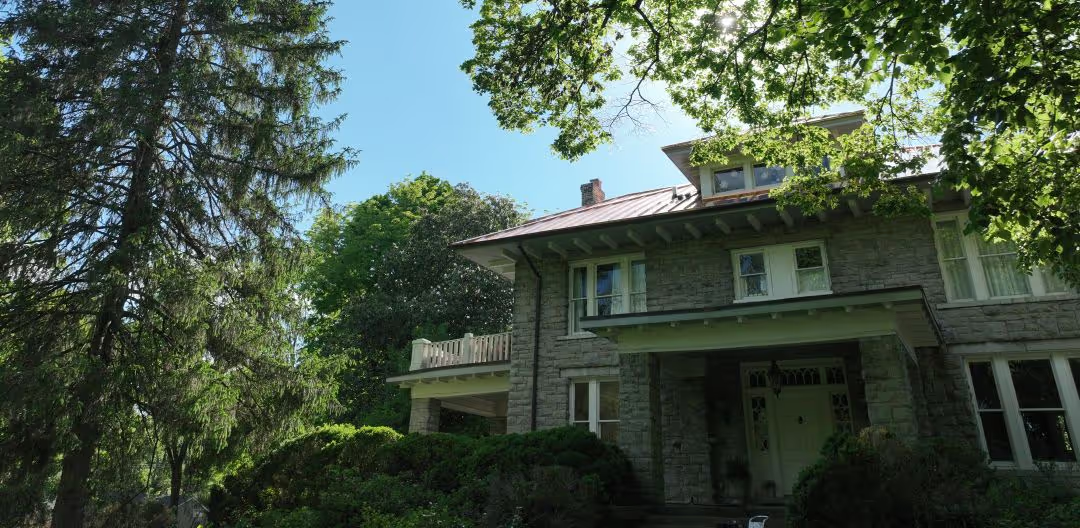
The estate neighborhoods where copper's premium positioning matches the architecture and the investment. Brick colonials, limestone facades, and formal Georgian homes provide the perfect canvas for standing seam or batten seam copper. Full roof or comprehensive accent packages with bay caps, dormer cheeks, and custom flashings.
Newer construction and upscale subdivisions where copper accents, bay window tops, porch roofs, dormer cladding, cupola caps, add distinction and curb appeal to homes that might otherwise look like their neighbors. Copper accents on a steel standing seam or metal shingle roof create a layered, sophisticated look at a fraction of full copper cost.
Neighborhoods with historic character where copper has architectural precedent. Restoration work on Victorian, Craftsman, and early 20th century homes where copper flashings, gutters, downspouts, and accent roof elements are historically appropriate and add period-correct authenticity.
Nashville's churches, universities, courthouses, and institutional buildings have a long tradition of copper roofing. Steeple cladding, cupola caps, entrance canopies, and signature architectural elements that will serve the institution for a century or more.
A copper standing seam or flat seam cap on a bay window is the single most common, and most visible, copper accent in Nashville residential roofing. It transforms a plain bump-out into an architectural feature. Flat seam copper is especially elegant here, with soldered joints that handle the low slope beautifully.
Copper on a front porch roof, especially a standing seam or batten seam system, creates a warm, inviting entrance that ages into the signature verdigris that says "this home was built to last." Visible from the street, it is the highest-impact copper accent per dollar spent.
Copper cladding on dormer sidewalls and roofs adds dimension and material contrast to a roofline that might otherwise be monochromatic. Especially effective on brick homes where the warm copper tones complement the masonry.
Copper chimney caps and cricket flashings are both functional (directing water away from the most vulnerable intersection on the roof) and beautiful (adding a copper crown to the highest point of the roofline). Soldered copper chimney flashings outlast any other material by decades.
If your home has a cupola, turret, or tower element, copper is the definitive cladding material. Diamond shingles, fish-scale shingles, or flat seam copper on a curved turret cap create a focal point that will become more beautiful every year for the next century.
Half-round copper gutters and round copper downspouts complete the copper accent package. They age in sync with the copper roof elements, developing the same patina progression, and they will never rust, never sag from UV degradation, and never need painting. Available in 16 oz and 20 oz.
Most Nashville copper accent projects fall in the $3,000–$12,000 range depending on the scope: a single bay window cap at the lower end, a comprehensive package (porch roof + bay caps + chimney cap + copper gutters) at the upper end. This is the most cost-effective way to add copper's beauty and longevity to your home without the investment of a full copper roof.
For the architectural homes of Belle Meade, Forest Hills, and historic Franklin, ornamental copper is where craftsmanship shows. It is fabricated for the roof in front of us, not pulled off a shelf.
Built-in copper gutters are historic-restoration work. Done right they disappear into the architecture and outlast everything else on the roof. Long runs get soldered-in expansion joints so thermal movement never splits the seams.
Do not try to preserve the shiny copper color. Sealants and clear coatings that prevent patination require constant reapplication, wear unevenly, and ultimately create a worse appearance than natural weathering. The Copper Development Association, the industry authority, does not recommend protective coatings for exterior copper. Let the copper be copper. Let it patinate. That is its nature, and that is its beauty.

A properly installed copper roof can last 100 years or more, and many have lasted far longer. The Pantheon in Rome, Hildesheim Cathedral in Germany, and countless European and American institutional buildings carry copper that has been in service for centuries. In Nashville's moderate climate, a 100+ year service life is a reasonable and well-documented expectation. Our coverage on the workmanship side: lifetime workmanship warranty.
Yes, eventually. In Nashville's humid climate with regular rainfall, expect the copper to darken to brown within the first year, begin showing green tones in 5–15 years, and develop a substantially uniform blue-green verdigris in 15–25 years. The exact timeline depends on orientation, slope, and local exposure. If you want the green patina from day one, pre-patinated copper and post-installation chemical treatments are available. Patina stages on real homes: our gallery.
Technically yes, through clear protective coatings. But the Copper Development Association, the industry authority, does not recommend it for exterior applications. The coatings require constant reapplication, wear unevenly, and often create a worse appearance than natural weathering. Our recommendation: let the copper patinate naturally. It is the reason people have chosen copper for a thousand years. The authority's guidance: Copper Development Association.
Copper elements can be added to a steel roof, but the transition details must be carefully designed to prevent galvanic corrosion and copper runoff staining. We use diverter flashings, separation barriers, and compatible materials at every copper-to-steel transition. This is detail work we specialize in. The steel side: standing seam metal roofing.
For the right homeowner and the right home, absolutely. If you are building or restoring a home that you intend to last for generations, copper is the ultimate long-term investment: the 100-year cost of ownership is actually lower than asphalt when you account for multiple replacements. If you are looking for great metal roofing performance at a lower price point, steel standing seam or metal shingles deliver exceptional value. Copper accents are the middle path, the beauty of copper at a fraction of the full roof cost.
Both. We install full standing seam copper roofs, flat seam copper roofs, batten seam systems, and every type of copper accent: bay caps, porch roofs, dormer cladding, chimney caps, cupola work, gutters, and downspouts. We also fabricate custom copper elements in our shop for unique architectural requirements. What owners say: 150+ Google reviews.
Copper does not attract lightning any more than any other metal or material. Lightning strikes the highest point, regardless of material. Metal roofs, including copper, actually perform better in a lightning event because they are non-combustible. A lightning strike on a copper roof will not start a fire. The same cannot be said for wood shakes or even asphalt shingles in certain conditions.
Copper can dent from large hail, particularly 16 oz weight. However, dents in copper are purely cosmetic. They do not compromise the waterproofing integrity, and the patina will reform over the dented surface. For homeowners in hail-prone areas who want maximum impact resistance, 20 oz copper provides meaningfully better dent resistance. For most Nashville applications, 16 oz is the standard and appropriate choice. Hail context: how hail damage impacts Nashville roofs.
Copper is one of the most sustainable building materials available. It is 100% recyclable without any loss of quality; copper recycled today performs identically to newly mined copper. Most architectural copper contains significant recycled content. And because a copper roof lasts 100+ years, the environmental impact of manufacturing is spread across a century of service, compared to seven or eight asphalt roofs that go to the landfill over the same period.
Yes, significant scrap value. Copper is a globally traded commodity, and even a small residential copper roof has meaningful value at end of life (though "end of life" may be a century away). This recyclability and scrap value make copper one of the few roofing materials that actually retains financial value over its entire service life. Spreading the up-front: financing options.
Standing seam copper runs $3,000–$4,000 per square installed, as of June 2026. Accent work is priced by the element: chimney caps $1,000–$3,000, copper valleys $2,000–$3,000 depending on the size of the house, dormers $3,400–$5,000, bay window caps $6,000–$8,000, and half-round copper gutter systems $3,400–$7,000, with counter flashings priced per project. Copper is a globally traded commodity, so quotes track the metal market.
No. Exposed fasteners through the face of the copper are not proper copper installation, and we do not do it. Every copper system we install, standing seam, flat seam, and batten seam, holds the metal with concealed attachment and seals with folded or field-soldered joints rather than screws through the panel. If a bid shows exposed-fastener copper, walk away. Exposed fasteners belong on a different product entirely: Classic Panel metal roofing.
Call The Metal Roofers at (615) 649-5002 or request a free estimate, and we will walk your Nashville property, evaluate the architecture, and give you an honest recommendation and a real number. Whether you are considering a full copper roof, a set of copper accents on an existing metal roof, or simply want to understand what copper could do for your home, we would love to talk. No pressure. Just craft and straight talk.