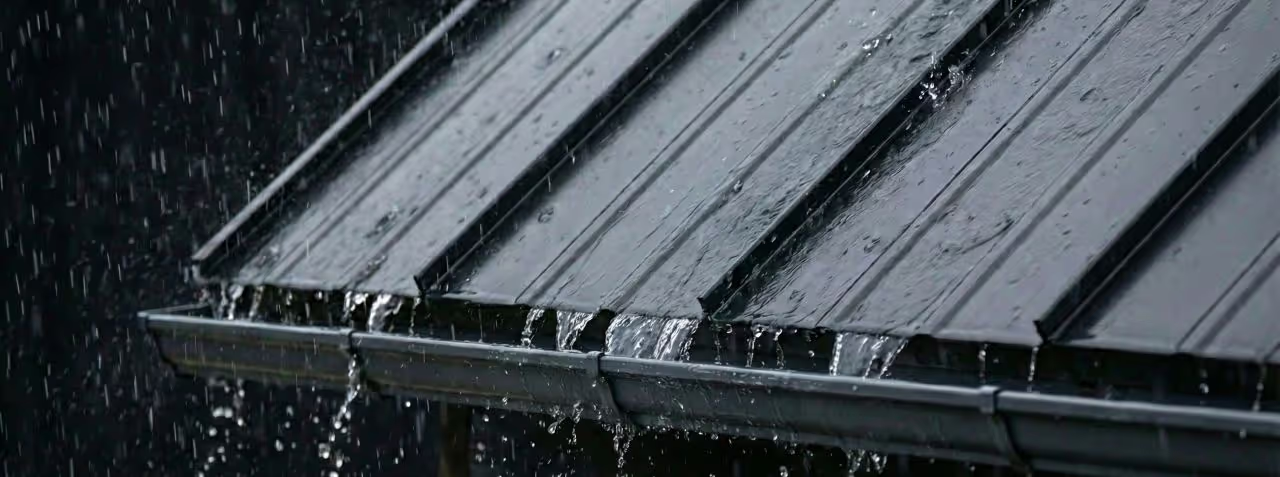
Rainwater overflowing and dripping from a metal roof gutter during heavy rainfall.
Abstract geometric design with a cream-colored triangle at the bottom left and a black triangle at the top right meeting diagonally.

Rainwater
Harvesting
System

Rainwater harvesting in Tennessee lets homeowners in Nashville, Brentwood, Franklin, Spring Hill, Nolensville, Murfreesboro, and the surrounding Middle Tennessee communities capture clean roof runoff and turn it into a free, reusable water source for lawns, gardens, landscaping, livestock, and properly treated indoor uses. If you already have a metal roof, you are sitting on one of the best rainwater collection surfaces available. A well-designed Tennessee rainwater harvesting system captures runoff from your metal roof, filters it, stores it in above-ground tanks or underground cisterns, and delivers it back to your property through hoses, drip irrigation, or pumps instead of letting it vanish down a ditch or storm drain.

We design and install complete rainwater harvesting systems across Tennessee that are optimized for metal roofs, local rainfall patterns, and your specific property layout. From simple rainwater collection systems that feed garden beds and lawns, to large cistern setups that support homesteads, horse farms, and rural estates, our goal is to give you reliable, low-maintenance rainwater storage that cuts water bills, reduces stormwater runoff, and makes your property more drought-resilient. If you are searching for “rainwater harvesting Tennessee,” “roof rain collection and metal roofs,” or “cistern installation in Tennessee,” this is the service that ties all of those together on your own roof.
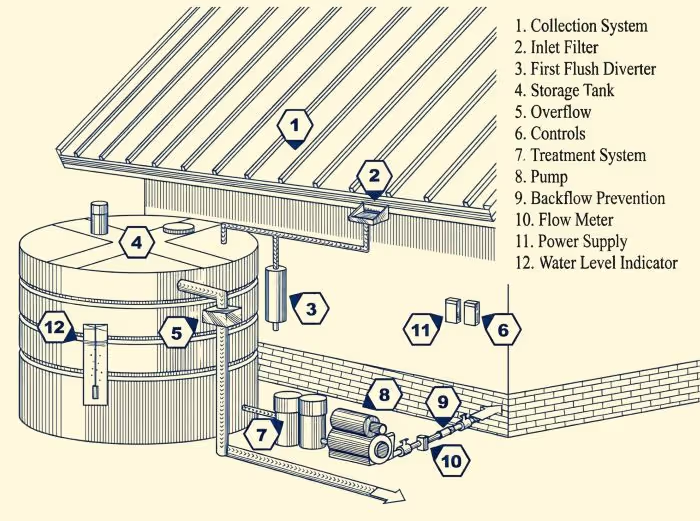
Diagram of a rainwater harvesting system showing roof collection, inlet filter, first flush diverter, storage tank, overflow, controls, treatment system, pump, backflow prevention, flow meter, power supply, and water level indicator.

"Metal roofs have much lower concentrations of dissolved organic carbon and other bacteria. That’s because metal roofs are often coated in anti-microbial paint systems, meaning they will shed larger organic matter more quickly and don’t have cracks and crevices that may allow harmful microorganisms to grow." - MRA

Why Rain Harvesting Works So Well in Tennessee

Tennessee gets enough rain in most years that it is almost wasteful not to capture at least part of it. One inch of rain on a 1,000 square foot roof can yield more than 620 gallons of water, and our climate delivers multiple inches per month across much of the state. Instead of letting that volume rush off your roof and into storm drains or low spots, rainwater harvesting holds it on site, where you can use it for gardens, orchards, lawns, animals, or even properly treated indoor uses.

Because much of Tennessee’s development sits near creeks, rivers, and low-lying areas, runoff is not just lost water, it is also a source of erosion and localized flooding. Capturing roof water in tanks and cisterns reduces the speed and volume of runoff, helping stabilize soils and easing the load on stormwater systems. At the same time, stored rainwater gives you resilience against the swings that come with summer drought, hosepipe bans, or shallow wells that struggle when several dry weeks stack up.

For homeowners paying municipal water rates, every gallon used for irrigation or washing that comes from a rain tank is a gallon you did not buy from the city. On rural properties, that same gallon may be the difference between over-pumping a well and stretching your groundwater more gently through the season.

Why Metal Roofs Are the Ideal Starting Point

If you already have or are planning a metal roof, you are halfway to a high-quality harvesting system. Metal roofing is widely considered one of the best catchment surfaces because it sheds water quickly and cleanly. Unlike older asphalt shingle roofs, which shed granules and can leach binders or surface chemicals as they age, a smooth metal panel or metal shingle sends water to the gutter with very little dissolved material or debris.

That cleaner runoff means filters last longer, tanks stay clearer, and treatment for higher-end uses is simpler. The seams and slopes of a well-installed metal roof also make collection more predictable. You know where the water is going, and you can size downspouts and conveyance piping accurately. During heavy Tennessee downpours, this matters. A metal roof moves intense bursts of rain into your storage or, when tanks are full, into safe overflow paths without backing up under the eaves or splashing across the fascia.

Pairing rain harvesting with a new metal roof is also a smart timing decision. The roof itself is designed to last decades; your harvesting system should be designed with the same long view. Gutters, downspout locations, and leaf protection can all be laid out once, correctly, instead of reworked later.

What a Tennessee Rain Harvesting Setup Looks Like

At a glance, a Tennessee system starts at the roof, passes through gutters and downspouts, and ends at a tank or cistern. In practice, there are several critical stages along that path. First, the gutters and downspouts must be sized and pitched to handle local storm intensity. Next, the initial runoff from each rain event, which carries dust, pollen, and any roof surface residue, is diverted away through what is called a first-flush system. Only after that first pulse is shed does cleaner water enter your storage.

Before water reaches the tank, it typically passes through screens or pre-filters that remove leaves, seed pods, and insects. Storage can be as modest as a few linked above-ground barrels beside a garden or as substantial as a buried multi-thousand-gallon cistern feeding irrigation zones and hose bibs around a property. Overflow from the tank is handled by a controlled outlet that ties into existing drainage or into a swale or infiltration area you are comfortable wetting during big storms.

If you want to push harvested water into drip irrigation, animal systems, pressure washers, or interior fixtures, the layout can include pumps, pressure tanks, and filtration. For most Tennessee homeowners, the first stage is simple: capture and store water for plants and exterior washing. The system can be designed from day one with the capacity to grow into more advanced uses later.

How We Design and Install Rain Harvesting Systems in Tennessee

The process starts with a visit to your property. We look at your roof shape, metal profile, total catchment area, and gutter condition. We walk the ground to see how water currently travels across your lot, where it rushes, where it pools, and where it would make sense to place storage for easy access and safe overflow. We ask what you want the water to do: keep a raised-bed garden alive, handle most of your landscape irrigation, support horses or a small herd, or eventually feed laundry and toilets.

From there, we size storage based on realistic rainfall and your roof area, not wishful thinking. A small suburban lot with a compact roof may suit a one to three thousand gallon tank. A larger rural home with multiple rooflines may support much more. We then design the catchment route, from redesigned or upgraded gutters through downspouts, first-flush diverters, pre-filters, and piping into your tank. If you are also replacing your roof, we coordinate panel layout and gutter attachment with the harvesting design so the entire system works as one piece.

Installation is staged to keep disruption low. We set pads or prepare excavation where tanks will go, make necessary gutter and downspout changes, tie in diverters and filters, and connect the tank and overflow. If you want pumps or filtration, we mount and plumb those, test pressure and flow, and show you how to operate each component. When everything is in place, we walk you through maintenance: how often to check filters, when to flush lines, what to listen for in pumps, and how to winterize or protect exposed parts when freeze events threaten.
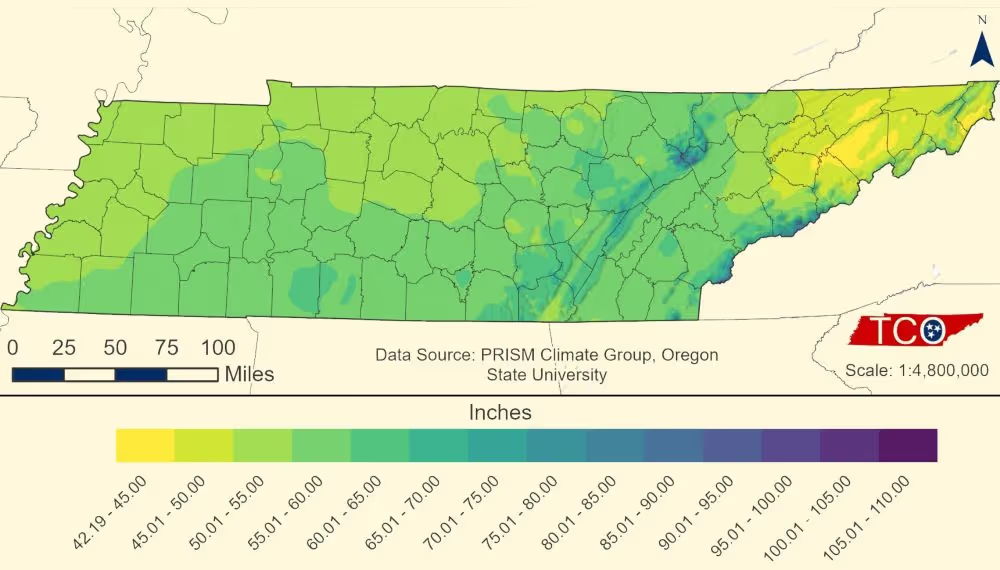
Map of Tennessee showing precipitation levels in inches with color gradient from yellow (42.19) to dark purple (110), with county boundaries and a scale in miles.
✔ There is plenty of rain to capture across Middle Tennessee, with many areas receiving 50 to 75 inches of rainfall each year, and because a single inch of rain on a 1,000-square-foot roof produces more than 620 gallons of usable water, even a routine storm can fill tanks quickly when gutters and downspouts are set up for harvesting.

✔ Summer storms that once meant flooded gutters, washed-out mulch, and runoff cutting tracks through the yard instead become a reliable water source, because with a rainwater harvesting system on a metal roof, those heavy downpours are what top off your cistern and keep your landscape alive through hot, dry stretches.

✔ Rainwater flowing off a clean metal roof is naturally soft, free of chlorine, and gentle on soil, which makes it ideal for vegetable gardens, decorative beds, trees, shrubs, and pasture. Plants respond better, soils stay healthier, and you avoid the salt and chemical buildup that often comes with municipal water.

✔ Capturing water at the roof reduces the amount of stormwater rushing toward driveways, foundations, slopes, and drainage ditches. By slowing and storing that runoff, you help protect your property from erosion, saturated low spots, foundation stress, and the repeated washouts that come with Middle Tennessee’s intense rain events.

✓ The Metal Roofers are Nashville’s trusted experts for metal roofing and rainwater harvesting systems, backed by a BBB A+ rating, a near-perfect 5-star Google review score, and decades of experience designing roof-and-gutter combinations that maximize clean water capture for homes, farms, and estates across Middle Tennessee.