Metal Roofing Alliance Member
TVA Preferred Partners Network
10,000+ Metal Roof Jobs
Nashville, TN
Licensed & Insured
BBB A+

Open 8am–8pm
(615) 649-5002Schedule Your
Appointment
Appointment

The Metal Roofers installs metal shingle roofing across Nashville and Middle Tennessee, backed by more than 1,000 metal roof replacements and 10,000 metal roof repairs since 2003. Metal shingles give homeowners the long service life of metal roofing without forcing the house into the modern standing seam look. Instead of tall vertical seams, metal shingles are stamped, formed, interlocked, and finished to resemble roofing styles homeowners already know: slate, cedar shake, clay tile, Victorian metal shingles, dimensional asphalt shingles, and stone-coated steel. Everything here draws on our own records.
Metal shingles are stamped steel or aluminum roofing panels that interlock to mimic slate, cedar shake, tile, or architectural asphalt. Installed: $9–$15 per square foot in Middle Tennessee, as of June 2026; a typical 2,000 sq ft Nashville home runs $18,000–$28,000. Class 4 UL 2218 impact rated, 50+ year service life, 90%+ HOA approval rate. Also called stamped metal shingles, metal slate, metal shake, steel shingles, aluminum shingles, stone-coated steel, or interlocking metal shingles.
✦ Reviewed by The Metal Roofers Technical Team

The simplest way to understand them is this: standing seam changes the style of the roof; metal shingles preserve the style of the house. A slate-profile metal shingle can look natural on a brick colonial. A shake-profile panel can fit a craftsman or farmhouse. An architectural metal shingle can replace asphalt without changing the neighborhood look. A Victorian shingle can bring back historic pattern on a gable, turret, or steep accent roof.
Metal shingles make sense in Nashville because our housing stock is traditional, mixed, and neighborhood-sensitive. Many homes here would look wrong with standing seam across the whole roof. Green Hills colonials, East Nashville bungalows, Belle Meade estates, Inglewood cottages, Donelson ranches, and Williamson County HOA homes often need a roof that improves performance without shouting “modern metal roof” from the street.
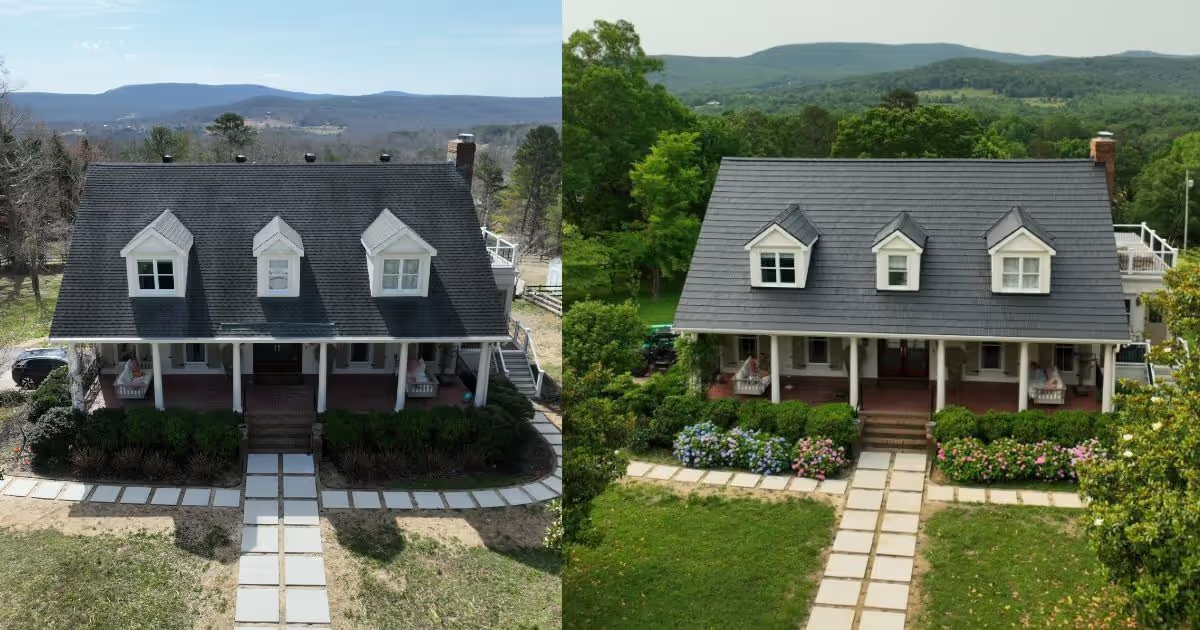
Most homeowners do not choose metal shingles because they want a novelty roof. They choose them because they are tired of the asphalt replacement cycle. A Nashville asphalt roof can be affected by heat, hail, poor attic ventilation, algae growth, granule loss, and storm damage. Metal shingles cost more up front, but the point is to buy one long roof cycle instead of repeating shorter cycles.


.avif)
Slate-profile metal shingles are designed to imitate quarried slate in a lightweight metal panel. The best versions use stamped relief, staggered course lines, and layered color in charcoal, pewter, graphite, blue-gray, dark bronze, or weathered green. The profile looks strongest on homes where a roof should feel permanent, traditional, and restrained.
This is the number that changes everything for Nashville homes:
Weight is the number that changes the conversation. A roof “square” is 100 square feet. Many metal shingle systems fall near the 100–160 lb/sq range, while architectural asphalt is often several hundred pounds per square, cedar shake is heavier still, and natural slate can be extremely heavy by comparison.
.avif)
A shake-profile metal shingle uses rough grain texture, irregular exposure, and variegated color to imitate cedar. Good systems avoid the mistake of making every panel look identical. The roof should have subtle variation so it feels like natural material from the street.
Shake-profile metal shingles are strongest when the house wants texture and warmth: craftsman homes, farmhouses, lake houses, stone-and-siding exteriors, cabins, and rural custom homes. If the home is formal brick or colonial, slate-profile metal usually looks more natural.
.avif)
Barrel tile-profile metal panels are formed to create rounded or half-round tile shapes with overlapping reveals. Colors usually include terracotta, burnt sienna, sand, aged copper, deep red, and weathered clay blends. The best versions avoid flat orange and use mottled variation so the roof looks aged rather than plastic.
This is not the largest metal shingle category in Nashville, but it has a clear place. It belongs on Mediterranean-inspired custom homes, church buildings, pool houses, commercial entrances, and existing clay-tile roofs where the owner wants the look without the weight and breakage.
It is also a strong option for replacing old clay or concrete tile when the structure, budget, or hail exposure makes another tile roof impractical. The homeowner gets the visual rhythm of barrel tile with easier handling and less breakage risk.
.avif)
Factory-formed metal shingles with a decorative embossed pattern, designed for roofs, walls, fascia, and architectural accent areas. Berridge’s Victorian Shingle, for example, is formed from 24-gauge steel, uses concealed fasteners, installs over solid sheathing, and provides 9-inch wide by 12-inch tall coverage. The system is made in factory-formed prefinished tiles, with roughly 133 shingles per square, creating a tight, repetitive, historically detailed pattern without exposed face screws.
This is not Nashville’s largest metal shingle market, but it may be one of the most architecturally important. Victorian metal shingles belong on homes and buildings where the roof is part of the design language, not just a covering. They make sense on historic restorations, steep decorative gables, church roofs, porch roofs, turret details, mansard sections, commercial façades, and custom homes that need pattern instead of plainness.
For Nashville, the best use cases are selective and intentional. A full Victorian-profile roof can be striking on the right historic property, but these shingles are also excellent as accent material: a front gable above a porch, a bay roof, a turret, a chapel entry, a dormer face, a mansard band, or a small historic commercial façade where standing seam would look too modern and asphalt would look too flat.
.avif)
Architectural metal shingles are stamped or formed to imitate dimensional asphalt shingles. Some use painted and embossed surfaces. Others use stone-coated steel with a granular texture that feels closer to asphalt. The goal is not to make the roof dramatic; it is to make the upgrade nearly invisible.
This is the profile that can move the largest number of homeowners from asphalt to metal. It looks like what the neighborhood already has, which lowers resistance from HOAs, spouses, neighbors, and buyers. It works especially well where the homeowner does not want the roof to become the focal point of the house.
The upgrade conversation is simple: your current asphalt roof looked right on the house, but it did not last long enough. This profile keeps the look and improves the roof cycle.
Stone-coated steel starts with a coated steel panel, often Galvalume or similar aluminum-zinc coated steel. The panel is stamped into a shingle, shake, tile, or barrel profile. A basecoat bonds ceramic-coated stone granules to the surface, and a protective overglaze or topcoat helps hold the granules in place.
The result is a metal roof that does not look shiny or slick. It looks more familiar to homeowners used to asphalt shingles because the surface is granular.
Stone-coated steel is often the right choice when the homeowner wants metal performance but a familiar asphalt-like or textured appearance. It is easier to explain in HOA settings, often quieter under rain impact, and can provide a more comfortable walking surface for service work.
It is not automatically better than smooth PVDF stamped steel. It is different. Smooth PVDF is usually stronger for color clarity, algae resistance, and a more architectural painted-metal finish. Stone-coated steel is stronger for familiar texture, traction, and asphalt-to-metal transitions.
Protects underside from condensation & attic-side corrosion
Seals ink layers — provides dirt-shedding, weather-resistant surface
Create variegated color patterns mimicking natural materials — the subtle hue shifts that make mimicry convincing
The workhorse layer. Determines color, UV resistance & chalking performance for life. Fluorine-carbon bond — one of the strongest in organic chemistry
Foundational bond layer — additional corrosion resistance
Chromate or non-chromate — promotes adhesion between zinc & primer
0.90 oz zinc per sq ft each side — galvanic corrosion protection on base steel substrate
A 40-year guarantee means the manufacturer warrants the finish to maintain a chalk rating of 8+ (scale 1–10) and color change of ≤5 Delta-E units — barely perceptible to the human eye. Lower-tier polyester finishes begin visibly fading within 5–10 years in Nashville's sun. PVDF shows minimal change over 30+.

The interlock connects adjacent shingles into a grid. Concealed fasteners attach the shingles to the roof, while the neighboring edges help restrain each piece. This is a different construction from asphalt shingles attached with nails and sealant strips.
Wind performance depends on the tested roof assembly, fastening pattern, roof geometry and site conditions. UL 580 Class 90 is an uplift-test classification, not a universal miles-per-hour rating. Confirm the selected product's test report and installation requirements before comparing wind claims.

We document existing conditions, plan access, choose staging areas, place dumpsters carefully, protect landscaping and driveways, and monitor weather. We do not open more roof than can be dried in safely. Metal shingle projects often involve more detailed trim than asphalt, so the job needs layout planning before panels arrive.
Our standard is full tear-off on primary homes. Tear-off exposes the roof deck, old leak paths, rotten sheathing, abandoned flashing, nail pops, soft decking, and ventilation problems.
Roof-over may be allowed by some manufacturers in some situations, but we do not like burying unknown problems under an interlocking metal system. A 50-year roof needs a deck worth covering.
Every roof plane is checked for soft spots, delamination, sagging, moisture staining, and loose sheathing. Damaged decking is cut back properly and replaced flush with surrounding material.
Metal shingles can hide less than asphalt in some conditions because the courses, valleys, and trim are more exact. Deck correction is part of making the finished roof look right and perform correctly.
Synthetic underlayment is installed across the deck. Self-adhered membrane is used where the roof design calls for it: eaves, valleys, skylights, chimneys, wall transitions, dead valleys, and low-slope details.
Underlayment is the backup water-control plane. The metal should shed water first, but the underlayment protects the deck if wind-driven rain or a flashing detail ever tests the roof.
=

New metal drip edge on all eaves and rakes. Step flashing and counterflashing at walls, chimneys, and dormers. Long-life pipe boots. Ventilation evaluation and upgrade — convert to balanced ridge-and-soffit system where possible.


Snap layout lines and square. Install starter strips. Course by course, interlocking all four sides with concealed fasteners through nailing flanges. Careful pattern layout around valleys, hips, dormers, protrusions. Color-matched hip and ridge components.
Crew lead walks every slope verifying full interlock, straight rows, concealed fasteners. Double-check critical areas. Clear metal cuttings from panels, valleys, gutters. Multiple magnetic sweeper passes on ground. Walk-around with homeowner to review work and answer questions.
Even when manufacturers allow roof-over installation, our standard is full tear-off to the deck. We want to see the decking, fix soft spots, re-fasten loose boards, and correct ventilation issues while the roof is open. Burying old layers under an interlocking metal system hides problems that will be expensive to discover later.
.avif)
Homeowner Guide
The Full Shingle-to-Metal Conversion GuideThinking beyond asphalt? See the full tear-off and conversion process, step by step.
Roof complexity is the primary cost driver. Multiple hips, valleys, dormers, skylights, wall transitions, and chimney penetrations require more time, more trim, more custom fabrication, and more skill. A cut-up roof on an East Nashville Victorian or a Green Hills colonial can take three to four times longer to detail than a straightforward gable of the same square footage. That labor and trim is what pushes toward the upper end.
Simple roof geometry (gable or hip with minimal penetrations), good condition decking, easy site access, and straightforward logistics. Homes with clean rooflines that are accessible from the driveway will price at the lower end regardless of which premium product is specified.
Older HOAs (Davidson, Williamson, Sumner, Rutherford counties) typically care about appearance and color, not the core material. Their covenants say things like "roofing must be compatible with existing neighborhood aesthetic." A slate-profile in charcoal on a brick colonial meets these standards effortlessly.
Newer HOAs (particularly in Nolensville, Mt. Juliet, Spring Hill, Thompson's Station) increasingly include explicit language allowing "slate-look, shake-look, or architectural shingle-look metal roofing" alongside traditional materials.
Over 90% with proper submission. The architectural shingle profile is the easiest approval — it looks like what the neighborhood already has. The slate profile is the easiest sell to older, more conservative boards — it actually looks more premium than the asphalt it replaces.
Metal shingles installed over solid decking with proper ridge-and-soffit ventilation create an effective thermal management system. The reflective surface rejects solar heat at the first barrier. The ventilated attic provides a convective buffer. This is why we evaluate and upgrade ventilation as part of every installation — the roof surface and attic airflow work together as a system.
Acts of God (tornadoes, extraordinary hail) · Damage from foot traffic or equipment · Post-installation modifications · Failure to maintain proper ventilation · Improper installation by non-certified installer. "Lifetime" means life of the original owner's ownership — not forever.
Most premium metal shingle warranties are transferable to one subsequent owner. When you sell a Nashville home with a 5-year-old metal shingle roof, the buyer receives 45+ years of remaining coverage. This eliminates the "when will I need a new roof?" question that costs sellers leverage, and real estate agents routinely highlight transferable metal roof warranties in listing materials.
Separate from the manufacturer's product warranty, The Metal Roofers provides a written lifetime workmanship warranty covering installation quality — proper interlock, correct fastening, waterproof flashing details, and code-compliant installation. If an installation defect causes a problem, our warranty covers the repair regardless of product warranty status.
We work directly with manufacturers. We pull factory data, coating specifications, ventilation guidance, and technical support instead of guessing. When we spec a metal shingle for your Nashville home, we choose from products we have installed on hundreds of Tennessee homes — products whose trim systems and flashing details we have mastered through repetition, and products whose warranties we can stand behind because we know exactly what the manufacturer requires for full coverage.
Metal shingle installation on a cut-up Nashville roofline — with dormers, valleys, chimneys, sidewall transitions, and complex hip intersections — is a craft that requires repetition to master. Our crews have built this skill over more than a thousand metal roof installations in the Nashville market.
Not every home is a candidate for metal shingles. If your home has 8 years left on a solid asphalt roof and you plan to sell in 3 years, we will tell you now is not the time. If your roof structure has issues that need addressing before metal goes on, we will tell you about those costs upfront — not mid-project. The goal is the right roof for the right home at the right time.

The premium systems we install have expected lifespans of 50+ years with product warranties that reflect that range. Architectural asphalt in Nashville is a 15–25-year product when installed correctly; many need attention earlier due to heat, poor ventilation, or hail damage. You are trading one more asphalt cycle for one long metal cycle that carries you through several decades. The asphalt side: asphalt shingle roofs.
From the street (30–50 feet), a premium stamped steel metal shingle is effectively indistinguishable from the natural material. Three-dimensional embossing, variegated PVDF color inks, and engineered shadow lines create a convincing replica. From the driveway at 15–20 feet, the texture and color hold up. On the roof at arm's length, you can tell it's metal. Most homeowners and their neighbors are genuinely surprised at how realistic it is. See real installs: our gallery.
Over 90% of Nashville-area HOAs approve metal shingles when the right materials are submitted. We prepare the full submission package: product data, photos of comparable homes, physical samples, and specification written in HOA-friendly language. Most bans were written for barn-style corrugated panels, not slate-profile systems in muted color palettes. The approval playbook: HOA and historic district approval.
$9–$15 per square foot installed. On a typical 2,000 sq ft home with moderate complexity: $18,000–$28,000. Biggest drivers are roof geometry (hips, dormers, valleys), deck condition, and number of penetrations and wall transitions. The shape and condition of the roof matters more than the product. Full breakdown: metal shingles cost in Nashville.
On a finished home with solid decking, underlayment, insulation, and drywall below: no. The "loud tin" sound comes from open framing with nothing under the metal, like agricultural buildings. Our homeowners consistently report that after the first big storm, it sounds normal inside the house. The numbers: our dBA guide.
Our standard is full tear-off, even when manufacturers allow roof-over. We want to see the deck, fix soft spots, re-fasten loose boards, and correct ventilation while the roof is open. Burying old layers hides problems that will be expensive to discover later. Why we tear off: metal roofing over shingles in Tennessee.
Many Tennessee carriers offer 5–28% premium reductions for Class 4 UL 2218 roofing. On a $3,000 annual premium, a 15% discount saves $450 a year, or $22,500 over the roof's life. We provide manufacturer certification and installation certificates. Call your agent before the project to confirm your carrier's specific discount. Read first: our guide to Tennessee insurance discounts.
Stamped steel has a smooth, PVDF-painted surface with embossed texture and variegated inks. Stone-coated steel is covered with ceramic stone granules that give it a rough, granular texture similar to asphalt. Both achieve Class 4 impact ratings. Stone-coated is typically less expensive and quieter; PVDF-finished is better at resisting algae and retaining color long-term. Color and finish: choosing metal roof colors in Nashville.
3–7 days depending on size, complexity, and weather. Simple gable roofs on moderate homes: 3–4 days. Complex roofs with multiple dormers, valleys, and penetrations: 5–7 days. We work slope by slope and never open more roof than we can dry in by end of day. Payment options: financing your roof.
Yes. Premium systems carry lifetime limited warranties transferable to one subsequent owner. The buyer inherits decades of remaining coverage, eliminating the "when will I need a new roof?" question. Real estate agents regularly highlight transferable metal roof warranties in listing materials. Full terms: our lifetime workmanship warranty.
Keep gutters clear, trim overhanging branches, inspect annually for debris. That is the full program. No sealing, no re-nailing, no granule loss to monitor, no moss treatment, and no periodic replacement of individual shingles. Maintenance burden drops to near zero. The routine in full: how to maintain a metal roof.
We serve all of Metro Nashville and the surrounding Middle Tennessee region: Brentwood, Franklin, Nolensville, Spring Hill, Thompson's Station, Murfreesboro, Mt. Juliet, Lebanon, Hendersonville, Gallatin, Clarksville, and surrounding counties. If you are in the greater Nashville area, we can get to you. Every town we cover: areas we service.
Call The Metal Roofers at (615) 649-5002 and we will bring product samples, color options, and photos of Nashville homes with metal shingles already installed. That way you can see exactly what the finished roof looks like on a house similar to yours, in a neighborhood you know.