Metal Roofing Alliance Member
TVA Preferred Partners Network
10,000+ Metal Roof Jobs
Nashville, TN
Licensed & Insured
BBB A+

Open 8am–8pm
(615) 649-5002Schedule Your
Appointment
Appointment

The Metal Roofers replaces asphalt, tile, wood, and worn-out metal roofs across Nashville with standing seam, metal shingle, or classic panel systems, and 2026 replacement quotes ran $15,000 to $69,600 installed. The right system depends on your home, your neighborhood, and the way Middle Tennessee weather actually behaves. We approach replacement the way it should be approached: not as a color decision first, but as a roof-system decision shaped by pitch, drainage, flashing, attic ventilation, durability goals, and how long you plan to own the house. Everything here draws on our own records: more than 10,000 metal roof repairs and 1,000+ metal roof replacements across Middle Tennessee since 2003.
A metal roof replacement in Nashville is different from a generic reroof in a milder climate. Nashville averages about 50.5 inches of rain a year, runs roughly 79 days with measurable precipitation and about 49 days at 90 degrees or hotter, and regularly deals with damaging winds, large hail, heavy rain, and occasional tornado risk. If your current roof is leaking in more than one place, showing storm wear, failing around flashings, or simply reaching the point where another asphalt reroof feels like restarting the same cycle, this page is built to help you make the decision with clarity. Schedule a free assessment: call (615) 649-5002.
Recent Projects Start At
Avg. Standing Seam Premium
Metal Roofs Installed
Week Panel Lead Time
✦ Reviewed by The Metal Roofers Technical Team
Repair still makes sense when the problem is localized and the existing roof is fundamentally sound: a single flashing, a few fasteners, one storm-damaged slope. We will tell you when a repair is the right call. But once a roof is old enough that leaks, flashing failures, storm deterioration, granule loss, and failing penetrations start stacking up, repair becomes a way of paying to postpone the inevitable.
At that point the real choice is not between two materials. It is between two ownership models. One assumes you will reroof again in fifteen to twenty years, and again after that. The other tries to end the cycle. A homeowner weighing another asphalt roof against a long-life metal system is really deciding whether to keep repeating the same decision or make it once.

The Metal Roofing Alliance puts a quality metal roof at 30 to 50+ years, commonly two to three times a typical asphalt roof. Locally we see asphalt last 15 to 25 years and metal 40 to 70+. A metal roof is chosen because it is built to outlast multiple asphalt cycles.
Properly installed metal resists high winds, heavy rain, and long exposure with far less deterioration than asphalt. Standing seam keeps fasteners off the weather surface; metal shingles add impact resistance. Where storm briefings routinely warn of damaging winds and large hail, that difference is not theoretical.
Metal is one of the lowest-maintenance steep-slope roofs available. Standing seam is close to maintenance-light because its fasteners are concealed. Exposed-fastener panels need periodic fastener checks, but even those ask far less than an aging asphalt roof shedding granules and losing its seal strips.
Cool-roof finishes combine high solar reflectance with high thermal emittance to lower roof-surface temperature and heat transfer into the house. Paired with balanced attic ventilation, a reflective PVDF metal roof can cut heat gain compared with an older, dark, absorption-heavy roof. Not magic, but a real reduction.
The deepest reason is ownership. Replacing with metal is a decision to stop reroofing every fifteen to twenty years. Over the life of the house, one metal roof can replace two or three asphalt roofs, which is why owners who plan to stay treat it as an investment, not a repair.
Not every metal roof is the same thing. Standing seam hides its fasteners and is close to maintenance-free. Classic exposed-fastener panels use gasketed screws that age and need periodic inspection and selective replacement as the washers harden. That does not make exposed-fastener metal a bad roof. It makes it the right roof for the right building, with honest expectations. We tell you which system fits your home before you sign anything.
Homeowner Guide
Converting from shingles? Read the Shingle-to-Metal GuideTear-off, decking, underlayment, and what a shingle-to-metal conversion really costs.
Copper and zinc are premium architectural systems with 80 to 100+ year lifespans. They cost more than steel and suit specific homes, which we cover further down. For most replacements, the three systems above are the practical starting point.
Per-square-foot numbers are a starting point, not a quote. Roof pitch, dormers, valleys, tear-off, deck repair, and ventilation all move the final price. A written estimate is the only number that means anything.
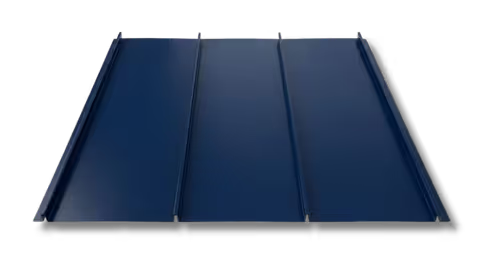
The concealed-fastener benchmark: raised seams lock the panels together and keep every fastener off the weather surface. The cleanest long-term roof and the most solar-friendly, since mounting clamps attach to the seams without new roof penetrations. The first system to study for most primary residences.
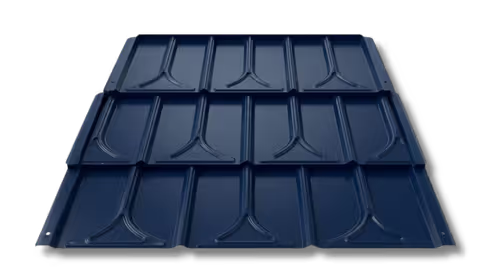
Stamped and stone-coated metal that mimics slate, shake, tile, or architectural shingle. Metal durability without forcing a contemporary vertical-seam look, which makes it the easy fit for traditional and HOA-regulated streets that want a familiar roof texture.
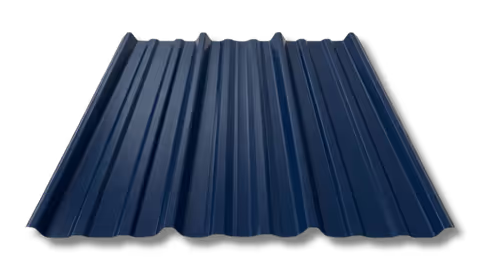
The screw-down ribbed panel many Tennesseans know from farmhouses, porches, and barns. The lowest-cost way into metal, with one honest tradeoff: the exposed fasteners need periodic inspection and eventual selective replacement as the washers age. The right roof for the right building, with the right expectations.
%20(4).avif)
When the roof is meant to become a permanent design feature, not just a durable cover. Copper is a 100+ year material that develops a living patina; zinc sits between premium steel and copper with an 80 to 100+ year life. On the right home these stop being roof products and become part of the architecture.
Many homes are not a single-system roof. A steep main roof might take standing seam while a low-slope porch or addition needs a sealed or coated assembly. Part of a good replacement plan is matching each section to the right system instead of forcing one product across the whole house.
Tear-off is where a replacement earns its long life. With the old roof gone, the crew can inspect the deck, repair soft or damaged sheathing, re-fasten loose sections, reset underlayment and ventilation, and build the new roof on a known surface. Standing seam especially shows substrate problems, so soft plywood, old nail pops, and uneven decking get corrected before the metal goes on, not discovered after.
On primary residences we treat full tear-off as the default, not an upsell. Overlay can look like a way to save money, but in Nashville it usually works against the very reasons people choose metal: clean appearance, predictable performance, and decades of service. We will tell you the rare case where an exception genuinely makes sense.
A roof is only as good as the layers under it. The panels get the attention, but the deck, underlayment, ventilation, and flashing are what make a metal roof last 40 to 70 years. Skipping any of them to shave the price is exactly how a roof fails early, which is why we rebuild the whole assembly on every replacement.
Want the cleanest modern look, future solar, and the lowest-touch roof? Standing seam. Want metal that disappears into a traditional street or sails through HOA review? Metal shingles. When budget is the deciding factor, metal shingles usually land a step below standing seam. We will walk your roof and tell you which one actually fits.
A metal roof can outlive its paint, so the finish is worth getting right the first time. We specify Kynar 500 PVDF on standing seam because it holds color for decades and carries the longest finish warranty, which matters far more than the up-front paint cost.
It starts with a same-business-day call, then an on-site visit where a project lead measures the roof, inspects decking and ventilation, checks penetrations and slope, photographs conditions, and reviews system options with you on the spot.
You get a written estimate with line-item detail: materials, labor, tear-off, underlayment, ventilation, flashing, and warranty, so you can compare systems without guessing. We pull Metro permits and handle HOA or historic review where it applies.
On install week the old roof comes off to the deck. The crew inspects the sheathing, repairs soft or damaged sections, re-fastens loose decking, and corrects irregularities that would otherwise telegraph through the finished metal.
High-temperature self-adhered underlayment goes down in vulnerable areas with a strong field-underlayment strategy across the roof. Intake and exhaust ventilation is balanced and attic issues corrected, since the roof is only as durable as the assembly beneath it.
Panels and trim are installed with the system's fastening method, then the details that actually keep water out: valleys, sidewall and endwall flashing, ridge, pipe boots, and transitions. Long-life roofs are won here, not in the brochure.
Daily cleanup throughout, then a final walkthrough, photo documentation, permit close-out, and delivery of the lifetime workmanship warranty. A simple ranch often runs 2 to 4 install days, a larger two-story 4 to 6, and complex roofs 5 to 7.
A standing seam roof is engineered around this movement. The panels are anchored at one point and allowed to float everywhere else, which is why a properly built metal roof stays flat and silent while a screwed-down panel pops and loosens in the heat.
Snow retention is its own topic. See our snow guards page for systems, costs, and where they belong on a Tennessee roof.
Laying new metal over an old roof leaves rotted decking and worn flashing buried where no one can see them. It looks cheaper on day one and costs far more when a hidden leak finally shows up. Tear-off is the only way to start a 50-year roof on a sound base.
A painted steel panel is really four layers working together. A structural steel core gives it strength. A metallic coating of zinc and aluminum (Galvalume) wraps that steel and stops rust even at cut edges. A primer bonds the finish to the metal. A baked-on fluoropolymer topcoat carries the color and takes the sun. Defeat one layer and the others still protect the steel.
The structural metal, 24 or 26 gauge, that gives the panel its strength and wind resistance. Stepping up from 26-gauge to 24-gauge steel adds roughly 5% to 14% to the project, about 9% on average. Everything above it exists to keep it dry.
A zinc-aluminum (Galvalume) layer bonded to the steel. It sacrifices itself to protect the steel and keeps rust from creeping even at cut edges and scratches.
A bonding layer between the metallic coating and the color coat. It locks the finish down so it does not peel or blister over decades of heat cycling.
The baked-on fluoropolymer color coat. It resists fading, chalking, and UV for decades and carries the longest finish warranty in the industry. This is the armor you see.
When a Galvalume-coated panel is cut or scratched, the zinc and aluminum in the coating protect the exposed steel galvanically, so rust does not creep out from the cut the way it would on bare steel. That sacrificial edge protection is a big part of why a properly coated steel roof lasts decades, not years.
In a mild, mostly rural climate like Middle Tennessee, a quality standing seam steel roof is expected to last 50 years or more, against 15 to 25 for asphalt. The finish warranty often runs 30 to 40 years on its own. That is why we talk about replacing your roof once, not every other decade.
The greenest roof is the one you only buy once. A metal roof costs more up front, but over 50 years it replaces two or three asphalt roofs and the landfill waste that comes with them, and it can still be recycled when its decades of service are finally over.
A metal roof's long life is not the panel alone, it is the fastening, headlap, and seam detailing that hold it down and keep water out through wind and storm. That detailing is exactly what separates a roof that lasts 50 years from one that leaks in five.
Clear leaves from valleys and gutters once or twice a year
Leave foot traffic to pros who know where to step
A quick visual check after a big storm is all it usually takes
Galvanic corrosion is not limited to direct contact. Copper runoff, rainwater that has passed over copper surfaces, carries dissolved copper ions that will stain and corrode aluminum, galvanized steel, and zinc surfaces downstream. This means copper gutters dripping onto an aluminum downspout, copper roof runoff hitting galvanized valley flashing, or copper chimney cap water flowing across steel roofing panels can all cause damage. Every material downstream of copper must be copper-compatible: copper, stainless steel, or properly coated to resist copper ion attack.
Many Nashville homes have a primary steel standing seam or shingle roof with copper accent elements: bay window caps, dormer cheeks, chimney flashings. This is a beautiful and cost-effective way to introduce copper. But the transition details must be designed to prevent copper runoff from contacting the steel. We use diverter flashings, separation barriers, and compatible transition materials to ensure the copper and steel coexist without galvanic problems. This is detail work that requires understanding of both metals, and it is one of the things we do best.
Most premature metal-roof failures we're called to fix trace back to mismatched metals: the wrong screws, copper draining onto steel, or old flashing left in place. Getting the metallurgy right is invisible when it's done, and impossible to hide when it's not.
Drainage is part of the roof, not an afterthought. We look at the gutters, downspouts, and where the water ends up as part of every replacement, because a great roof over a bad gutter still soaks the foundation.
This is not hypothetical. A metal roof installed today should still be protecting the house in 2070, while the asphalt roofs next door get torn off and replaced two or three more times. The up-front number is higher. The cost per year of service is among the lowest of any roof you can buy.
Chimney and wall flashings, valleys, step and counter flashing, pipe penetrations, ridges and hips. We custom-bend these on site to match each panel and color, because a roof that leaks almost always leaks here first, not in the middle of a panel.
Asphalt is the right call when you are selling within a few years, or working with a tight short-term budget and no plan to stay. For anyone keeping the house, metal is almost always the better long-run decision: a higher number once instead of a lower number three or four times, and a roof that looks and performs better the whole time it is up there.
Most of our replacements pull off one or two layers of asphalt. We tear down to the deck, inspect every sheet for soft spots and old leaks, replace what is bad, and dry the roof in before any metal goes on. A straightforward asphalt-to-metal swap is the cleanest project we do.
Older exposed-fastener panels often leak at the screws long before the metal fails. We assess whether the old roof can be a substrate or needs to come off, then move you to a modern standing seam system with concealed clips and no exposed fasteners to back out over time.
Old wood roofs are often a fire concern and frequently hide rotted decking underneath. We strip the shakes, rebuild the deck where needed, and replace with non-combustible metal, which usually helps with insurance and gives the house a roof that will not rot or burn.
Tile and slate are heavy and the tear-off is labor intensive. Replacing with metal sheds a lot of dead load off the structure, and metal shingles can keep a similar architectural look. These projects need careful planning, which we walk through before any work starts.
If a storm damaged your existing roof, a replacement may be partly or fully covered. We document the damage, meet your adjuster on site, and speak the claims language so the scope is fair. We never inflate a claim, we just make sure nothing legitimate gets missed.
A metal roof costs more up front, and financing lets you spread that over manageable monthly payments instead of one lump sum. Financing is available at 10.99% APR over 10 years; one recent replacement financed at $247.95 per month. We can walk you through the plans available so the better long-term roof is also the one you can pay for comfortably.
The metal can be perfect and still leak if it is installed wrong, so we stand behind our installation with a lifetime workmanship warranty. The flashings, the fastening, the detailing: if it is our work, we own it.
The panels and their PVDF finish carry manufacturer warranties of their own, often 30 to 40 years on the paint against fade and chalk. Between the material warranty and our workmanship warranty, the whole roof is covered, not just half of it.
Every replacement starts with a free assessment. We measure, inspect the decking and existing roof, talk through systems and budget, and give you a written quote for your specific roof. No obligation and no hard sell.
Our quotes cover tear-off, disposal, decking repair allowance, underlayment, the metal system, flashings, and cleanup. You see the whole scope in writing so there are no surprise add-ons partway through the job. Payment follows the work: 50% deposit, 45% when your Berridge panels arrive (typically 3 to 5 weeks from order), and the final 5% at completion, so the last payment waits until the work is done right.
Between a storm claim where one applies, financing to spread the rest, and warranties that cover both the metal and the workmanship, a metal roof is more reachable than the sticker price suggests. We lay all of it out at the assessment so you can decide with the full picture in front of you.
For the architectural homes of Belle Meade, Forest Hills, and historic Franklin, a complex roofline is where workmanship shows. We measure, cut, and flash each plane for the roof in front of us, not off a shelf.
We handle gutters as part of the roof, not a separate trade brought in later. Sizing the rainware to the new metal roof is what keeps water off the fascia, out of the basement, and away from the foundation.
Do not pressure wash the panels or scrub them with anything abrasive, and do not let anyone seal or recoat a factory PVDF finish that does not need it. The coating is engineered to weather on its own. If something ever does need attention, call us rather than improvising. A quick service visit costs far less than undoing a well-meant mistake.

A quality metal roof lasts 40 to 70 years or more, against 15 to 25 for asphalt. In Nashville's moderate climate a standing seam steel roof routinely reaches the upper end of that range, which is why most homeowners who switch to metal never buy another roof. Our coverage on the workmanship side: lifetime workmanship warranty.
Sometimes, but we almost always recommend a full tear-off. Going over old shingles hides any rotten decking, traps heat and moisture, and adds weight. Tearing off lets us inspect and repair the deck so the new roof starts on a sound, dry surface. We tell you honestly which approach your roof needs. Completed replacements: our gallery.
Most residential metal roof replacements take a few days to about a week, depending on the size of the roof, its complexity, and the weather. Tear-off and any decking repair come first, then dry-in, then the metal. We give you a realistic schedule at the quote and keep you updated as the work goes. More on the process: Copper Development Association.
No. A modern metal roof installed over solid decking and underlayment is no louder inside than asphalt. The drumming people picture comes from bare metal over open purlins on a barn, not a residential roof with a full deck, underlayment, and attic insulation beneath it. The standing seam system: standing seam metal roofing.
It depends on budget and look. Standing seam is the premium choice with concealed fasteners and clean lines. Metal shingles mimic shake or slate and suit traditional homes. Classic exposed-fastener panel is the most affordable. We walk every option at the assessment. For lower price points, consider steel standing seam or metal shingles, both of which deliver excellent value for a Nashville replacement.
Yes. Every replacement we quote includes tearing off the old roof, hauling away and disposing of the debris, repairing decking as needed, and a full cleanup with a magnetic sweep for stray fasteners. You get a finished roof and a clean yard, not a pile of old shingles to deal with. What owners say: 150+ Google reviews.
No. A metal roof does not attract lightning any more than any other roof. Lightning strikes the highest point regardless of material. If anything metal performs better in a strike because it is non-combustible and will not ignite, which is not something you can say for wood shakes or, in some conditions, asphalt.
Very well. Steel sheds typical Tennessee hail without the bruising and cracking that ends an asphalt roof. Severe hail can leave cosmetic dimples on some profiles, but it does not break the waterproofing the way it splits a shingle mat. Heavier gauge improves dent resistance if your area sees frequent large hail. Hail context: how hail damage impacts Nashville roofs.
Yes. Steel roofing carries significant recycled content and is fully recyclable at the end of its long life, while asphalt shingles go to the landfill. Because a metal roof lasts decades longer, you also avoid the waste of the three or four asphalt roofs you would otherwise tear off and throw away over the same span.
It can. Reflective metal finishes bounce away summer heat instead of soaking it into the attic, which eases the load on the AC during a Tennessee August. Paired with good attic ventilation, many homeowners notice a more comfortable upstairs and a lighter cooling bill. Spreading the up-front: financing options.
Installed, standing seam runs about $11 to $19 per square foot, metal shingles about $9 to $15, and classic panel about $5 to $9. For a typical Nashville home most exposed fastener replacements land near $27,000 and most standing seam near $42,000, with 2026 quotes running $15,000 to $69,600 overall. Roof size, pitch, complexity, and decking repair drive where you fall in that range.
That is normal and we plan for it. Valleys, dormers, chimneys, skylights, and vents each get a custom-bent flashing detail. A cut-up roofline takes more labor and measuring, which we account for in the quote, but it is exactly the kind of work standing seam and good metal detailing handle best. The budget exposed-fastener option: Classic Panel metal roofing.
Call The Metal Roofers at (615) 649-5002 or request a free estimate, and we will inspect your roof and decking, walk through the systems and numbers, and give you a written quote. Whether your asphalt is aging out, a storm did damage, or you simply want a roof you install once, we would be glad to take a look and give you an honest recommendation. No pressure, just straight talk.