Metal Roofing Alliance Member
TVA Preferred Partners Network
10,000+ Metal Roof Jobs
Nashville, TN
Licensed & Insured
BBB A+

Open 8am–8pm
(615) 649-5002Schedule Your
Appointment
Appointment

The Metal Roofers installs the metal roofing systems Tennessee homeowners call tin roofs, from ribbed classic panel to standing seam, with more than 1,000 installed across Middle Tennessee. Looking for a tin roof contractor in Nashville? You are probably not looking for a literal roof made of pure tin. In Tennessee, "tin roof" is one of those phrases people still use because it feels familiar. It sounds like barns, farmhouses, porches, workshops, rain on a metal roof, and the ribbed panels people have seen across rural roads and back porches for generations. In modern roofing, though, "tin roof" is usually not the correct product name.
This guide explains what "tin roofing" used to mean, what Tennessee homeowners usually mean by it today, and which installed roofing system makes the most sense for your house, porch, barn, workshop, farmhouse, commercial building, or historic property. One note before we start: The Metal Roofers installs complete metal roofing systems. We do not sell loose tin sheets, raw panels, screws, trim, or DIY materials. If you are shopping for materials only, a building supply company is the better fit.
✦ Reviewed by The Metal Roofers Technical Team
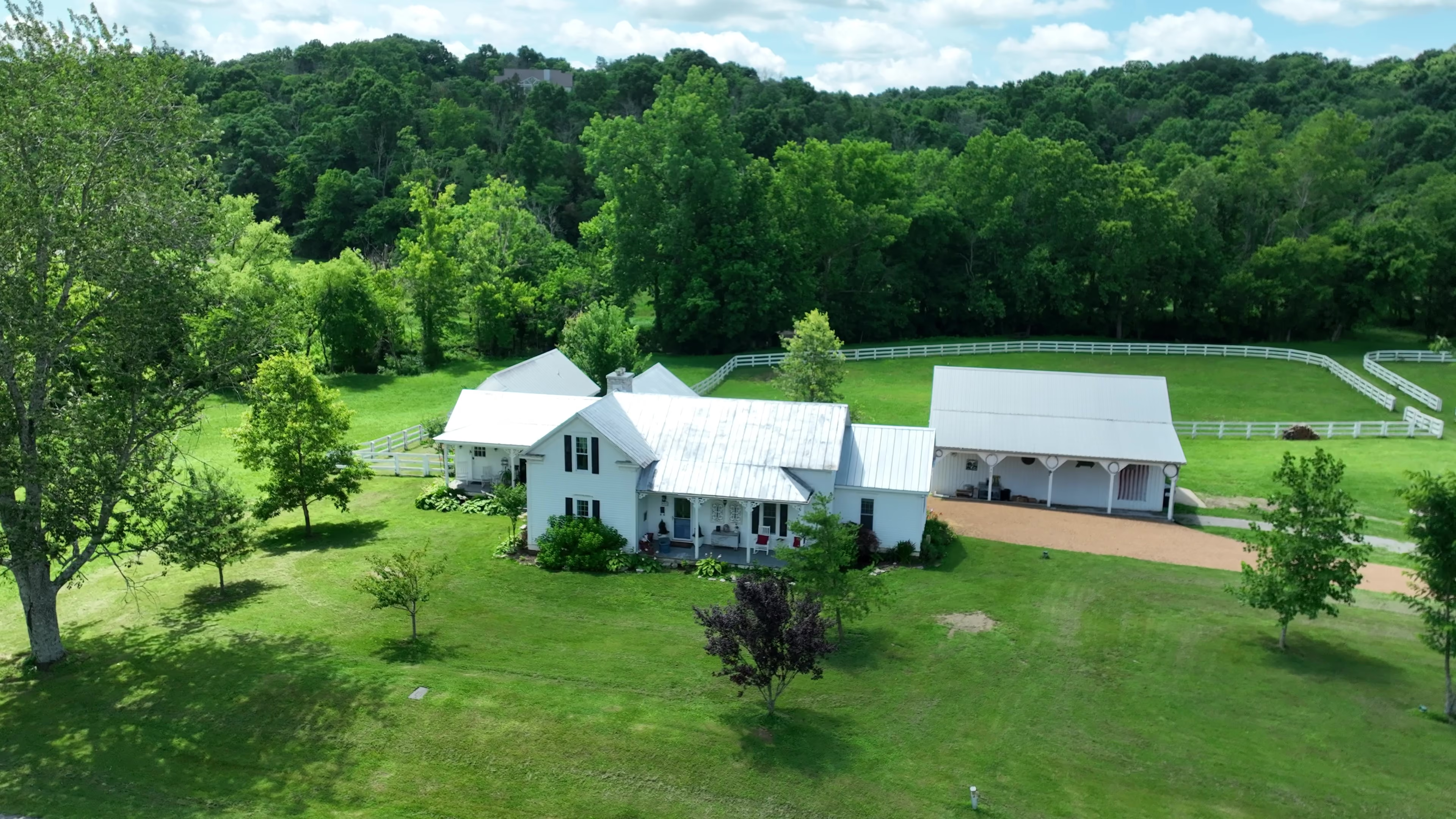
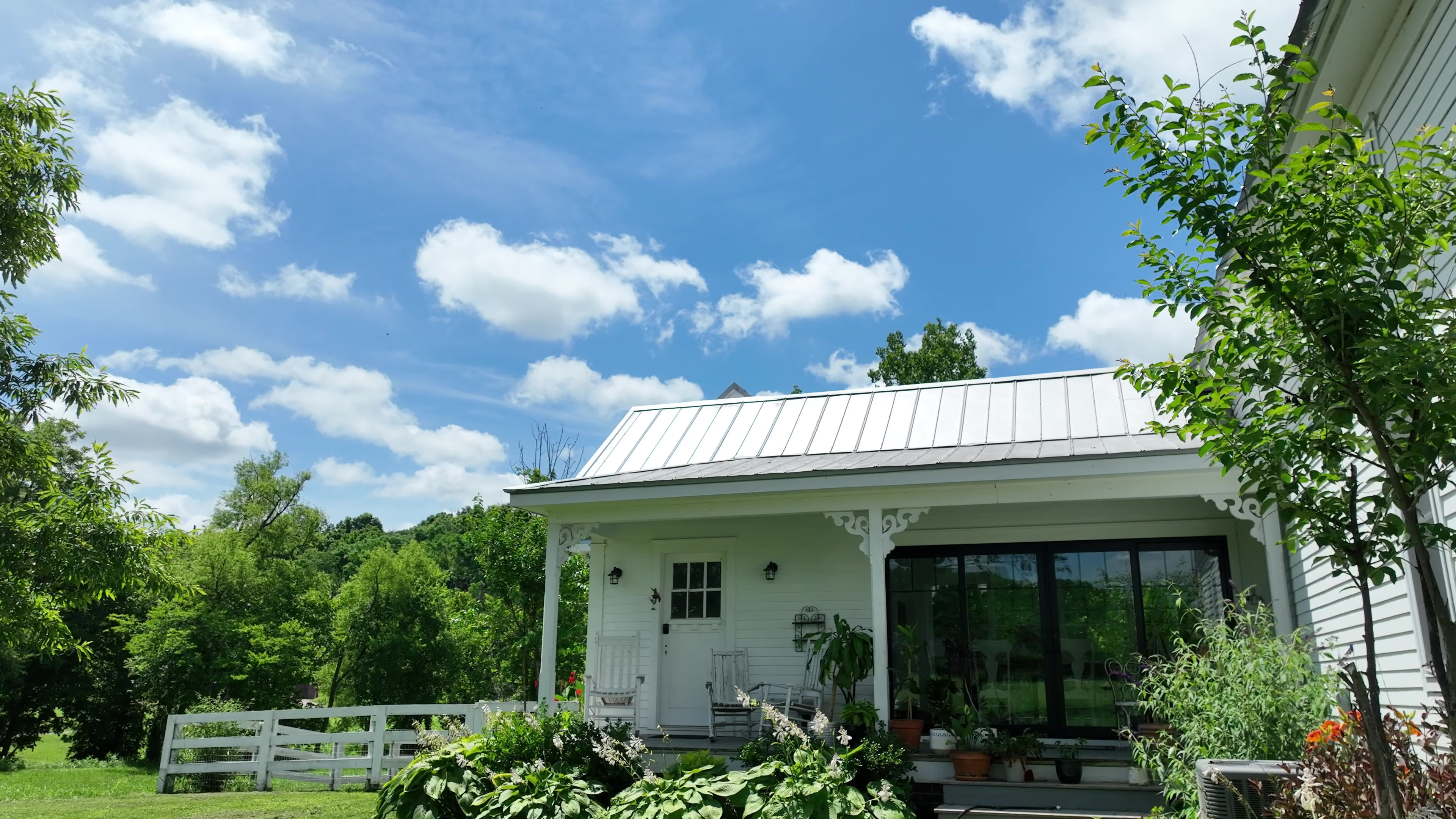
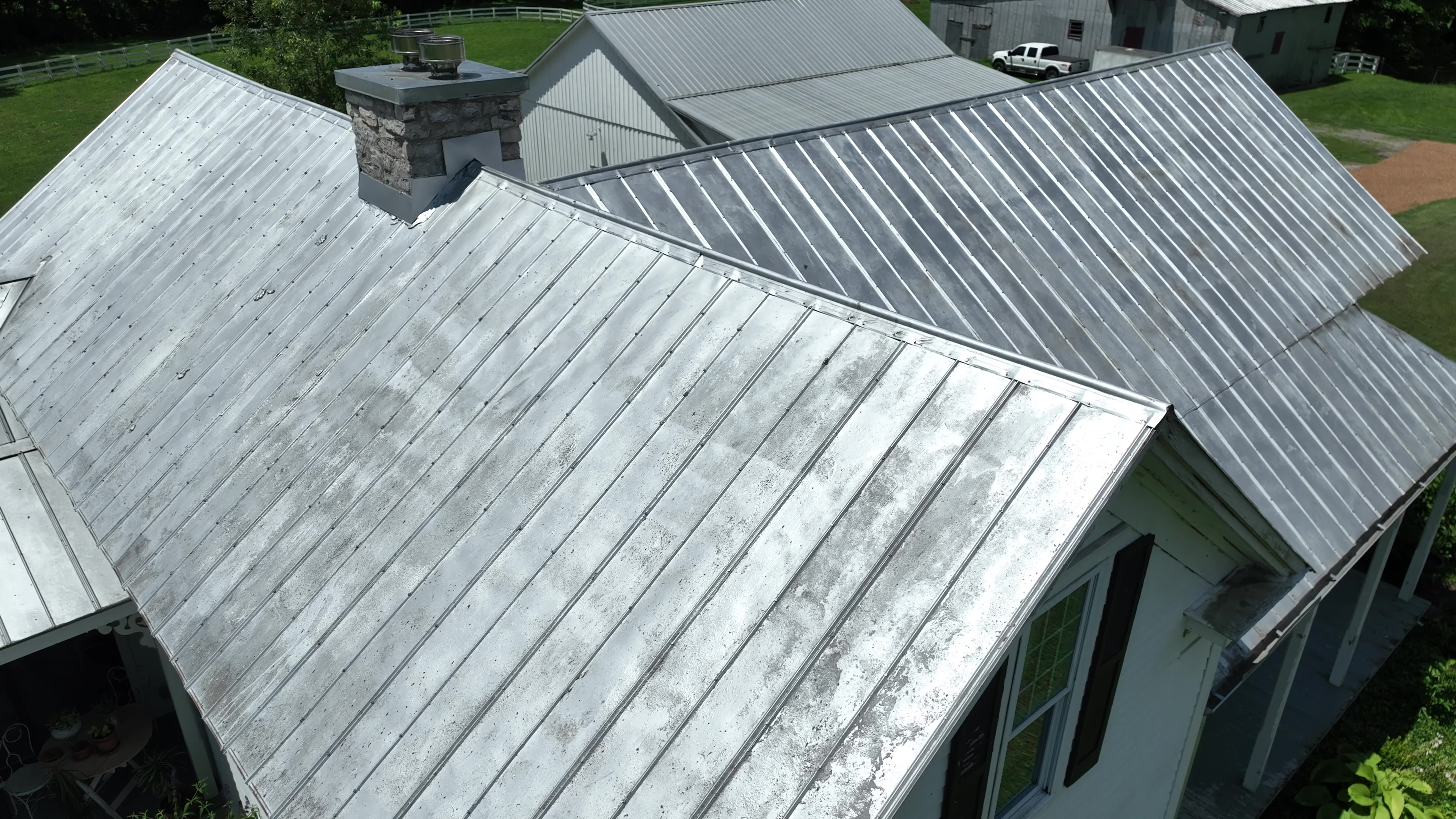
Tin plate historically meant iron or steel sheet coated with tin. The tin coating helped protect the base metal, but like all coated ferrous metals, the roof depended on paint, coating integrity, drainage, and maintenance.
Very few modern roofs are true tin plate. When people search for tin roofing today, this is almost never the product they actually need.
Terne plate was traditionally an alloy coating of lead and tin over iron or steel, giving the metal a duller finish. The National Park Service notes that terne plate differed from tin plate, and historic documentation often confused the two.
Modern terne-like restoration metals are specialty products. They should not be confused with everyday ribbed metal roof panels.
Corrugated iron was another historic phrase. In modern usage, the installed equivalent is usually a coated steel panel with a ribbed or corrugated profile, not literal wrought iron roofing.
The word "corrugated" technically refers to a sheet shaped with alternating ridges and grooves. In everyday homeowner language, though, people use it for almost any ribbed metal roof, including classic rib panels, AG panels, R-panel, PBR, and 5V-style panels.
Those are related but not identical systems, with different rib shapes, widths, fastening patterns, and slope requirements.
Galvanized roofing means steel protected by a zinc coating. It was widely used historically because the coating helped protect the base steel from rust.
Modern coated steels, including Galvalume, carry that idea forward with better metallurgy and factory-applied finishes.
Copper and zinc also belong to the historic metal roofing family, especially on premium, architectural, and preservation-style work.
They are not "tin," but homeowners often group them into the same old-house metal-roof conversation, particularly for porches, dormers, and historic details.
Historic metal roofing vocabulary is messy. "Tin roof" may be historically meaningful, but it is rarely the best way to specify a modern roof.
If your project involves a historic overlay or preservation review, the right conversation is about profile, seam type, finish, and compatibility, not the word "tin."


Start with classic panel or another exposed-fastener system. It has the familiar ribbed look, the lowest installed cost among the major metal systems, and a practical fit for barns, workshops, garages, ADUs, barndominiums, porches, and simple rooflines. The tradeoff: the screws and washers are part of the weathering surface and need attention over time.

Start with standing seam. Concealed clips and locked seams replace thousands of exposed screws, which changes how the roof looks, drains, and ages. It costs more than classic panel, but for primary residences, complex rooflines, and solar-ready roofs, the higher upfront price buys a long-term architectural system.

Start with metal shingles. Interlocking panels that resemble slate, cedar shake, tile, or dimensional shingles give you metal performance without the ribbed barn-roof look. They are a strong fit for HOA neighborhoods, brick homes, and older Nashville streets where standing seam can read too modern.

Start the copper or zinc conversation. Dormers, bay windows, porch roofs, chimney crickets, valleys, and half-round gutters are where premium natural metals earn their keep on older and estate homes. Reclaimed metal can work for character projects, but old material needs careful evaluation before it becomes a water-shedding surface.
Screws through the panel face
Hidden attachment, locked seams
Slate, shake, and tile looks
Tennessee homeowners rate The Metal Roofers 4.9 stars across 150 Google reviews, with an A+ BBB rating and no unresolved complaints. We have never wanted to be the kind of company that tells people how good we are louder than the work proves it. In Tennessee, reputation is still local. People ask their neighbors. They ask their church friends. They ask the person down the street whose roof looks sharp after the last storm. That is the kind of reputation we care about.
We researched and got quotes from several different roofers. We are so glad we chose to work with The Metal Roofers. They were responsive, up front and honest. Our roof looks amazing! We could not be more pleased with the finished roof and their professionalism from start to finish."
"We have had such a hard time with getting any good work done on our complicated 100+ year old Victorian home and wasted thousands on work from companies that couldn't fix our problem with our roof… the fact that they did this job in about three days and solved it made us very happy. The team was amazing and we are so grateful to now have a beautiful functional tin roof on our old home."
"We would give them 10 stars if it were possible! The Metal Roofers are a reliable, detail-oriented, friendly and family-owned business with tons of skill and many years of experience. We had many challenges in dealing with our homeowners insurance, but they worked with our adjusters and smoothed out the entire process."
"They kept in contact with us the whole time and listened to what we wanted and needed. Came back and checked the work and made sure that there was no trash on the ground that could harm our four kids."
"Absolutely the BEST! These folks did an excellent job on my house. The installers were very, very good. From the first time I met the owner to the end of the job — total communication. I would highly recommend."
"What an incredible team. My only regret is not replacing my roof sooner! I've had it a few weeks now and it was tested under all the ice and snow and it's dry as a bone and looks top notch."
"Financing was very simple, payments are affordable, and the owner himself came out to our house for final inspection. Couldn't have asked for better service."
"These guys are the best. The good guys of roofing. Very helpful and professional during the whole process. Honest and quality work. They get my top recommendation."
Some homeowners search "tin roof" but do not actually want a ribbed metal roof. They want the durability of metal while the house still looks traditional from the street. That is where metal shingles come in: interlocking metal panels designed to resemble slate, cedar shake, tile, or dimensional shingles.
Metal shingles are often the right fit for HOA neighborhoods, traditional brick homes, historic-looking homes, steep front gables, cottages, and older Nashville streets where standing seam may look too modern. The main advantage is curb appeal compatibility. The tradeoff is panel complexity: more pieces, more layout work, and more interlocks than a simple exposed-fastener panel. They are not usually the cheapest metal option, but they can be the best visual fit.
Some people want the old-roof look: weathered, aged, rustic. Reclaimed metal can be beautiful, but old panels may hide rust, fastener holes, inconsistent profiles, and unknown coating history. Use character material where character matters, and a modern system where watertightness matters most.
For many homes, the better answer is a modern installed system with a weathered finish, reclaimed look, or carefully chosen classic panel color. You get the character without inheriting the problems of old material.
Copper is hand-formed metal for dormers, bay windows, porch roofs, chimney crickets, counterflashings, valleys, half-round gutters, and accent roofs on historic and luxury homes. It develops a patina over time and can become one of the most beautiful parts of a home.
Zinc suits owners who want a softer, quieter, more natural metal appearance than painted steel. It works well on premium homes, historic-style details, architectural roof planes, wall cladding, and high-design renovations.
Copper and zinc are not tin. They show up in the same conversation because homeowners associate them with older homes, custom metalwork, and premium roof details. For historic, premium, or architectural projects, they may be exactly the right place to start.

There is no single tin roof price because "tin roof" is not a single system. The ranges below reflect installed systems in Nashville and Middle Tennessee, not loose material prices from a supply store. Every range assumes a complete system: panels or shingles, underlayment, trim, flashing, fasteners, and the labor to detail it correctly.
Classic panel and exposed-fastener roofs typically run $5–$9 per square foot installed on simpler rooflines, which is why they remain the go-to answer for barns, shops, and budget-conscious projects. Standing seam typically runs $11–$19 per square foot installed, reflecting the concealed fastening, clips, and detailing that make it the premium residential system. Metal shingles typically run $9–$15 per square foot installed for the slate, shake, and tile looks.
The specialty metals sit higher. Copper typically runs $22–$35 per square foot installed and usually appears on dormers, porch roofs, bay windows, and accent details rather than whole homes. Zinc typically runs $14–$24 per square foot installed for architectural planes and premium renovations. For commercial buildings where the existing metal roof is sound but aging, a commercial roof coating system typically runs $3.75–$6.75 per square foot, a fraction of replacement cost.
The actual number for your building depends on roof size, pitch, complexity, tear-off, decking condition, underlayment, flashing details, gutters, ventilation, access, metal type, finish, fastener system, and whether historic or HOA review shapes the material choice. Two houses on the same street can land at different prices for good reasons.
That is why a confident quote over the phone for a "tin roof" is close to meaningless. A real number starts with the roof, not the phrase. If you want current Nashville pricing broken down by system and roof size, our metal roof cost guide covers it, and a written estimate pins it to your actual roof.
When most people say "tin roof," they are picturing the classic exposed-fastener ribbed roof. Standing seam is the modern system that answers the same desire for metal with a different design: concealed clips instead of face screws, locked seams instead of overlapped ribs, and long clean panels instead of a screw pattern you can see from the driveway.
The practical difference is maintenance and water management. An exposed-fastener roof has thousands of screws and washers in the weather surface that age over time. Standing seam hides the attachment, which is why it costs more and why it is usually the right call for primary homes, complex rooflines, and anyone planning solar.
Tin roof vs metal shingles: if the word "tin" is really standing in for "metal that lasts," but the ribbed barn look is wrong for the house, metal shingles are the comparison to run. They interlock, conceal their fasteners, and read as slate, shake, tile, or dimensional shingles from the street. HOA neighborhoods and traditional brick homes often approve them more easily than a ribbed panel.
Tin roof vs corrugated: this is mostly a vocabulary distinction. "Corrugated" describes the shape of the sheet, not how the roof performs. Classic rib, AG-panel, R-panel, PBR, and 5V profiles all get called corrugated or tin in everyday conversation. What matters is that they are exposed-fastener systems, so the real questions are slope, building type, and maintenance expectations, not which nickname the panel carries.
Tin roof vs reclaimed metal: some homeowners want the old roof itself, weathered and full of character. Reclaimed panels can deliver that look, but they carry rust, old fastener holes, inconsistent profiles, and unknown coating history. For most homes the better answer is a modern installed system with a weathered or reclaimed-style finish: the character without inheriting the problems.
If you want the familiar ribbed look, compare classic panel. If you want the premium modern metal roof, compare standing seam. If you want metal that still looks traditional from the street, compare metal shingles. If the project is historic or architectural, start the conversation with copper, zinc, or specialty metal.
Middle Tennessee roofs see heavy rain, hail, wind-driven storms, humidity, fast temperature swings, and long stretches of hard sun. Nashville averages around 49 inches of rain a year. Whichever "tin roof" you land on, the system has to match the roof it goes on, not just the look you searched for.
Water management is where the systems separate. On an exposed-fastener roof, water runs down the panels and over the ribs toward the gutters, so poor slope, clogged valleys, or weak flashing will cause leaks even with good panels. On standing seam, the seams themselves guide the water, but valleys, eaves, and penetrations still decide how the roof performs in a hard Tennessee rain.
Hail deserves a straight answer: metal can dent without failing. A cosmetic dent is not the same thing as a watertight failure, and that distinction matters for both your expectations and your insurance conversation. The real question after a Tennessee hailstorm is whether the roof still sheds water, not whether it ever shows a mark.
Wind performance lives in the assembly, not the panel alone. For standing seam that means clips, clip spacing, seam type, and deck attachment. For exposed-fastener roofs it means screw pattern, washer condition, and what the screws bite into. Humidity is the quiet one: condensation is not caused by metal itself, it happens when warm moist air meets a cool surface without proper ventilation and insulation. That is why underlayment, decking, attic ventilation, and insulation belong in any honest estimate, whichever system you choose.
Parts of Nashville sit inside historic zoning overlays and conservation districts where exterior changes, including the roof, go through design review. If your home is in one of these areas, the roof system, profile, and finish may need approval before installation. That is not a reason to avoid metal. It is a reason to know the rules before you fall in love with a look.
What review actually cares about is specific: the panel profile, the seam height, the sheen of the finish, and how the roof reads from the street. "Tin roof" is not something a review board can approve. A named system with a specific profile and finish is. That is another reason the vocabulary on this page matters: the approval process runs on specifics, not nicknames.
HOA design review works the same way in newer neighborhoods across Brentwood, Franklin, Nolensville, and the growing subdivisions around Nashville. Boards respond to drawings, samples, and named products. In neighborhoods that expect a traditional roofline, metal shingles often approve more easily than standing seam because they read as slate or shake from the street.
The order matters: confirm the review requirements first, then choose the system, then the color. Picking a color and finding out later that the system will not pass review is the expensive way around. Commercial buildings run on a separate track entirely, where permits, code requirements, and structural questions drive the roof decision more than appearance does.
Profile, sheen, and seam height
Metal shingles often approve easier
Code and structural triggers
The tin roof you need is classic panel on a barn or shop, standing seam on a primary home, metal shingles for a traditional look, or copper on historic details. Every version of the "tin roof" search lands on one of a few installed systems, and the building decides which one. A barn in Wilson County is not a porch in East Nashville, and a modern farmhouse in Spring Hill is not a warehouse off Trinity Lane. Here is where each search usually lands, with the translator below for the exact phrases.
Exposed-fastener ribbed panels. The familiar Tennessee barn-roof look at the lowest installed cost, right for barns, shops, garages, and simple rooflines.
Concealed clips, locked vertical seams, no exposed screws across the field. The premium system for primary homes, complex rooflines, and solar-ready roofs.
Interlocking panels that read as slate, shake, or tile from the street. Metal durability for traditional homes and HOA neighborhoods.
Tin roof on a barn or shop: Classic Panel · Corrugated or screw-down roof: Classic Panel · Tin roof on a modern home: Standing Seam · Tin shingles: Metal Shingles · Tin porch roof: Standing Seam, Copper, or Zinc · Historic tin roof: Copper, Zinc, or specialty metal · Tin roof repair: Metal Roof Repair · Commercial tin roof: Commercial Metal Roofing · Tin roof cost: Metal Roof Cost in Nashville
Every metal roof we install is backed by our lifetime workmanship warranty — a written guarantee covering the quality of our installation for as long as you own the home. This covers proper fastening, correct panel layout, waterproof flashing details, code-compliant work, and all the details that determine whether the roof performs as designed. The panel manufacturer provides a separate product warranty covering the steel substrate and paint finish. You receive both documents at project closeout, along with a maintenance schedule and the specification of every material used on your roof.
We offer the lifetime workmanship warranty because we believe in what we build. We have watched our roofs weather a decade of Nashville storms and still look like the day we finished them. We have driven past homes we roofed years ago and felt that quiet pride that comes from knowing the work was done right. That warranty is not a marketing gesture. It is a promise — backed by a Tennessee company that plans to be right here on East Trinity Lane for a very long time.
In everyday Tennessee usage, yes. Almost nobody installs actual tin anymore. When someone says “tin roof,” they usually mean a metal roof made from coated steel, Galvalume, aluminum, copper, or zinc. The word sticks around as a nickname for the ribbed or corrugated look people grew up seeing on barns, farmhouses, and porches. It is a search phrase, not a spec.
Most roofs people call tin are coated steel or Galvalume, sometimes aluminum. Historic and premium work uses copper or zinc. True tin plate and terne plate exist on some very old buildings, but new roofs are almost never real tin. The base metal matters less than the system: the profile, the fastening method, the finish, and how it is installed.
Almost always a ribbed, exposed-fastener panel, what we call a classic panel (also sold as AG-panel or R-panel). Screws go through the face of the panel into the framing, which makes it affordable and quick to install. It fits barns, workshops, detached garages, and budget projects, as long as you plan for the washers and screws needing attention over the years.
The fasteners. A classic “tin” panel is screwed through the surface, so the fastener heads are exposed to weather. Standing seam hides the fasteners under interlocking raised seams, so there are no screw holes through the weather surface. That means fewer maintenance points, cleaner lines, and a solid base for clamp-mounted solar later. Standing seam costs more, but on a primary home it usually earns it.
That is usually shorthand for metal shingles, panels stamped to look like slate, cedar shake, or dimensional shingles. You get metal durability without the barn-roof look, which is why they clear HOA and architectural review more easily than a bold standing seam profile in some neighborhoods.
There is no single number, because “tin roof” covers several different systems. Installed in Nashville and Middle Tennessee, classic exposed-fastener panels run about $5–$9 per square foot, standing seam about $11–$19, and metal shingles about $9–$15. Copper and zinc are specialty metals and cost more. The real number depends on the roof itself, so it is worth reading the full breakdown on our metal roof cost page.
Not technically, but people group them into the same old-house metal-roof conversation. Copper and zinc show up on dormers, bay windows, porch roofs, and valleys, especially on historic and estate homes where a natural, premium metal is worth the cost. If someone is searching for a “historic tin roof,” copper or zinc is often what they are really picturing.
Often, yes. On exposed-fastener roofs, leaks usually start at aging washers, backed-out screws, weathered sealant, or bad flashing at valleys and penetrations, not the panels themselves. We handle metal roof repair across Middle Tennessee, and a proper inspection tells you whether a repair buys you real years or just delays a replacement.
It comes down to the condition of the panels, the fasteners, and the deck underneath. If the metal is sound and the leaks are at fasteners and flashing, a repair makes sense. If the panels are rusting through, the profile is failing, or you are chasing the same leaks year after year, replacement is usually the better long-term call. We give you the honest version, not the expensive one by default.
Yes. On commercial and agricultural buildings, “tin roof” usually means an exposed-fastener PBR or R-panel, or a mechanically seamed standing seam for low-slope and higher-performance work. Our commercial metal roofing covers both, along with the structural and permit triggers that come with larger buildings.
Usually, with the right profile. Review boards care about seam height, color, sheen, and visibility from the street, not the word “tin.” Metal shingles and lower-profile standing seam tend to clear review more easily than a tall, bold rib. We have walked plenty of Nashville homeowners through this, and the details are in our guide to HOA and historic district approval.
Reclaimed metal has real character, but old panels come with rust, existing fastener holes, and weatherproofing headaches. In a lot of cases a new system with a weathered or aged finish gives you the same look with none of the leak risk. We break down the tradeoffs in recreated versus authentic reclaimed metal roofing.
Yes. A metal roof is only as good as the deck, underlayment, and ventilation under it. The right underlayment, sound decking, and proper attic ventilation are what keep condensation, not the metal itself, from causing problems. We cover this in what goes under a metal roof.
Metal can show cosmetic dents in a bad hail storm, but the roof stays watertight, which is the part that actually protects your house. The real question after a Tennessee storm is whether the roof still sheds water, not whether it is perfectly smooth. Softer metals like copper and aluminum dent more easily than steel, which is one more reason the material choice should match the building.
Sometimes, if the damage is storm-related and documented properly. Insurance work lives or dies on the paperwork: clear photos, a proper scope, and accurate documentation of what failed and why. We walk homeowners through the insurance process so a legitimate claim does not get denied over missing detail.
Start with the building, not the phrase. A barn wants a different roof than a 1920s bungalow, and a warehouse wants a different roof than a Belle Meade estate detail. The fastest way to sort it out is a metal roof inspection, where we look at your slope, structure, and goals and tell you which system actually fits.
Call The Metal Roofers at (615) 649-5002 or request a consultation to have your roof walked and priced. That is normal, and it is exactly what a consultation is for. Tell us what you are picturing, and we will translate it into the actual system, walk the roof, and give you a straight recommendation with a real number. No pressure, no storm-chaser pitch. Just a Nashville company that has been putting metal on Tennessee buildings for over twenty years.