Metal Roofing Alliance Member
TVA Preferred Partners Network
10,000+ Metal Roof Jobs
Nashville, TN
Licensed & Insured
BBB A+

Open 8am–8pm
(615) 649-5002Schedule Your
Appointment
Appointment
✦ Reviewed by The Metal Roofers Technical Team
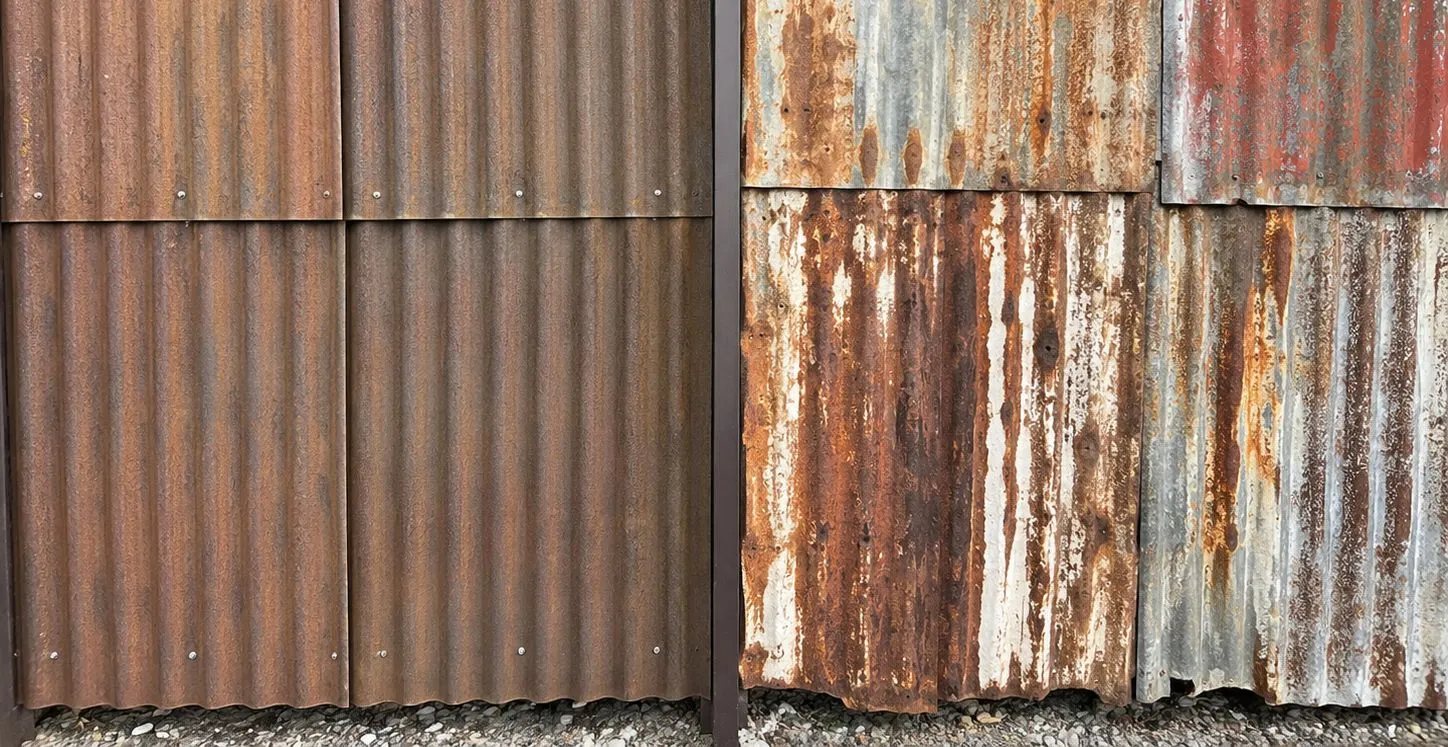
Reclaimed metal has a look people remember. It feels aged, rural, textured, and permanent. It can make a new farmhouse look settled, a porch ceiling look historic, or a commercial space feel like it has been part of Nashville for decades.
But before choosing it, a homeowner needs to answer one question:
Do you want the look of reclaimed metal, or do you want actual old metal?
Those are not the same decision.
A recreated reclaimed metal roof uses new steel with a factory-applied weathered finish. It is designed to look like old barn metal while performing like a modern roof.
Authentic reclaimed metal is genuine salvaged material. It may have come off an old barn or agricultural building. It carries real age, real patina, real fastener holes, real dents, and real irregularity.
Both can be excellent. The mistake is using the wrong one in the wrong place.
For a full roof, choose recreated reclaimed metal.
For accents, features, ceilings, walls, small structures, and places where people will see the material up close, consider authentic salvaged metal.
That is the practical dividing line.
The Metal Roofers describes recreated reclaimed metal as a full-roof and large-area product because it is new steel with matched color, full panel lengths, proper roof-system detailing, and warranty support. The same source describes authentic reclaimed metal as genuine antique roofing that is best for accents, features, ceilings, walls, and small structures because its sheet sizes, weathering, holes, and condition vary.
Recreated reclaimed metal is brand-new steel designed to look old.
The finish is applied at the factory in layered tones that imitate the way old galvanized roofing ages. It can include gray, silver, brown, orange, red, and rust-like streaking. The key is that the finish is sealed. The rust look is controlled.
That means a recreated reclaimed roof is not relying on corrosion for its appearance. It looks weathered, but it is not supposed to keep rusting.
The Metal Roofers explains that the recreated rust appearance is printed or coated onto new steel and sealed under a protective top coat. Because the finish is not active rust, it does not creep, darken unpredictably, or stain siding, masonry, concrete, and landscaping below the roof.
For Nashville homeowners, that makes recreated metal the safer option for large roof areas.
Authentic reclaimed metal is real salvaged metal. It may be corrugated barn roofing that has weathered for decades through Tennessee summers, rainstorms, humidity, hail, and winter freeze-thaw cycles.
Its beauty comes from the fact that no two sheets are the same. One panel may be almost clean silver. Another may have a balanced half-patina look. Another may be heavily rusted. Another may carry the marks of old fasteners, overlaps, dents, or bends.
That real variation is hard to fake. It is also hard to control.
The Metal Roofers notes that authentic reclaimed metal may include aged galvanized silver, deep orange oxidation, nail holes, random lengths, bends, and visible marks from its original overlaps. Those features are the reason it has character, but they are also why it is usually better as an accent than as a full primary roof.
A full roof needs consistency.
It needs panels long enough to run correctly. It needs controlled seams. It needs matching pieces. It needs predictable gauge. It needs reliable trim. It needs valleys, pipe boots, rake edges, eaves, ridges, and wall flashings that all work together. It needs underlayment and deck preparation. It needs a contractor who can treat the roof as an assembly, not as a collection of interesting old sheets.
Recreated reclaimed metal gives the homeowner that. It can be ordered in the required quantity. It can be fabricated into the right profiles. It can be installed as standing seam, Wave Panel, or Classic Tennessee Panel. It can be detailed like any other modern metal roof.
The Metal Roofers explains that the recreated finish is available on the profiles they install across Nashville, including 24-gauge standing seam, corrugated Wave Panel, and Classic Tennessee Panel. The service page also says the reclaimed finish does not change the underlying metal-roof performance because the recreated version is new structural steel underneath.
That is why recreated reclaimed metal is the full-roof answer.
Authentic salvage is strongest where its irregularity becomes a feature.
On a porch ceiling, the old nail holes and uneven patina look intentional. On a gable ceiling, the mixed silver and rust tones add texture. On a restaurant wall, the dents and weathered edges help create atmosphere. On a cupola, awning, or small shed, the material has enough visual power to define the whole feature.
But across a large primary roof, that same irregularity can become a problem. It can look patchy. It can be hard to source enough matching sheets. It can be difficult to manage old holes and random lengths. If the metal is still actively rusting, it may stain surfaces below.
The Metal Roofers says authentic salvage is best as a feature material for porch and gable ceilings, accent walls, wainscot, cupolas, small structures, and similar applications.
The best use of authentic reclaimed metal is close-range character, not broad roof coverage.
Recreated reclaimed metal gives a controlled version of the old barn look. The finish has variation, but it is designed to stay cohesive across a roof. That matters on big roof planes, especially with valleys, dormers, hips, and multiple slopes.
Authentic reclaimed metal gives real patina. It may be more beautiful up close because the age is genuine. It may also be uneven, unpredictable, and difficult to match.
The right choice depends on the viewing distance. A full roof is usually seen from the street or yard as one surface. It needs to read as intentional. A porch ceiling is seen from ten feet away. It can reward closer inspection.
The Metal Roofers describes recreated reclaimed metal as having controlled color variation so a large roof reads as one cohesive surface rather than a patchwork, while authentic salvage is one of a kind from sheet to sheet.
Recreated reclaimed metal is a modern metal roof. Its performance depends on the panel profile, gauge, fasteners, clips, underlayment, flashings, roof deck, ventilation, and installation quality.
Authentic reclaimed metal is antique material. It may still have many years of useful life, but its condition has to be judged piece by piece. It may need cleaning, sealing, sorting, and careful placement.
The Metal Roofers states that recreated reclaimed roofing typically lasts 40 to 70 years depending on profile and installation quality. Authentic salvage has a remaining life that depends on the condition of the sheets and whether they are sealed.
A homeowner should not ask antique salvage to behave exactly like new steel.
The cost depends on the application.
For a full roof, recreated reclaimed metal is usually more predictable. The Metal Roofers says recreated reclaimed metal is priced comparably to standard painted metal roofing of the same profile, usually a little above standard profile ranges. Their reclaimed service page lists standard painted standing seam at $1,100–$1,900 per square installed and exposed-fastener reclaimed-profile roofing at $800–$950 per square installed, with the recreated reclaimed finish typically adding somewhat to those baseline ranges.
Authentic salvaged metal is priced per project. That is because the cost depends on sourcing, sorting, cleaning, sealing, preparing, and installing the specific sheets. A small porch ceiling may be realistic. A whole primary roof may become expensive and impractical because enough matching salvage must be found and prepared.
This is one reason many Nashville projects combine the two: recreated reclaimed metal on the roof and authentic salvage in the feature areas. For broader pricing context, our Nashville metal roof cost guide breaks down 2026 pricing by system and roof size.
Recreated reclaimed metal has low maintenance because the weathered look is sealed into the finish. It does not need routine rust treatment. Its maintenance is normal metal-roof care: keep debris out of valleys, keep gutters flowing, inspect flashings, and check exposed fasteners if the roof uses an exposed-fastener profile.
Authentic salvage may need more judgment. If it is used indoors or under a porch ceiling, it may be protected from direct weather. If it is used outdoors, it may need sealing to stabilize the surface and reduce staining or flaking. The Metal Roofers notes that authentic salvaged accents can be resealed over time if the homeowner wants to keep the surface stable.
The maintenance question is not “Is reclaimed metal hard to maintain?” The better question is “Is this recreated finish or real rust?”
Real rust can bleed.
That matters on Nashville homes with white siding, painted brick, light stone, concrete patios, landscaping, or visible foundation walls. Water moving across real rusted metal can carry orange staining onto surfaces below.
Recreated reclaimed metal avoids that issue because the rust appearance is sealed. The Metal Roofers specifically says the recreated finish does not stain siding, masonry, concrete, or plantings because there is no active rust runoff.
Authentic salvage can still be used beautifully, but runoff needs to be considered. It should not be placed casually above materials that could stain.
Authentic salvaged metal may have old coatings, paint, dust, or residue. That does not mean it is automatically unsafe, but it does mean it should be handled like an old building material rather than a brand-new product.
Lead-safe rules are especially relevant when painted materials from older housing or child-occupied facilities are disturbed. EPA says paid contractors who disturb paint in pre-1978 housing and child-occupied facilities generally must be certified and use lead-safe practices. Tennessee’s RRP program also establishes requirements for compensated renovation, repair, and painting activities in target housing and child-occupied facilities built before 1978.
For reclaimed metal, the practical rule is simple: if the salvage has old paint or unknown coating, do not sand, grind, scrape, or cut it casually. The material should be inspected, cleaned, sealed, and handled appropriately.
Authentic reclaimed metal has a strong reuse story. It keeps old material in circulation and gives new life to something that might otherwise become demolition debris. EPA describes recovering used construction and demolition materials for reuse as a resource-efficient practice that can save money and protect natural resources.
Recreated reclaimed metal has a different sustainability argument. It is not reused antique metal, but it can be a long-life metal roof that avoids repeated asphalt replacement cycles. The Metal Roofers states that recreated reclaimed metal roofs typically last 40 to 70 years depending on profile and installation quality, roughly three to four times the lifespan of asphalt shingles.
So the sustainability comparison is not one-sided. Authentic salvage wins on reuse. Recreated reclaimed roofing wins on predictable long-term roof performance.
For a full farmhouse roof, recreated reclaimed metal is usually better. It gives the weathered look while keeping the roof watertight, consistent, and insurable.
For farmhouse accents, authentic salvage may be better. A porch ceiling made from real barn metal has a warmth that factory-finished roofing cannot fully duplicate.
A strong farmhouse design might use recreated reclaimed standing seam or Wave Panel on the roof, then authentic salvaged corrugated metal on the porch ceiling or gable detail. The Metal Roofers describes this mixed approach as one of their preferred strategies because the recreated roof gives warranty-backed performance while the salvaged feature adds true age up close.
Barndominiums are one of the strongest fits for reclaimed metal.
A recreated reclaimed roof can make a new barndominium look less like a new metal building and more like a long-standing rural structure. It also allows the roof to be detailed as a proper modern metal roof.
Authentic salvage can then be used selectively on interiors, ceilings, wall panels, or entry features. On a barndominium, that combination feels natural because the building already borrows from agricultural architecture.
The Metal Roofers identifies barndominiums and farmhouses as signature applications for reclaimed-look roofing in Middle Tennessee.
For commercial interiors, authentic salvage can be especially effective.
Restaurants, breweries, boutiques, event spaces, and retail environments often want material with a story. Real salvaged metal provides that. It can be used on bar fronts, accent walls, ceilings, wainscot, host stands, and exterior feature areas.
For the actual roof, recreated reclaimed metal is usually the better choice because the building still needs a predictable weather barrier. The Metal Roofers notes that reclaimed looks are used in breweries, restaurants, and retail spaces because the material gives an immediate sense of rustic heritage.
For working buildings, either approach can make sense.
A recreated Wave Panel or Classic Tennessee Panel roof gives a barn, shed, or outbuilding the weathered look with modern panel lengths and a more predictable installation. Authentic salvage may be appropriate for a small shed, decorative structure, or protected feature where the homeowner accepts the irregularity.
If the building must stay dry and low-maintenance, recreated metal is safer. If the goal is pure character and the structure is small or secondary, authentic salvage may be worth considering.
Historic homes require more caution.
Reclaimed metal can look old, but “old-looking” is not the same as historically appropriate. A historic review may care about the specific roof profile, seam type, visibility, sheen, color, material, and whether the proposed roof matches the architecture. Metro Historic Zoning asks property owners to contact the Commission to confirm whether a project needs review.
For a historic Nashville home, reclaimed metal may work better on a secondary structure, rear feature, porch ceiling, or accent than on a primary street-facing roof. A historically compatible standing seam may be easier to approve than a heavily rusted visual finish on the main roof plane.
HOAs usually care about consistency, curb appeal, and neighborhood appearance. A reclaimed roof can be beautiful, but it may be too bold for some subdivision guidelines.
The Metal Roofers notes that rust-toned roofs are usually review items in HOA neighborhoods and historic overlays, and they provide samples, profile details, and finish information before approval.
For HOA homes, recreated reclaimed metal has an advantage over authentic salvage because the color and finish are more controlled. But the homeowner should still submit samples before ordering material.
The first mistake is using authentic salvaged metal on a large roof when the project really needs recreated reclaimed steel. A primary roof has to perform first.
The second mistake is assuming recreated reclaimed metal is actively rusting. It is not. It is a sealed finish designed to look weathered without continuing to corrode.
The third mistake is ignoring staining. Real rust can bleed onto siding, masonry, concrete, and landscaping.
The fourth mistake is choosing reclaimed metal because it looks cool online without asking whether it fits the house. The reclaimed look belongs naturally on farmhouses, barndominiums, barns, sheds, rustic commercial spaces, cabins, and some Craftsman or rural homes. It may not belong on every suburban roofline.
The fifth mistake is skipping approval. HOAs and historic overlays can treat reclaimed finishes as review items, especially when the roof is visible from the street.
Choose recreated reclaimed metal when the project needs a real roof system. It is the better option for full roofs, large roof areas, barndominiums, barns, sheds, outbuildings, farmhouse roofs, and any project where warranty, predictable performance, matched color, full panel lengths, and modern flashing details matter.
It is also the better choice when the homeowner wants the weathered look without active rust, runoff staining, random sheet sizes, old holes, or unpredictable corrosion.
Choose authentic reclaimed metal when the project is about character at close range. It is the better option for porch ceilings, gable ceilings, accent walls, wainscot, commercial interiors, small structures, cupolas, awnings, decorative features, and places where real age is more important than perfect consistency.
It is also the better choice when the homeowner or designer values provenance: the idea that the material had a first life before it became part of the new project.
Neither is universally better. Recreated reclaimed metal is better for full roofs. Authentic reclaimed metal is better for accents and features.
It is a recreated finish, but it is real metal roofing. The steel is new, the roof system is modern, and the weathered appearance is factory-applied and sealed.
It is more authentic visually, but not always better as roofing. Real salvage can have old holes, bends, random lengths, and active rust. Those characteristics are beautiful in accents but challenging on full roofs.
A recreated reclaimed roof usually has the more predictable service life because it is new steel. The Metal Roofers lists recreated reclaimed roofs around 40 to 70 years depending on profile and installation. Authentic salvage depends on the condition of the individual sheets and whether they are sealed.
Yes. In many cases, that is the best approach. A recreated reclaimed roof handles the weather. Authentic salvage adds real age on the porch, gable, wall, or feature area.
Recreated reclaimed metal is usually easier to present because the color and finish are controlled, but HOA approval still depends on the neighborhood. Samples and profile information should be submitted before installation.
The best reclaimed metal projects are honest about the difference between appearance and material history.
Recreated reclaimed metal gives Nashville homeowners the weathered barn look with the performance of a modern metal roof. It is the better choice for full roofs, large areas, and buildings that need predictable long-term protection.
Authentic reclaimed metal gives real age, real patina, and real irregularity. It is the better choice for accents, ceilings, walls, small structures, and feature areas where the material can be appreciated up close.
For many Middle Tennessee homes, the best answer is not either-or. It is both: recreated reclaimed metal where the roof has to perform, and authentic salvaged metal where the building deserves character. To see finish samples and talk through your project, request a free written estimate online.

Nashville homeowners—see how metal roofing stacks up against asphalt shingles in durability, cost, and weather protection.
Choosing between 24, 26, and 29 gauge metal roofing in Nashville? Here's which gauge fits Middle Tennessee's wind, hail, and summer heat.
Nashville metal roof screws: ZAC “forever” fasteners with EPDM washers beat barn screws for leak resistance, clean looks, and long-term performance.