Metal Roofing Alliance Member
TVA Preferred Partners Network
Music City Specialists
Nashville, TN
Licensed & Insured
BBB A+

  • bullet icon

Commercial Metal Roof Cost in Nashville: 2026 Pricing Guide

A building owner's guide to commercial roof pricing in Nashville and Middle Tennessee: metal panels, membranes, and coatings, plus tear-off, wet insulation, access, phasing, and long-term ownership cost. As of June 2026, published installed ranges run from $375 to $675 per square for coating restorations up to $1,100 to $1,900 per square for mechanically seamed standing seam. One square is 100 square feet, and the sections below turn those ranges into real budgets.

June 2026 Published Pricing · Commercial & Industrial · Nashville & Middle Tennessee

$375–$675

Coating Restorations · Per Square

$875–$975

PBR Metal · Per Square

$800–$1,700

Membrane Systems · Per Square

$1,100–$1,900

Standing Seam · Per Square

Commercial Roof Pricing Is a Building Decision

Published June 2026 Ranges · Every System · Real Cost Drivers

Most commercial roof prices are not really a square-foot number. They are a building decision. The price of a commercial roof in Nashville depends on the roof system, slope, access, deck condition, insulation, tear-off requirements, rooftop equipment, drainage, flashing, penetrations, wind-uplift requirements, warranty expectations, and how much disruption the building can tolerate while the work happens. That is why two buildings with the same square footage can carry very different roofing budgets, and why this page explains the drivers instead of hiding them behind a phone call.

A simple owner-occupied shop with a steep PBR roof is not priced like a low-slope warehouse with long panel runs, wet insulation, HVAC curbs, internal drains, and a phasing plan that keeps trucks moving. A coating on a sound existing metal roof is not priced like a full tear-off and mechanically seamed standing seam replacement. This guide runs seventeen sections deep: every published system, worked budgets by building size, the fourteen drivers that move the number, tear-off and wet insulation, coating versus replacement, 10, 20, and 40 year ownership cost, how to compare bids, Nashville factors, and straight answers for owners, property managers, facility directors, churches, schools, warehouses, restaurants, retail centers, and industrial properties. A square is 100 square feet of roof area, and every whole-roof figure is a budgeting example built from published ranges, not a quote.

Want a real number for your building's roof?
triangle image

I

The Quick Answer: What Commercial Roofing Costs in Nashville

Published June 2026 Installed Ranges by System

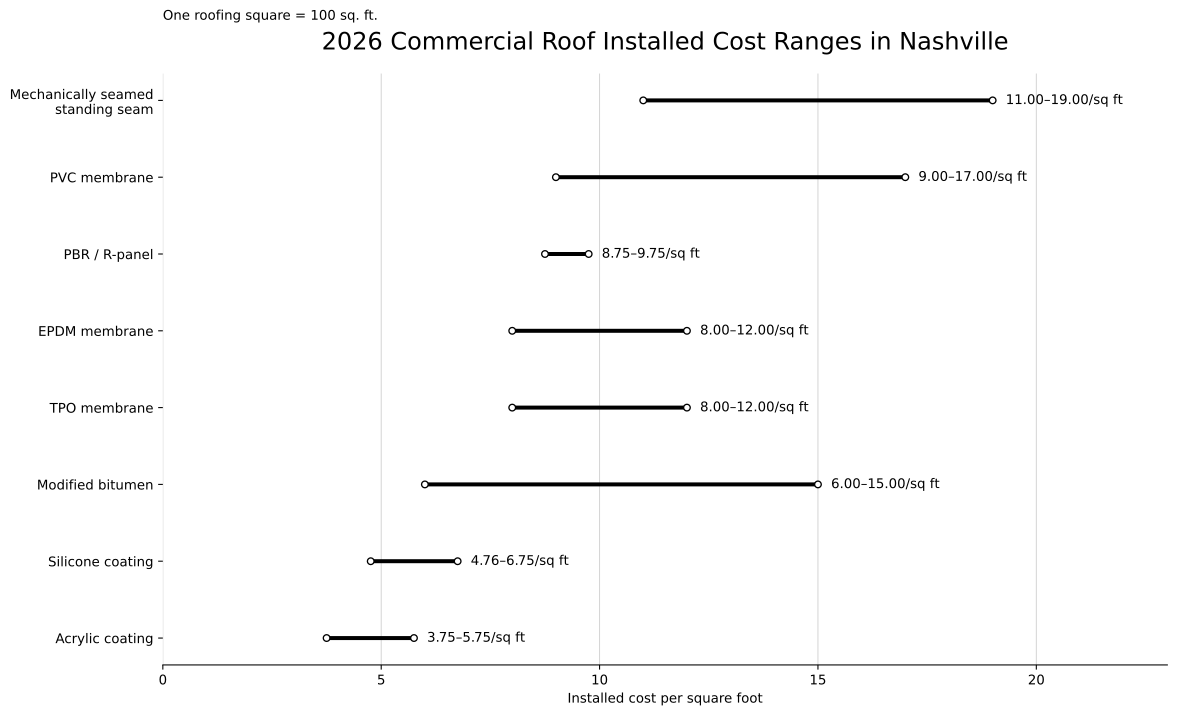
As of June 2026, commercial roofing installed ranges quoted by The Metal Roofers in Middle Tennessee start around $375 to $675 per roofing square for coating restorations and reach $1,100 to $1,900 per roofing square for mechanically seamed standing seam metal roofing. One roofing square equals 100 square feet of roof area.

The full published menu, per square installed: acrylic roof coating at $375–$575, silicone roof coating at $476–$675, modified bitumen at $600–$1,500, TPO membrane at $800–$1,200, EPDM membrane at $800–$1,200, PBR and R-panel metal at $875–$975, PVC membrane at $900–$1,700, and mechanically seamed standing seam at $1,100–$1,900. In per-square-foot terms that runs from $3.75 at the coating floor to $19 at the standing seam ceiling. Coatings restore qualifying roofs, membranes cover the flat sections, PBR handles steeper-slope shops and storage, and standing seam is the premium metal for low-slope commercial spans.

These are starting budget ranges for installed systems. The final proposal depends on inspection findings, roof access, tear-off, wet insulation, deck repair, edge metal, flashing, penetrations, curbs, drains, gutters, phasing, code requirements, and the warranty package, all of which the sections below take one at a time.

II

How to Use This Pricing Guide

The Squares Math and a 20,000 Square Foot Example

This page is not meant to replace a site visit. It is meant to help you understand the conversation before the site visit, so a commercial roofing estimate is never a mystery: why one system costs more than another, why a coating can be dramatically less expensive than replacement when the roof qualifies, why wet insulation can change the entire budget, and why the cheapest number can become the most expensive decision when the wrong system lands on the wrong slope.

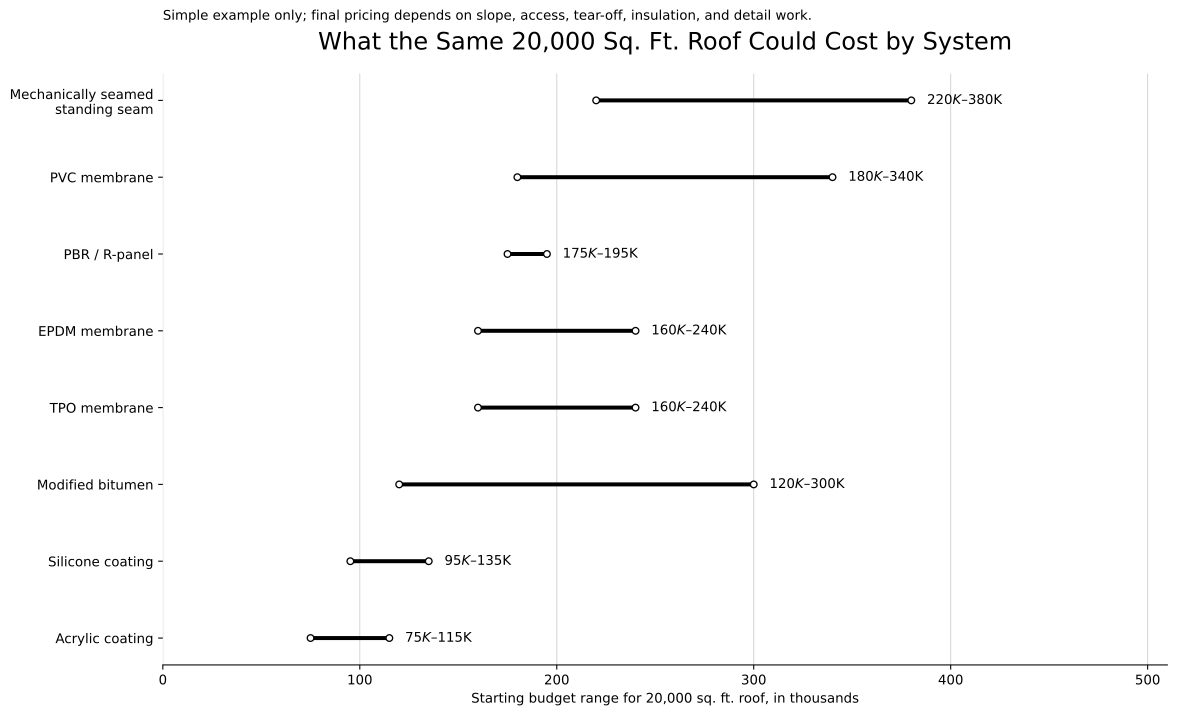
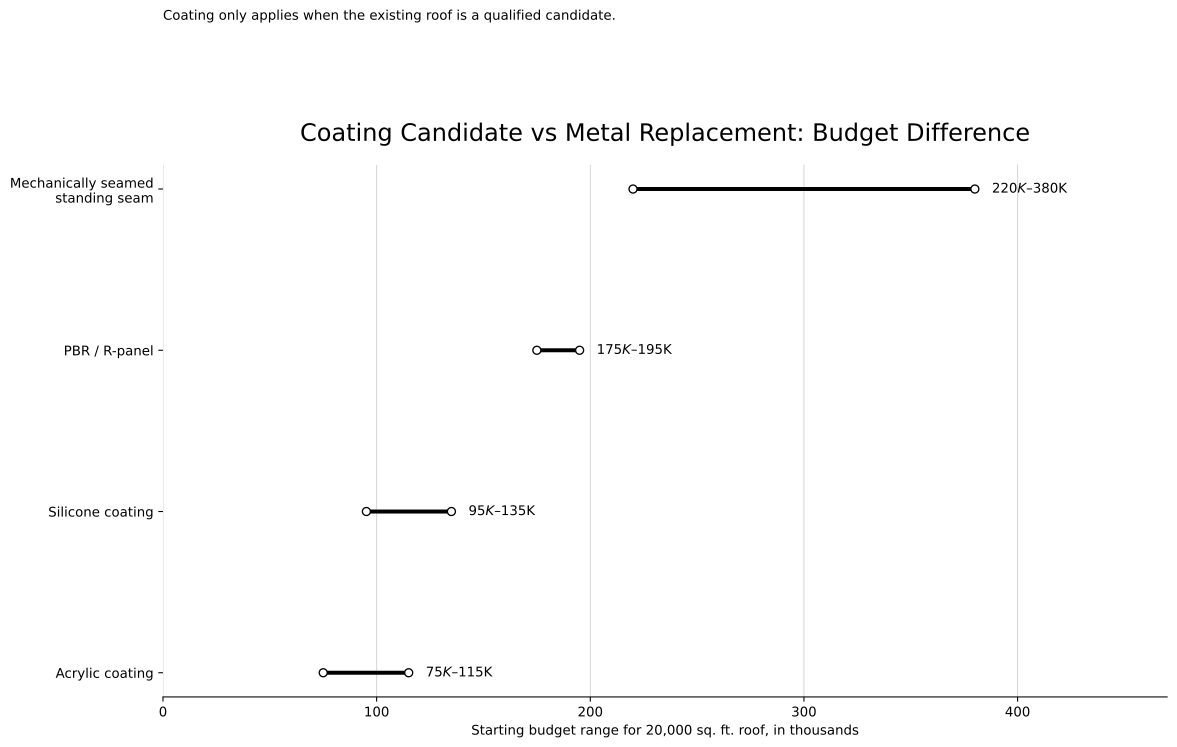
The fastest way to build a starting budget takes two steps. Divide the roof area by 100 to get roofing squares, then multiply the squares by the system's published range. A 20,000 square foot commercial roof is 200 squares. If that roof qualifies for silicone coating, 200 squares at $476–$675 is a starting budget of $95,200 to $135,000. If the same roof needs mechanically seamed standing seam, 200 squares at $1,100–$1,900 is $220,000 to $380,000.

That spread is why inspection matters. A coating candidate and a replacement roof may protect the same building, but they are not the same project, and nobody can tell you which one your roof is from the parking lot.

triangle image

III

Mechanically Seamed Standing Seam Cost

$1,100–$1,900 Per Square · $11–$19 Per Square Foot

Mechanically seamed standing seam is the premium commercial metal system for buildings that need low-slope performance, concealed fasteners, long panel runs, controlled thermal movement, and decades of weather-tight service. The panels install on clips and are then mechanically locked together with a seaming tool, and that locked seam is what lets the roof manage water and movement across long commercial spans.

It belongs on warehouses, distribution buildings, churches, schools, medical buildings, retail centers, multifamily properties, and manufacturing buildings, and on any commercial roof where exposed-fastener maintenance is unacceptable. It costs more because the system is more demanding: clips, panel gauge, seam type, engineering, layout, flashing, and installation discipline all matter. On commercial spans, thermal movement is not a small detail. Long panels expand and contract through Nashville heat, cold, sun, and shade, and a properly designed system lets that movement happen without fighting the roof.

Standing seam is also the system to study if solar is anywhere in the building's future, because panels clamp to the standing seam ribs without a single roof penetration.

The honest framing on price: standing seam is usually not the cheapest bid, and it is usually not cheaper than PBR. The better question is whether it is cheaper than decades of fastener maintenance, leak calls, early replacement, tenant complaints, and downtime. For the right building, the answer can be yes.

triangle image

IV

PBR and R-Panel Commercial Metal Cost

$875–$975 Per Square · $8.75–$9.75 Per Square Foot

PBR stands for purlin-bearing R-panel, and it is the practical commercial metal option for buildings with the right slope, budget, use case, and maintenance expectations: auto shops, storage facilities, machine shops, smaller warehouses, agricultural buildings, barndominiums, light industrial buildings, and owner-occupied commercial buildings that want real metal performance at a lower installed cost than concealed-clip standing seam.

The tradeoff is exposed fasteners. On an exposed-fastener roof, screws and washers are part of the weather seal. That does not make the system bad; it means maintenance is part of ownership, and the screws, washers, lap sealant, fastener pattern, slope, and roof traffic all shape long-term performance.

PBR is a smart budget choice when the roof is steep enough, the building use fits, and the owner understands fastener maintenance. It becomes expensive later when it lands on a roof that is too low-slope, too complex, too critical, or too hard to maintain. Chronic ponding, a crowd of rooftop units, tenant-risk exposure, or low tolerance for future fastener service can make the cheaper upfront system the more expensive long-term one. PBR is not simply the cheaper metal roof. It is the right roof for the right building.

triangle image

V

Commercial Roof Coating Cost

Acrylic $375–$575 · Silicone $476–$675 Per Square

Roof coating is the lowest-cost commercial option in this guide, but only when the existing roof qualifies. A coating is not paint. A properly specified silicone system is an engineered weatherproofing membrane, not a cosmetic refresh, and it extends roof life without demolition or landfill waste when the roof is a good candidate. The majority of our silicone work in Nashville is commercial and industrial: large flat or low-slope metal roofs, warehouses, manufacturing facilities, retail buildings, churches, schools, and office buildings.

Coating costs less than replacement because the existing roof stays in place: usually no full tear-off, less demolition, less disposal, less disruption, less labor, and less material. But coating is not a shortcut around inspection. It only makes sense when the roof is structurally sound, dry enough, repairable, cleanable, and compatible with the coating system. Widespread structural corrosion, extensive trapped moisture, severe structural damage, end-of-life conditions, or failed adhesion testing mean replacement, and coating over those problems just delays the replacement you already need.

On acrylic versus silicone: acrylic costs less upfront and suits well-drained roofs and budget-sensitive restoration. Silicone costs more and earns it in Nashville's heavy rain, humidity, UV exposure, temperature swings, and ponding-water risk, because silicone does not soften or re-emulsify in rain and is fundamentally waterproof once cured. For many commercial roofs here, the cheaper coating is not the better value.

triangle image

VI

TPO Cost on Flat Commercial Sections

$800–$1,200 Per Square · $8–$12 Per Square Foot

TPO is not a metal roof, but it often belongs on the same building as metal. Many Nashville commercial buildings are hybrids: standing seam on the visible sloped sections and TPO on flat rear sections, metal on the front elevation with membrane over the larger low-slope area, or metal accents with membrane behind parapets. True flat sections usually need TPO, PVC, modified bitumen, or a qualified coating restoration rather than metal forced where it does not perform.

TPO commonly covers office buildings, retail strips, restaurants, medical facilities, multifamily buildings, and low-slope commercial sections. The final number depends on membrane thickness, the insulation package, cover board, attachment method, parapet walls, drains, rooftop units, and whether the existing roof has to come off first.

triangle image

VII

PVC Cost on Restaurants and High-Traffic Roofs

$900–$1,700 Per Square · $9–$17 Per Square Foot

PVC typically costs more than TPO because it is used where the roof environment is harsher: chemical resistance, grease resistance, rooftop traffic, or equipment exposure. It is the membrane for restaurants, food-service buildings, commercial kitchens, grease vent areas, big-box retail, schools, and equipment-heavy, high-traffic roofs.

PVC pricing climbs when the roof needs reinforced walk paths, more complex flashing, contamination cleanup, or additional protection around rooftop service zones. On a restaurant roof, the grease vents alone are a detailing job that a simple storage building never has to pay for.

triangle image

VIII

EPDM Cost on Flat Commercial Sections

$800–$1,200 Per Square · $8–$12 Per Square Foot

EPDM is a proven thermoset rubber membrane for flat or near-flat commercial sections, installed in large sheets with fewer field seams than many systems. It belongs on warehouses, commercial additions, rear flat sections, and roof areas behind parapets, and it pairs naturally with metal on hybrid buildings.

EPDM price depends on membrane thickness, attachment method, insulation, deck condition, termination details, edge metal, and how much rooftop traffic the building sees. It is often the budget-conscious low-slope answer when the roof conditions fit.

triangle image

IX

Modified Bitumen Cost

$600–$1,500 Per Square · $6–$15 Per Square Foot

Modified bitumen is a multi-ply asphalt-based system for small to mid-sized low-slope buildings: offices, retail strips, churches, older buildings, tie-in projects, and owners who want a tough, familiar, redundant membrane.

The range is wide because the assemblies vary: torch-applied, cold-adhered, hot asphalt, or self-adhered, in two-ply or three-ply builds with granulated cap sheets, tie-in repairs, or older-roof restoration in the mix. A simple low-slope section prices toward the bottom. A complex multi-ply assembly with difficult access, wall flashings, penetrations, and old-roof removal lands much higher.

triangle image

X

Starting Budgets by Building Size

10,000 · 20,000 · 50,000 Square Foot Examples

These examples use the published June 2026 ranges and assume a simple roof-area calculation before adders like tear-off, wet insulation, deck repair, complex access, major flashing, drainage redesign, or phasing costs.

A 10,000 square foot roof is 100 squares. Starting budgets run $37,500 to $57,500 for acrylic coating, $47,600 to $67,500 for silicone, $60,000 to $150,000 for modified bitumen, $80,000 to $120,000 for TPO or EPDM, $87,500 to $97,500 for PBR, $90,000 to $170,000 for PVC, and $110,000 to $190,000 for mechanically seamed standing seam.

A 20,000 square foot roof is 200 squares: $75,000 to $115,000 acrylic, $95,200 to $135,000 silicone, $120,000 to $300,000 modified bitumen, $160,000 to $240,000 TPO or EPDM, $175,000 to $195,000 PBR, $180,000 to $340,000 PVC, and $220,000 to $380,000 standing seam.

A 50,000 square foot roof is 500 squares: $187,500 to $287,500 acrylic, $238,000 to $337,500 silicone, $300,000 to $750,000 modified bitumen, $400,000 to $600,000 TPO or EPDM, $437,500 to $487,500 PBR, $450,000 to $850,000 PVC, and $550,000 to $950,000 standing seam. These illustrations are intentionally simple; real proposals separate the roof system cost from tear-off, wet insulation, decking, drainage, access, equipment curbs, edge metal, code upgrades, and phasing.

triangle image

XI

The 14 Drivers of Commercial Roof Cost

What Moves the Number Up or Down

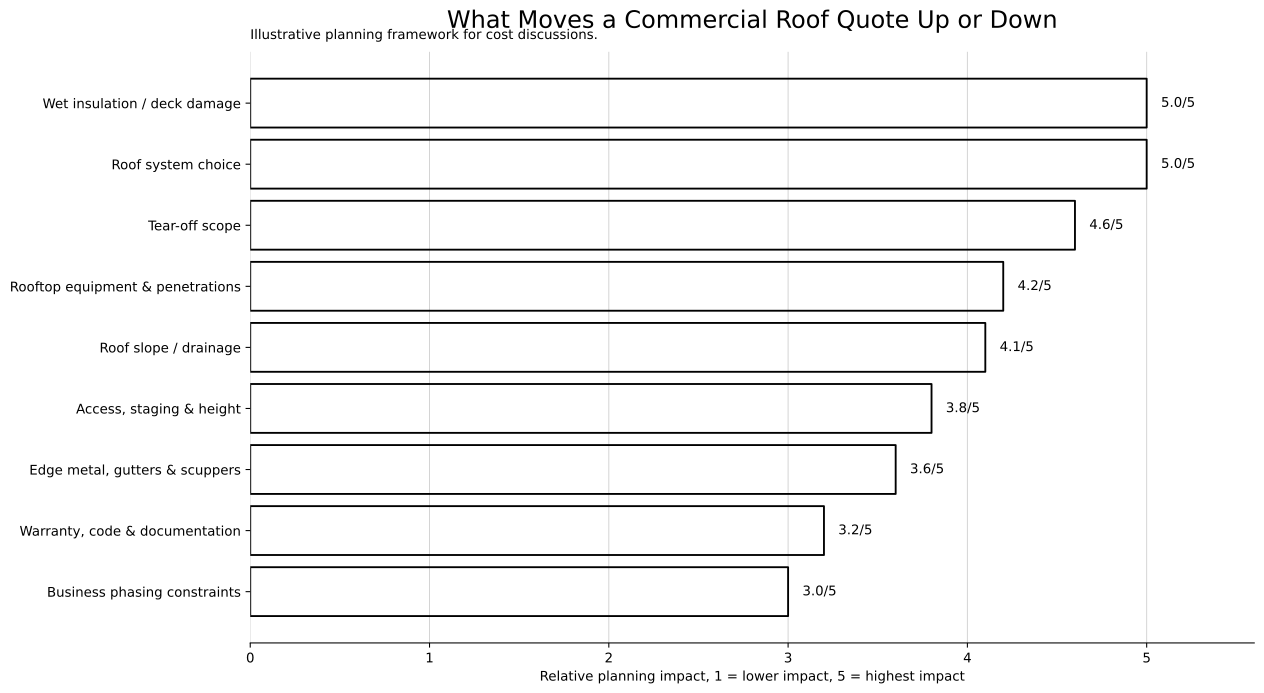
Fourteen drivers move almost every commercial roof price. The system itself is the biggest: a coating restoration costs far less than a standing seam replacement because the roof stays in place, PBR undercuts standing seam because of exposed fasteners and simpler installation, and PVC outprices TPO because it lives in harsher environments. Slope is second: metal sheds water by gravity, flat sections need membranes or qualified coatings, and using the wrong system on the wrong slope is the fastest way to turn a cheap roof into an expensive one. Size is third: bigger roofs cost more overall, though very large roofs can lower unit cost by spreading mobilization, staging, and setup across more squares.

Access and height are fourth: a tall building with tight parking, active tenant entrances, loading docks, power lines, and limited crane or lift access is slower and more expensive to work than a low, open one. Tear-off scope is fifth and one of the biggest unknowns before inspection: anywhere from no tear-off to full removal down to deck with temporary dry-in and interior protection. Wet insulation is sixth and changes everything, covered in its own section below. Deck type and condition are seventh: metal, wood, purlins, concrete, or lightweight insulating concrete each affect fastening, uplift performance, and fire rating, and hidden rust, rot, deflection, or loose attachment adds cost, so a proposal should state its deck assumptions and what happens if they are wrong.

Insulation and energy requirements are eighth: on low-slope roofs the insulation boards, tapered insulation, cover board, fasteners, adhesive, and vapor control layers can be a major share of the project, and a low bid often just assumed less of them. Flashing, curbs, penetrations, and rooftop equipment are ninth: a roof with twenty rooftop units costs more than a roof with two, and commercial roofs leak at exactly these details. Drainage and ponding are tenth: a cheap roof over bad drainage is not a bargain, it is a future leak. Edge metal, coping, gutters, and scuppers are eleventh, because the perimeter and corners of a wide commercial roof see different wind stresses than the field, and a proposal that ignores the perimeter is not complete.

Wind-uplift design and code documentation are twelfth: carriers, lenders, and code officials may need panel type, gauge, deck type, clip and fastener schedules, fire rating, and wind documentation, and a commercial roof is not just bought, it is documented. Warranty expectations are thirteenth, since a stronger warranty can change mil thickness, attachment method, preparation, and inspection requirements. Business disruption and phasing are fourteenth: a phasing plan that keeps loading docks moving, kitchens venting, and tenants undisturbed is real work that belongs in the proposal, not a surprise after the trucks arrive.

triangle image

XII

Tear-Off and Wet Insulation

The Two Biggest Unknowns Before Inspection

Tear-off adds labor, disposal, risk, time, weather exposure, and hidden discoveries, and it is best understood as a scope rather than one universal add-on number. A commercial tear-off may include old panels, membrane, failed coating, insulation, fasteners, edge metal, flashing, coping, gutters, adhesives, or multiple roof layers, and multiple existing layers can trigger code questions on their own. A strong proposal answers plainly: is tear-off included, how many layers come off, is insulation removal included, is wet insulation priced separately, what happens if deck damage is found, how is the building dried in, how does debris leave, and does the building stay operational.

Wet insulation changes everything. A roof can look repairable from the surface while trapped moisture spreads below the membrane, panel, or coating, and once insulation is saturated, coating over it is not responsible. The moisture must be located with thermal imaging or test cuts, removed, and replaced, and if the wet area is widespread, replacement can become more cost-effective than patching and coating around it.

This is why cheap coating bids that skip moisture evaluation are dangerous, and why moisture is one of the biggest differences between a real estimate and a guess.

triangle image

XIII

Coating vs Replacement

Which One Is Responsible for This Roof

Coating and replacement are not interchangeable, but both extend roof life, so owners compare them constantly. A coating can save approximately 65 to 75 percent compared with replacement while providing warranted protection, when the roof qualifies. That last clause is the whole conversation.

Coating may be right when the deck is sound, insulation is dry or isolated repairs are manageable, the roof is structurally stable, fasteners and seams can be repaired, the surface cleans and preps properly, adhesion testing passes, and the owner wants life extension without full tear-off. Replacement is right when rust has eaten through panels, insulation is saturated across large areas, the deck is compromised, leak paths repeat, panels are structurally damaged, adhesion fails, drainage problems cannot be corrected with restoration, or the roof has reached the end of structural life.

The question a commercial owner should ask is not which is cheaper. It is which one is responsible for this roof. We answer that from inspection findings, and when a roof fails the coating gate we say so.

triangle image

XIV

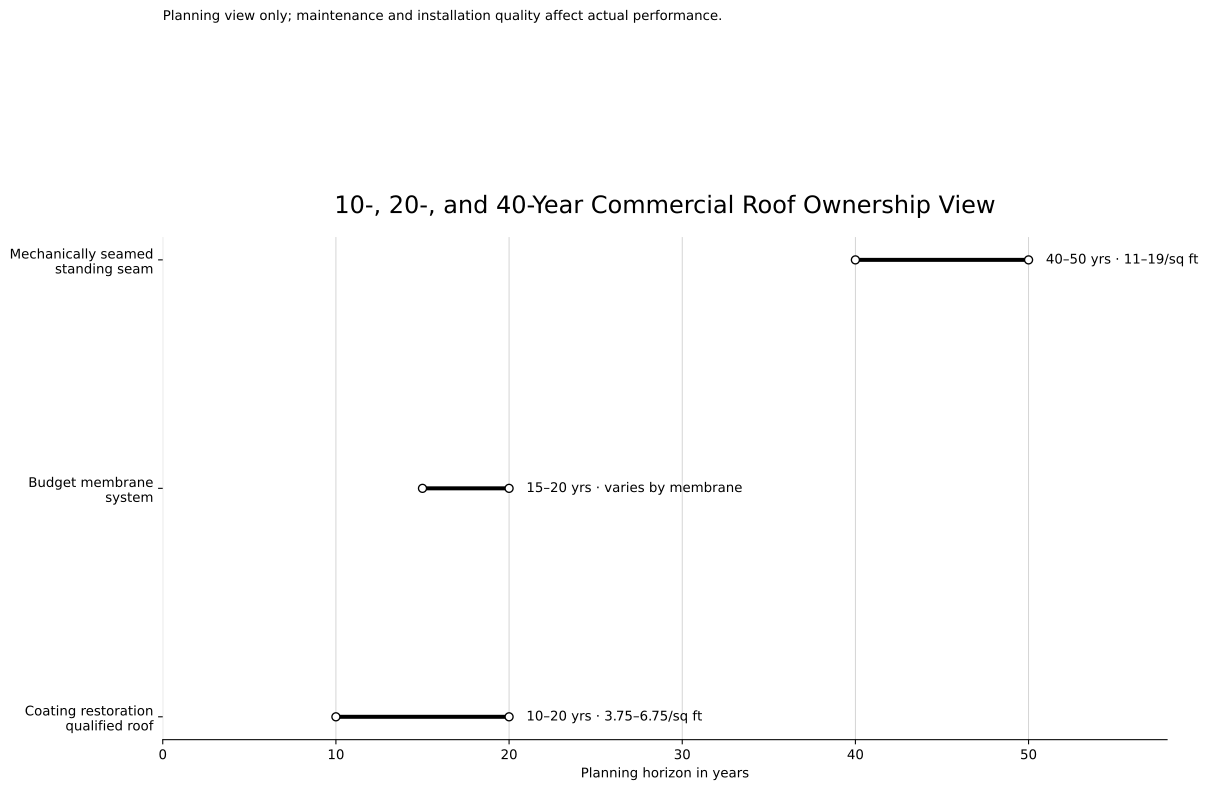
10-Year, 20-Year, and 40-Year Ownership Cost

How Many Times Do You Want to Buy This Roof

Commercial roof cost should be measured over time, not just at installation, because the lowest first price gets expensive fast if it produces recurring leak calls, tenant disruption, inventory damage, fastener maintenance, coating failure, early tear-off, or documentation problems.

At ten years, a coating is often the strongest financial decision when the roof qualifies, and a PBR roof can be a strong call on the right slope with an owner who accepts fastener maintenance. At twenty years, the wrong cheap roof starts to show: a membrane may need major repair or replacement depending on traffic, drainage, thickness, and installation, a coating needs recoat planning, PBR fasteners need attention, while a properly specified standing seam roof is still mid-life.

At forty years, premium metal makes its case. A mechanically seamed metal roof on a low-slope Nashville warehouse can last 40 to 50 years, while a budget membrane system may need replacement in 15 to 20, and every replacement is billed at that future year's prices with its own tear-off, disruption, and documentation. The 40-year question is how many times you want to buy this roof. Many owners do not ask it until the second roof fails.

triangle image

XV

How to Compare Commercial Bids

Why the Cheapest Bid Can Be the Most Expensive

A commercial estimate should make the scope clear enough to compare proposals honestly. Ask every contractor for the same information: roof area priced, system proposed, price per square, deck assumptions, tear-off scope, insulation and cover board scope, flashing and edge metal scope, gutter, scupper, and drain scope, rooftop equipment and penetration details, coating or membrane thickness, panel gauge and substrate, clip or fastener schedule, warranty, code documentation, wind-uplift assumptions, fire-rating assembly, phasing plan, business access plan, exclusions, change-order rules, and maintenance requirements.

If one bid is much cheaper, it may simply be missing expensive parts of the roof. That does not make the cheaper contractor dishonest; it means you need to know whether the bids price the same roof. A low bid may use the wrong system for the slope, skip wet-insulation investigation, ignore drainage, reuse failing edge metal, assume no deck repair, underprice flashing, thin the membrane, skip cover board, omit code documentation, leave out the phasing plan, or price a coating without confirming adhesion or moisture.

The expensive part is rarely the roof. It is what happens later: tenant complaints, interior water damage, inventory loss, emergency leak calls, HVAC curb failures, blocked operations, early recoat, premature tear-off, insurance disputes, warranty problems, and repeated repairs. A commercial roof is a risk-management system, and the real cost is the next 10, 20, or 40 years.

triangle image

XVI

Nashville Factors, the Assessment, and Money Questions

Local Pressures, Financing, Insurance, and Taxes

Nashville puts its own pressure on commercial roofs. Heavy rain and storm seasons demand drainage that actually moves water off low-slope roofs through gutters, scuppers, downspouts, and internal drains, and poor drainage pushes roofs toward silicone, drainage redesign, or bigger repair scopes. Summer heat and UV punish coatings, membranes, and metal movement and raise HVAC demand, which is why reflective coatings and white membranes enter the cost conversation. Humidity raises the stakes on trapped moisture, wind exposure at perimeters and corners matters more on a warehouse near open fields than a protected urban building, and building use ties it together: a restaurant, warehouse, church, medical office, and retail center do not carry the same roof risks.

A serious commercial roof cost assessment is not a quick number from the parking lot. Ours covers roof measurement, system identification, slope review, deck review where visible, existing layer review, leak history, drainage and gutter review, rooftop equipment and penetration count, flashing and edge metal condition, moisture concerns, coating candidacy, tear-off assumptions, access and staging, business constraints, a system recommendation, a budget range, and a next-step proposal. For coating candidates, thermal imaging earns its keep by revealing hidden moisture, insulation failure, and backed-out fasteners. The goal is not to give every owner the same roof. It is to price the right roof for the building.

On money: financing can spread the cost of a capital roof project, and it is worth asking about before you delay a roof that is already failing, because waiting turns a planned project into an emergency repair or a tenant issue. Insurance may help when damage ties to a covered event like hail or wind, but it does not pay for age, wear, or deferred maintenance; we document roof conditions, storm damage, leak locations, photos, system type, and repair needs, and the insurance carrier determines coverage. On taxes, coatings, restorations, replacements, and repairs can carry different accounting treatment; we document the scope clearly, and your CPA or tax professional determines how the project is classified.

Dig deeper into any piece of this:

Commercial Metal RoofingCommercial Roof RepairCommercial Roof Maintenance ProgramsRoof CoatingFinancing OptionsInsurance ProcessResidential Metal Roof Cost in NashvilleSchedule a Commercial Roof Cost Assessment
triangle image

XVII

Commercial Roof Pricing: Frequently Asked Questions

Straight Answers Before the Assessment

How much does a commercial metal roof cost in Nashville?

As of June 2026, The Metal Roofers quotes commercial roofing systems in Middle Tennessee from about $375 to $675 per square for coating restorations up to $1,100 to $1,900 per square for mechanically seamed standing seam. PBR, TPO, PVC, EPDM, and modified bitumen fall between those ranges depending on system, slope, access, roof condition, insulation, tear-off, and detail work.

What is a roofing square?

A roofing square is 100 square feet of roof area. Commercial pricing is discussed per square because it makes large roof systems easier to compare.

What does mechanically seamed standing seam cost?

About $1,100 to $1,900 per square in Middle Tennessee as of June 2026. It is usually the premium commercial metal option because it uses concealed clips, mechanically locked seams, and better low-slope performance on long commercial spans.

What does PBR or R-panel cost?

About $875 to $975 per square in Middle Tennessee as of June 2026. It is typically less expensive than mechanically seamed standing seam, but it uses exposed fasteners, so fastener maintenance becomes part of ownership.

What does commercial roof coating cost?

Acrylic restorations run about $375 to $575 per square, and silicone restorations run about $476 to $675 per square in Middle Tennessee as of June 2026. The roof must qualify; coating is not a responsible option for widespread rust-through, saturated insulation, failed adhesion, severe structural damage, or end-of-life conditions.

What do TPO, PVC, EPDM, and modified bitumen cost?

As of June 2026 in Middle Tennessee: TPO runs about $800 to $1,200 per square, EPDM about $800 to $1,200, PVC about $900 to $1,700, and modified bitumen about $600 to $1,500 depending on whether the assembly is torch-applied, cold-adhered, hot asphalt, self-adhered, two-ply, or three-ply.

Why do commercial roof prices vary so much?

Because the roof system is only one part of the cost. Slope, size, access, deck condition, insulation, tear-off, wet areas, rooftop equipment, flashing, drains, edge metal, warranty, code documentation, and business phasing all move the final price.

Is roof coating cheaper than replacement?

Yes, when the roof qualifies. Coating avoids major tear-off and uses the existing roof as the substrate, and professional-grade silicone systems can save approximately 65 to 75 percent compared with replacement when the roof is a good candidate.

When is coating not worth it?

When the roof has widespread structural corrosion, extensive trapped moisture, severe structural damage, end-of-life conditions, or failed adhesion testing. In those cases replacement is usually the more responsible recommendation.

How much does tear-off add?

Tear-off varies too much to price accurately without inspection. It depends on how many layers must be removed, whether insulation is wet, whether the deck is damaged, how debris will be removed, how the building will be dried in, and whether the work must be phased around operations. A commercial proposal should clearly state whether tear-off is included.

How much does wet insulation add?

Wet insulation can add significant cost because it may require moisture investigation, test cuts, selective tear-off, insulation removal, new insulation, cover board, dry-in, deck inspection, and disposal. Widespread wet insulation can also change the recommendation from coating to replacement.

Can my business stay open during commercial roofing work?

In most cases, yes. Most Nashville commercial roofing projects can be performed from the exterior with minimal to no downtime, and phasing can be planned around restaurants, clinics, manufacturing floors, distribution centers, retail centers, medical buildings, and warehouses.

Is commercial metal roofing more cost-effective than TPO over time?

It can be, when the right system is matched to the building. A mechanically seamed metal roof on a low-slope Nashville warehouse can last 40 to 50 years, while a budget membrane system may need replacement in 15 to 20. The long-term value depends on slope, drainage, maintenance, installation quality, and building use.

How do I get an accurate commercial roof price?

Start with a commercial roof cost assessment. The roof needs to be measured, inspected, and evaluated for system type, slope, deck condition, moisture, tear-off, drainage, access, rooftop equipment, flashing, warranty needs, and business operations before a reliable proposal can be built. Call (615) 649-5002 to schedule.

Ready to turn these ranges into a commercial proposal?
triangle image
Published Installed Ranges · June 2026

Commercial Roof Cost at a Glance

Acrylic Roof Coating

$375–$575 per square

Silicone Roof Coating

$476–$675 per square

Modified Bitumen

$600–$1,500 per square

TPO Membrane

$800–$1,200 per square

EPDM Membrane

$800–$1,200 per square

PBR / R-Panel Metal

$875–$975 per square

PVC Membrane

$900–$1,700 per square

Mechanically Seamed Standing Seam

$1,100–$1,900 per square

triangle image
triangle image

Get a Commercial Roof Price You Can Actually Use

A commercial roof estimate should tell you what system fits the building, what the roof condition allows, what is included, what is excluded, where the risk is, and whether repair, coating, replacement, or maintenance is the responsible next step. We provide commercial roof cost assessments across Nashville and Middle Tennessee for metal roofs, low-slope sections, coatings, warehouses, churches, schools, retail centers, restaurants, medical buildings, multifamily properties, and industrial facilities.

(615) 649-5002

Monday – Friday · 7:00 AM – 5:00 PM · Saturday by Appointment

Licensed & Insured
BBB A+ Accredited
Hundreds of Nashville Roofs Installed
Free On-Site Assessments