Metal Roofing Alliance Member
TVA Preferred Partners Network
10,000+ Metal Roof Jobs
Nashville, TN
Licensed & Insured
BBB A+

Open 8am–8pm
(615) 649-5002Schedule Your
Appointment
Appointment
From The Metal Roofers’ Job Files · Existing metal panels · Dolly Red finish restoration
The Dolly Red restoration video documents a finish project on an existing metal roof. It is not a video of roof replacement. The important distinction is between preparing and refinishing existing panels and replacing panels, damaged decking or failed roof assemblies. Those are different scopes.
Watch the project reelSee the finished roof ↓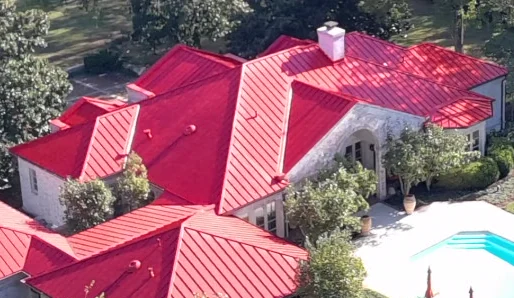
Middle Tennessee
Roof restoration project
Dolly Red
Restored roof appearance
Existing metal
Not a new-roof case
Surface preparation
Shown in the footage
01 · The Finished Roof
The visual story is a red roof whose finish had become uneven over time, followed by close-ups of surface preparation and a deeper, more uniform red in the later footage. The public video's title identifies the project as Franklin. The available archived red-restoration job in AccuLynx says Nashville. Until that conflict is resolved, this draft uses Middle Tennessee and keeps the project's exact location, customer history and job-specific product claims out of the story.
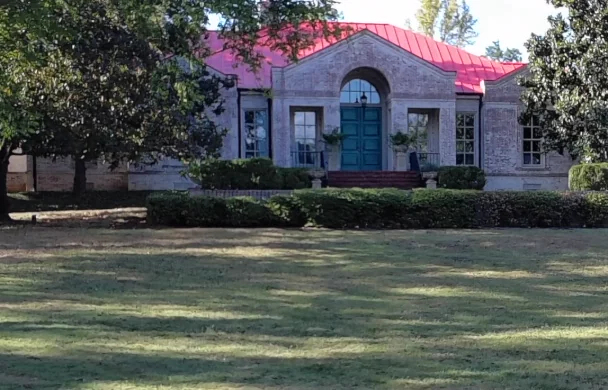
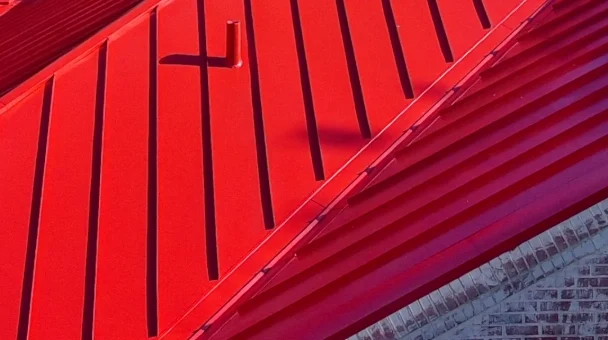
The final roof views are useful for judging appearance. The weathered panel and prep views answer another question: what was done to the existing surface before the red finish went on?
The Short Answer
The reel follows a weathered red metal surface through preparation and a renewed finish. Raised panel ribs and laps remain visible in the later views. Those frames show a finish change, not replacement, a watertightness test or the treatment specification for another building.
The original reel documents visible prep, an intermediate treatment and the red final appearance. A photograph does not establish coating chemistry, leak correction, a warranty or a water-test result. How we document our work.
02 · The Restoration, Step by Step
Follow the work from the old finish to the sprayer pump, the red spray fan and the separate roller pass. These are work stages shown in an edited reel, not a claim about the sequence on every roof plane.
Step 01
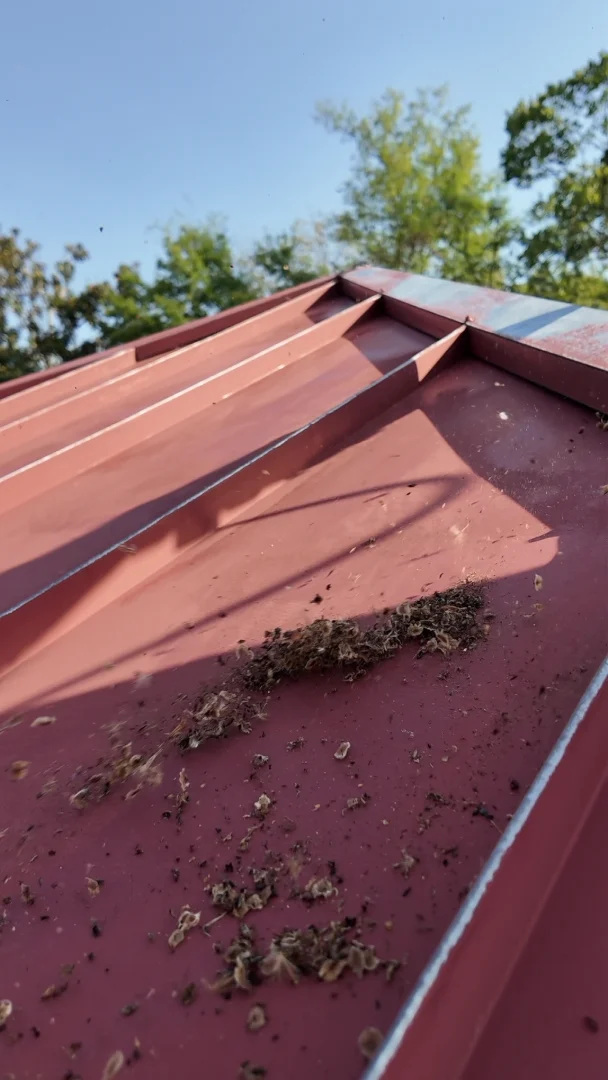
A dull red panel and debris near a raised seam show the condition before the finish was restored. That photo records the visible surface. It does not say whether any concealed roof parts needed repair.
Step 02
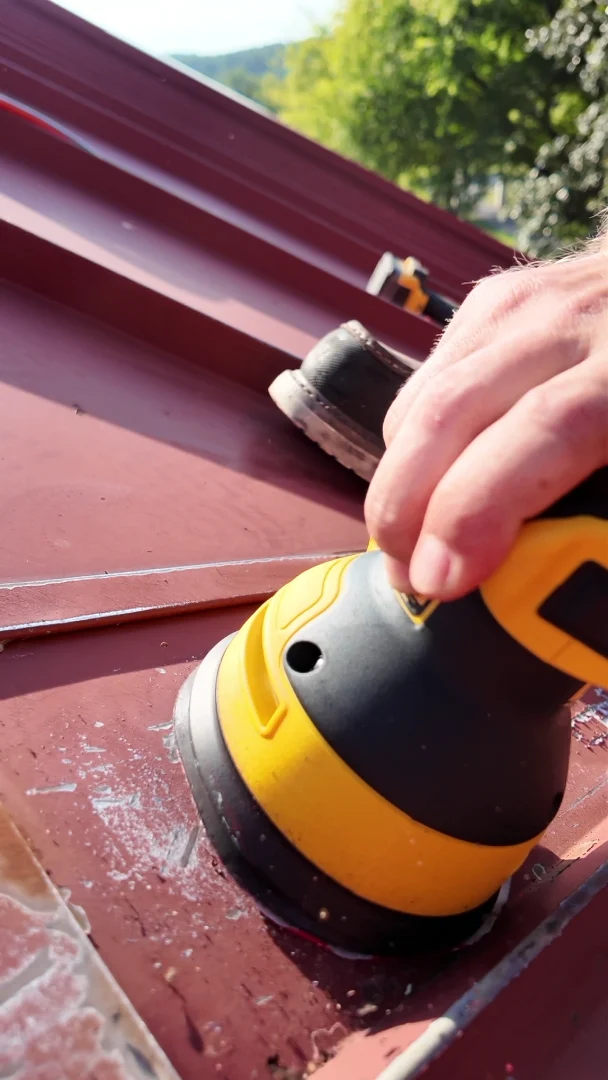
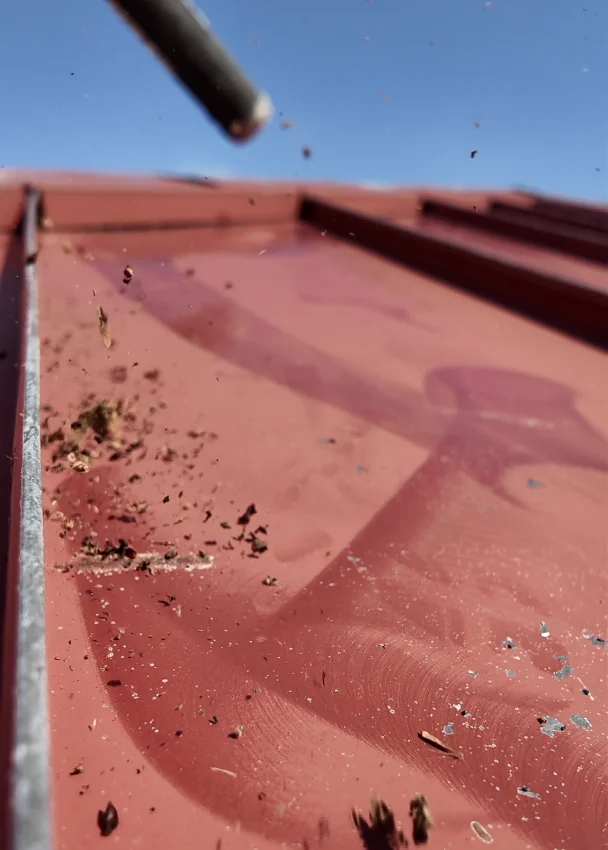
The reel shows a handheld tool working the old red finish near a seam. In another shot, a blower lifts loose debris from the panel. Those are preparation steps, rather than the red spray pass.
Step 03
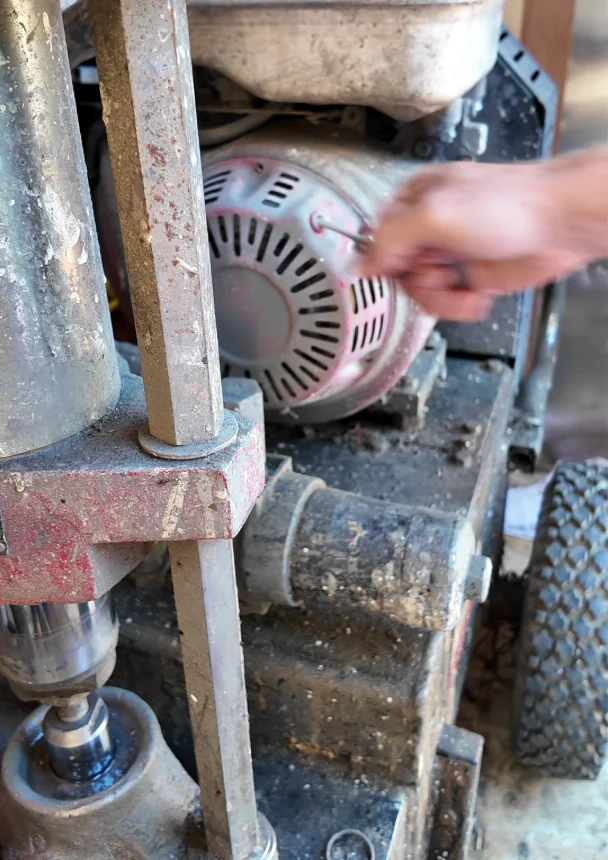
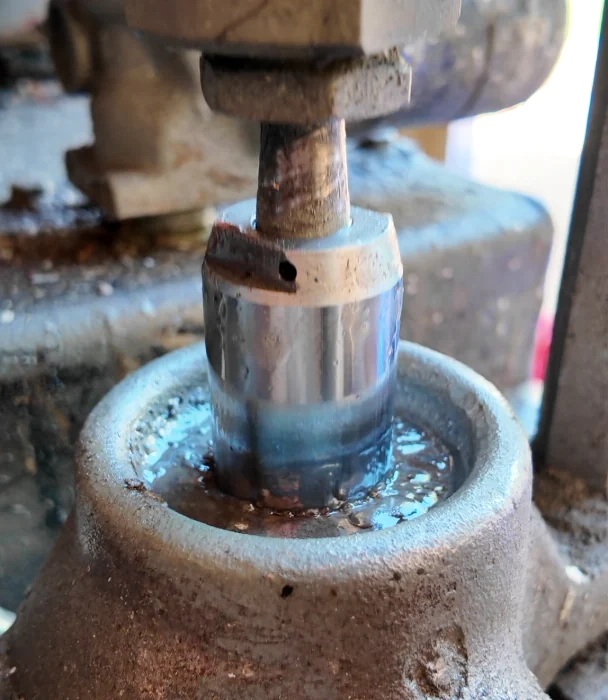
The reel cuts to the equipment: the power unit and paint pump, then a close-up of the pump rod moving. This is what feeds material to the spray tool. The footage does not establish a model, tip size or operating pressure.
Step 04
A lighter material is visible during this earlier pass. It is shown separately from the red finish that appears later in the video. The footage alone does not identify its formula or establish whether the crew called it a primer.
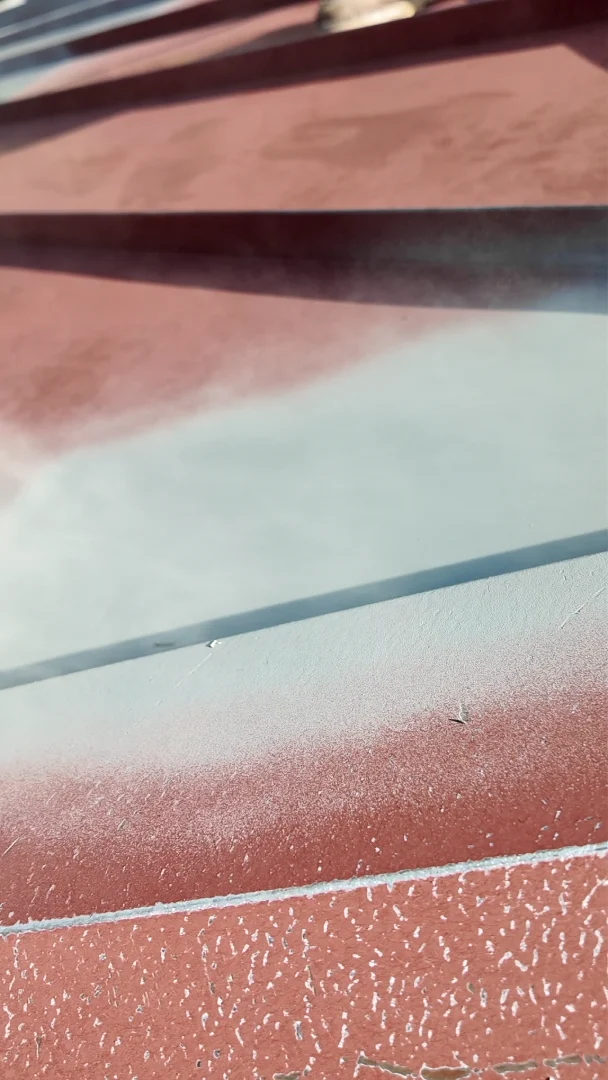
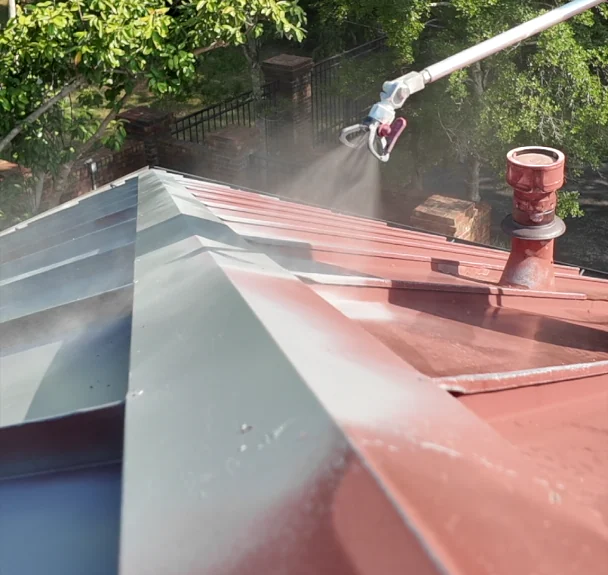
Step 05
The close-up shows the red material being stirred before the reel moves to the application shots. It is not evidence of a particular mix ratio, product or number of coats.
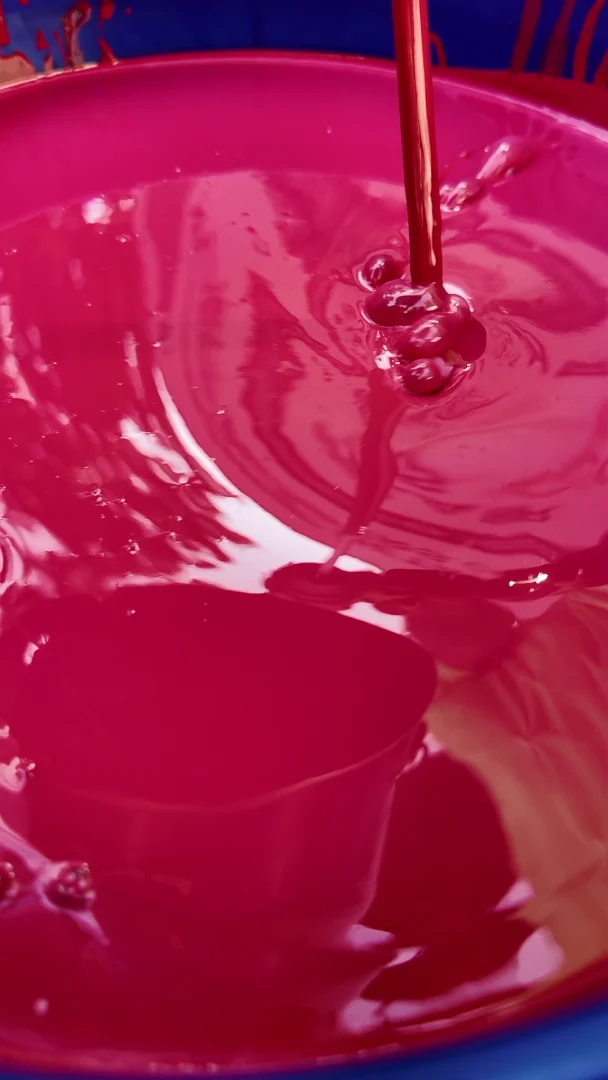
Step 06
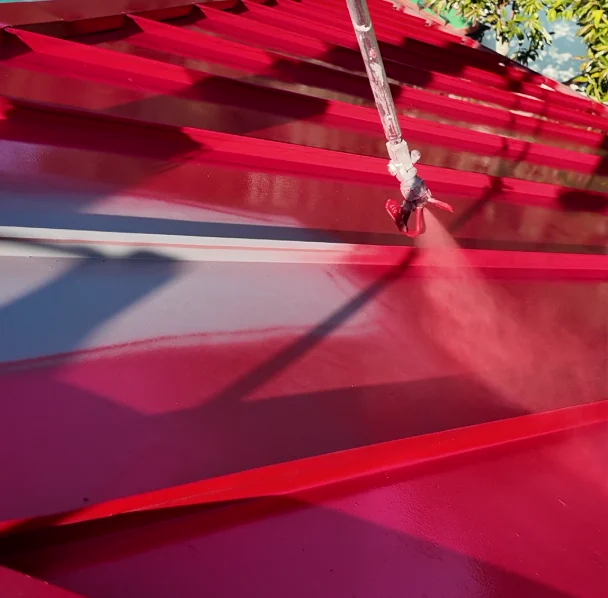
Watch the nozzle, not just the color of the roof. A red fan leaves the spray tool and reaches the broad surface between the raised seams. The frame gives a direct view of spray application, not a measurement of coating thickness.
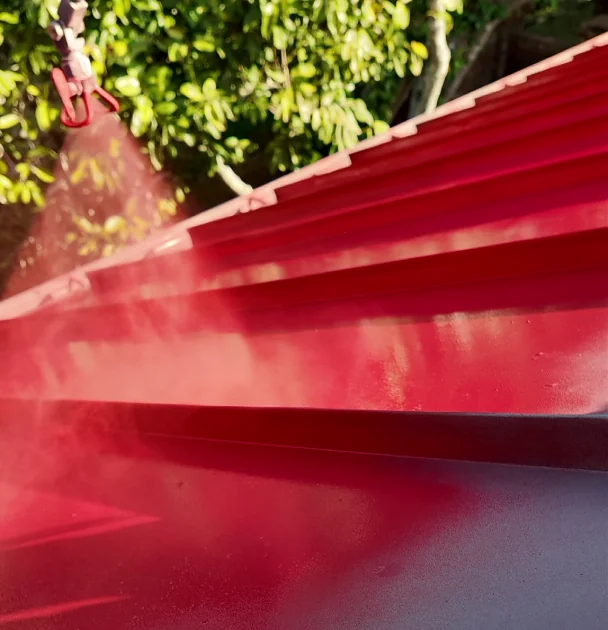
Step 07
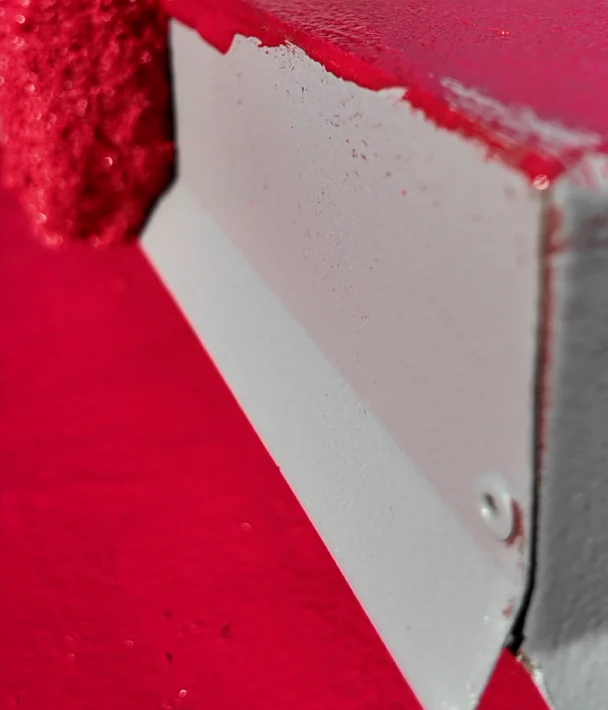
The reel cuts between spray work on the broad panel surfaces and a separate roller pass on the vertical face of a formed edge. The roller shot records what happened at that edge, not how every transition on the roof was treated.
Step 08
The last ground-level and aerial shots show the red finish extending across the connected roof planes. They show the appearance after the work illustrated in the reel, not a water test or evidence of leak correction.
03 · From the Job Site
The final roof views are useful for judging appearance. The weathered panel and prep views answer another question: what was done to the existing surface before the red finish went on?
Open the original reel on YouTube04 · For Your Own Roof
The question is whether the roof itself is sound enough to restore, not whether the finish is the shade you want. Separate the condition report, preparation and finish from any needed work on flashings, laps, fasteners or leaks before comparing prices.
Keep going: Metal roof painting and restoration · More Tennessee project stories
05 · Common Questions
Sometimes. A finish restoration may be appropriate when the panels and attachment are sound enough for the proposed treatment. It is not a substitute for replacing deteriorated metal or diagnosing a source of water entry.
Not by itself. A written scope should distinguish repainting from any specific repairs to fasteners, seams, penetrations or flashing. No leak outcome is established for this video.
Ask what preparation and primer are included, how transitions and fasteners are handled, which finish system is specified, and what conditions are excluded. Those choices explain more than comparing the final color alone.
No. Lighting, panel angle, weathering and the display all affect how the color looks. Ask to see the proposed finish sample in daylight.
Have the panels, attachment and flashing assessed before choosing a finish system. Uneven color alone does not show whether water is entering; holes, loose material and failed roof details may need a separate remedy.
Look at the same panel ribs and surface for a visual change in the finish. Differences in sunlight and camera angle can exaggerate a color change. Photos do not substitute for a documented scope or an inspection of the underlying metal.
Yes. The reel shows why the work before the color is visible matters. A proposal should explain what preparation, product system and attention to laps or other details are included rather than simply naming the color.
The Metal Roofers · Middle Tennessee
Tell us what you have in mind. We’ll take a look and explain what should go into the scope for your property.
Request an inspection and quoteSee more project stories →