Metal Roofing Alliance Member
TVA Preferred Partners Network
10,000+ Metal Roof Jobs
Nashville, TN
Licensed & Insured
BBB A+

Open 8am–8pm
(615) 649-5002Schedule Your
Appointment
Appointment
✦ Reviewed by The Metal Roofers Technical Team
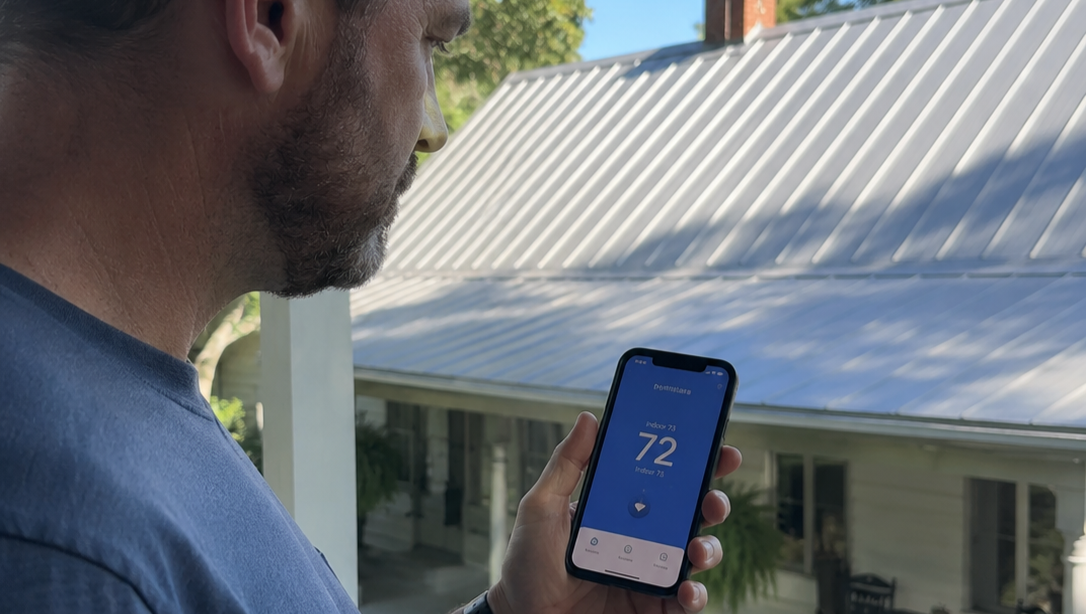
A properly specified residential metal roof does not make a house hotter in summer. In many cases, it reduces roof heat gain, attic temperature, air-conditioning load, and cooling cost compared with conventional dark asphalt roofing. The reason is straightforward: modern metal roofing can reflect a significant portion of solar energy, release heat quickly, and pair effectively with attic ventilation and insulation. The Metal Roofers states that metal roofing reflects solar radiation rather than absorbing and trapping heat the way asphalt shingles do, and it identifies cool roof coatings as a reason attic temperatures stay cooler and air-conditioning systems work less.
The most important distinction is between surface temperature and indoor temperature. A roof surface can become hot to the touch in full sun regardless of material. Asphalt, metal, tile, slate, and membrane roofs all heat up under summer solar load. The relevant question is not whether the roof surface becomes hot. The relevant question is how much solar energy the roof absorbs, how much heat it emits back to the outdoor air, how much heat it conducts into the roof deck and attic, and how much of that heat reaches the conditioned living space. A metal roof can feel hot on the surface and still reduce heat transfer into the house when the panel finish, color, ventilation, underlayment, attic insulation, and roof assembly are selected correctly.
The Metal Roofers gives several measurable heat-related numbers. On its benefits page, it states that cool-roof metal can produce attic temperature reductions of 30 to 40°F compared with conventional asphalt, and it lists 10% to 25% seasonal HVAC energy savings in southern climates. The same page notes that Nashville’s cooling season runs more than five months and that the area averages about 4.5 peak sun hours daily, making roof heat performance a major part of summer comfort and cooling cost.
The Metal Roofers also states that ENERGY STAR-rated metal roofing with reflective pigment coatings can reduce roof surface temperature by up to 100°F compared with dark asphalt and can cut cooling loads by 10% to 25%, depending on the home’s insulation and HVAC system. It adds that in a Nashville summer, air conditioning can account for 30% to 50% of a residential electric bill. Those figures are important because they show that the answer is not merely “metal reflects heat.” The answer is that roof reflectance, attic conditions, insulation, and HVAC load interact.
Color and finish matter. A light-colored metal roof usually reflects more solar energy than a dark-colored metal roof. A cool-roof-rated dark color can still perform better than a standard dark roof material because modern pigments can reflect near-infrared energy that is not visible to the eye. The Metal Roofers explains that many PVDF colors qualify as cool-roof formulations because they use infrared-reflective pigments, and that even dark bronze or charcoal can reflect meaningfully more solar energy than standard dark paint.
That point is critical for homeowners who want a dark roof. The choice is not limited to white metal or poor performance. A dark, cool-roof-rated PVDF finish can reduce heat absorption compared with a non-reflective dark surface. The best summer performance still generally comes from lighter colors and high-reflectance finishes, but the presence of infrared-reflective pigment means color alone does not tell the whole story. The coating chemistry matters as much as the visible shade.
Ventilation is the second major factor. A reflective roof surface reduces heat absorption at the exterior. Ventilation removes heat and moisture from the attic. Insulation slows heat transfer into the living space. A good roof system uses all three. The Metal Roofers states that a well-ventilated attic under a metal roof keeps cooling costs down by venting excess heat and that ridge and soffit ventilation maintain airflow balance. It also states that properly installed metal roofing works with insulation and ventilation so hot air escapes more easily, reducing the burden on the HVAC system.
A metal roof can underperform if the assembly is poor. A dark, uncoated, poorly ventilated roof over weak attic insulation can still contribute to summer heat gain. Metal is not magic. The system must be specified and installed correctly. A dark panel with poor ventilation and leaky attic ductwork will not perform like a light PVDF cool-roof panel over a well-vented attic with adequate insulation. The roof material is one part of the building envelope. The final indoor result depends on the whole assembly.
The Metal Roofers’ roof coating data illustrates the difference between dark, medium, light, and coated metal surfaces. On a 95°F Nashville afternoon, it lists approximate full-sun surface temperatures of 170°F for dark uncoated metal, 145°F for medium color metal, 135°F for faded or chalked metal, 118°F for light-color PVDF metal, and 100°F for a white silicone coating. It also states that actual readings vary by color, age, orientation, and substrate condition. That comparison shows why “metal roof” is too broad a category. The temperature behavior of a white coated metal roof is not the same as the temperature behavior of a dark uncoated metal roof.
The same source states that roof coating can reduce roof surface temperature by 50 to 80°F on a summer afternoon and produce 7% to 15% cooling cost savings in coating applications. That does not mean every new residential metal roof needs a coating. Factory-finished standing seam and metal shingles commonly use durable paint systems from the start. The coating data is useful because it shows the magnitude of reflectance and emissivity effects. A reflective roof surface changes the thermal load imposed on the building.
A common misconception comes from touching metal in the sun. A metal object in direct summer sun can feel extremely hot. That fact does not prove that a metal roof makes the house hotter. Human touch is a poor measure of building heat transfer. Bare or dark metal can heat quickly, but it can also release heat quickly. Asphalt absorbs and stores heat differently. A roof that absorbs heat and holds it into the evening can continue transferring heat after peak sun. A metal roof with reflective pigments and proper ventilation can reduce the total heat entering the attic even if the exterior panel becomes hot during the day.
A second misconception comes from older agricultural buildings. A barn, carport, shed, or open-framed structure with exposed metal panels and no insulated attic assembly can be hot underneath because there is little separation between the roof panel and the occupied space. That is not how a finished residential metal roof functions. The Metal Roofers describes a finished residential assembly as including the metal panel, underlayment, solid wood deck, air space, insulation, and drywall. In a house, the roof is not just a sheet of metal over people’s heads. It is part of a layered building envelope.
The main summer benefit is reduced cooling load. A cooler roof surface reduces attic temperature. A cooler attic reduces the temperature difference that ceiling insulation must resist. Lower attic heat reduces the load on ductwork located in unconditioned attic space. Reduced cooling load means the air conditioner runs less often or runs under less severe conditions. The Metal Roofers states that reduced attic temperatures translate directly to reduced HVAC runtime, lower electricity bills, and longer equipment life.
The final answer is direct. A metal roof does not inherently make a house hotter in summer. A properly specified metal roof generally makes the roof assembly cooler than conventional dark asphalt by reflecting solar energy, releasing heat efficiently, and working with attic ventilation and insulation. The best results come from cool-roof-rated PVDF finishes, lighter or infrared-reflective colors, balanced soffit and ridge ventilation, adequate attic insulation, and careful installation. A poorly ventilated attic or dark non-reflective roof can still run hot, but that is a system-design issue, not proof that metal roofing makes houses hotter. If you want numbers for your own roof, request a free estimate.

With energy bills on the rise and summers getting hotter, Nashville homeowners are searching for ways to keep cooling costs under control.
Learn when Nashville metal roof repair is what you need and when a full replacement is the honest choice for your home and budget in Middle Tennessee.