Metal Roofing Alliance Member
TVA Preferred Partners Network
10,000+ Metal Roof Jobs
Nashville, TN
Licensed & Insured
BBB A+

Open 8am–8pm
(615) 649-5002Schedule Your
Appointment
Appointment
✦ Reviewed by The Metal Roofers Technical Team
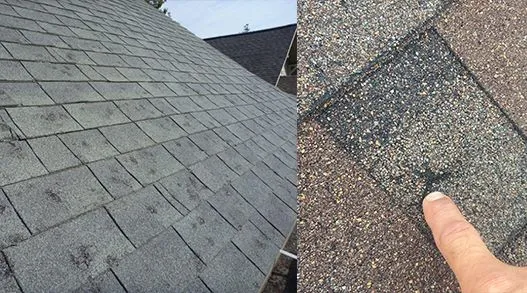
Signs of roof hail damage include dented flashing, vents and gutters, granules collecting in the gutters, dark spots or cracks on shingles, and fresh water stains inside. Hailstones the size of a pea up to the size of a softball can hit a roof at 20 to 100 miles per hour, and what looks like a passing storm can leave real damage behind. Knowing what to look for can be the difference between catching a small problem early and dealing with a leak six months later.
Hail damages roofs in a few specific ways: it dents metal flashing and gutters, it cracks or bruises shingles, and it knocks off the protective granule layer on asphalt shingles, the layer that shields them from UV rays. None of that is always obvious from the ground. A roof can pass the eye test and still have meaningful damage.
That's why a quick visual check after any hailstorm matters, even when the storm seemed mild. Damage that goes unnoticed turns into a leak the next heavy rain.
Flashing, vents, gutters, and plumbing boots are the easiest places to spot hail damage. Metal shows dents and dings clearly. If you see fresh marks on any of these, your roof took hits too.
If you find a heavy accumulation of dark, sand-like granules in your gutters or at the bottom of your downspouts after a storm, your shingles lost their protective coating. That's the layer that blocks UV; without it, the asphalt underneath ages fast.
Hail strikes often leave round, darker spots where the granules were knocked off. They look like polka dots on the roof and can be subtle from the ground. Binoculars help.
Cracked shingles or split flashing are the most urgent finds. These create direct paths for water and need professional attention quickly.
If you see fresh stains or discoloration on a ceiling or upper wall, hail has already breached the roof. Water is in the attic or wall cavity and the clock is ticking.
Hail doesn't stop at the roofline. Shredded leaves on the ground, dented patio furniture, dents in siding, marks on your car. These tell you the storm was serious enough that your roof almost certainly took the same beating.
Call a roofing professional after a hailstorm if you see dents, granule loss, dark spots, or cracks, or if the storm felt severe, and get a professional inspection. A roofer doesn't just check for hail damage; they check the underlying condition of the roof: flashing, fasteners, ventilation, attic, and any spots where storm damage may have compounded an existing weakness. If repairs are needed, the right sequence matters: guard the home against water penetration first, then work through the damaged details across the roof surface.
Most reputable roofers offer free post-storm inspections. There's no reason to wait until a leak shows up.
For significant damage, an insurance claim usually makes sense. Most homeowner policies cover sudden hail damage. Weigh the repair cost against your deductible before filing; small repairs can sometimes be cheaper out of pocket than the long-term effect on your premium. A roofer who handles insurance claims can help you make that call honestly. Our insurance claims guide covers when filing makes sense.
Hail claims can also get complex because you have to show that hail, not age or wear, caused the damage. We help Nashville homeowners document the damage and work through the claims process so they receive what their policy owes them. If your policy covers your roof, mention it up front when you contact us so the inspection can be documented the way your insurer needs to see it.
Yes. Large hail can puncture shingles, crack tile, or split seam sealant on a metal roof. Once the surface is breached, water finds a path. A leak might not show up immediately; it can take weeks or months for water to work through the underlayment and decking before staining a ceiling. By then the damage is bigger than the original puncture. Water that gets in goes to work on the structure: it warps components, rots wood, and feeds mold growth, and the cost of fixing those problems is often much higher than the price of fixing the roof in the first place.
Even without a breach, hail damage accelerates aging. Dents, holes, and spots stripped of their protective layer expose the components underneath to UV rays, which quietly shortens the roof's remaining lifespan. That is why hail damage is worth repairing promptly, not just monitoring.
One inch is the general threshold for shingle damage, roughly the size of a quarter. Smaller hail can still cause issues if it's wind-driven or hitting an older roof. Once hailstones get above an inch and a half, damage becomes near-certain on most residential roofing materials. Metal roofs handle hail better than asphalt across the board. Many metal roofing products carry a UL 2218 Class 4 impact resistance rating, the highest class in that test. Keep the wording straight: Class 4 is a resistance rating, not a hail-proof guarantee. Severe hail can still dent panels cosmetically, but a Class 4 metal roof is far more likely to stay watertight through the same storm that cracks asphalt shingles.
Hail damage is one of those problems that gets exponentially more expensive the longer you wait. A free 20-minute inspection after a storm can save you a five-figure repair bill a year from now. If your area just got hit, walk the property, check the gutters and metal, and call someone to take a closer look from the roof itself.

Storm damage to your roof? Act fast! Learn the crucial steps to protect your home and navigate repairs with ease
Tornado damage to your roof? Learn the immediate steps to take, how to assess the damage, and navigate the insurance claim process
Learn how Nashville metal roof storm repairs address wind, hail, and uplift and when replacement, not repair, is the safer choice for Tennessee homes.