Metal Roofing Alliance Member
TVA Preferred Partners Network
10,000+ Metal Roof Jobs
Nashville, TN
Licensed & Insured
BBB A+

Open 8am–8pm
(615) 649-5002Schedule Your
Appointment
Appointment
✦ Reviewed by The Metal Roofers Technical Team
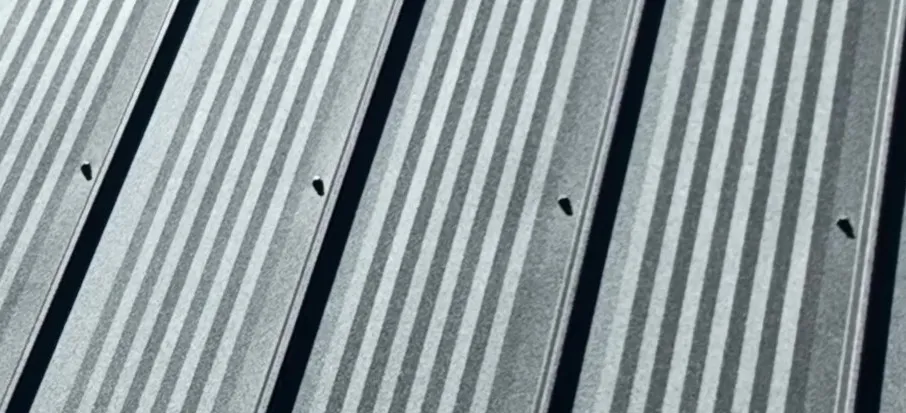
Exposed fastener metal roofing is the most affordable way many Nashville homeowners can move from asphalt shingles into a metal roof system. It is also the metal roof type most people recognize from barns, workshops, garages, porches, farmhouses, utility buildings, and simple ranch homes across Middle Tennessee.
At The Metal Roofers, this system is called Classic Panel. It is the exposed-fastener option for homeowners who want metal roofing performance without paying standing seam prices. It does not try to be the most premium metal roof system. It solves a different problem: giving the homeowner a durable, lower-cost metal roof for the right kind of structure.
That distinction matters. A Classic Panel roof is not the same thing as standing seam. It is not the same thing as metal shingles. It is not always the right choice for every Nashville home. But on the right building, with the right roof shape, installed over the right deck, with the right underlayment and fasteners, it can be one of the strongest value plays in residential and light commercial roofing.
This guide explains what exposed fastener metal roofing costs in Nashville, what drives the price up or down, how Classic Panel compares with asphalt and standing seam, and what homeowners should understand before choosing a screw-down metal roof. For the full market picture across every system, see our 2026 Nashville metal roof pricing guide.
In the Nashville market for 2025–2026, The Metal Roofers lists Classic Panel exposed fastener metal roofing at $5–$9 per square foot installed. The same pricing guide gives a typical 2,000 sq. ft. home range of $10,000–$18,000, with Classic Panel generally costing 40–60% less than standing seam.
A practical planning table looks like this:
Classic Panel / exposed fastener project typePlanning rangeLower-end simple Classic Panel installation$5–$6 per sq. ft.More detailed Classic Panel installation$7–$9 per sq. ft.Typical 2,000 sq. ft. home example$10,000–$18,000Cost per roofing square by math$500–$900 per squareCompared with standing seamUsually 40–60% less
The lower end generally fits simple gable roofs, 29-gauge panels, SMP paint, minimal penetrations, good deck condition, easy access, and straightforward geometry. The upper end generally includes 26-gauge panels, PVDF paint, multiple hips and valleys, complex trim, steep pitch, second-story access, deck repair, and numerous penetrations.
An exposed fastener metal roof is a metal roof system where the panels are attached through the face of the panel with visible screws. Each screw penetrates the metal panel and uses a sealing washer to help protect the penetration from water.
This is why the system is often called:
Exposed fastener metal roofing
Screw-down metal roofing
Through-fastened metal roofing
Classic Panel
R-panel
PBR panel
AG panel
Max-rib
Corrugated metal roofing
5V crimp metal roofing
The names vary by panel profile, but the concept is similar: the fasteners are visible and exposed to sun, rain, heat, wind, and thermal movement.
That is the main difference between exposed fastener metal roofing and standing seam. Standing seam hides the fasteners below the panel seams or clips. Classic Panel leaves the fasteners visible in the field of the roof.
The Metal Roofers describes Classic Panel as the exposed-fastener value system for simpler buildings, while standing seam is the concealed-fastener option for long-term performance and fewer visible fasteners.
Classic Panel is less expensive because the system is simpler.
Standing seam uses narrower panels, concealed clips, folded or locked seams, more specialized tools, more custom trim work, and more labor around roof details. Classic Panel uses wider exposed-fastener panels that can be installed more quickly. The Metal Roofers explains that Classic Panel savings come from wider panels, faster installation, no clips or seaming tools, and thinner gauge options. The tradeoff is periodic fastener maintenance and a shorter maximum service life compared with standing seam.
That is why Classic Panel can be a smart option for:
Simple homes
Ranch homes
Detached garages
Workshops
Barns
Farm buildings
Outbuildings
Porches
Utility buildings
Budget-conscious residential roofs
Light commercial roofs
The price advantage is real, but it comes with a responsibility: the homeowner needs to understand the maintenance profile of an exposed-fastener roof.
Roofing cost is based on roof surface area, not interior floor area. A 2,000 sq. ft. house does not always have a 2,000 sq. ft. roof. Roof pitch, overhangs, porches, attached garages, dormers, and roof complexity can all increase the measured roof area.
Still, homeowners need a planning table. Using The Metal Roofers’ $5–$9 per sq. ft. installed Classic Panel range, here is what different roof sizes may look like:
Measured roof areaRoofing squaresAt $5/sq. ft.At $7/sq. ft.At $9/sq. ft.1,500 sq. ft.15 squares$7,500$10,500$13,5002,000 sq. ft.20 squares$10,000$14,000$18,0002,500 sq. ft.25 squares$12,500$17,500$22,5003,000 sq. ft.30 squares$15,000$21,000$27,0003,500 sq. ft.35 squares$17,500$24,500$31,500
These examples are not final quotes. They are simple math based on The Metal Roofers’ published Classic Panel range. The actual price depends on the roof’s geometry, pitch, access, panel gauge, coating, trim, penetrations, decking condition, tear-off, and detail work.
Roofers often price work by the roofing square. One roofing square equals 100 square feet of roof surface.
Using the Classic Panel range of $5–$9 per sq. ft. installed, the cost per roofing square is:
Installed price per sq. ft.Price per roofing square$5/sq. ft.$500/square$6/sq. ft.$600/square$7/sq. ft.$700/square$8/sq. ft.$800/square$9/sq. ft.$900/square
A low price per square is not automatically a better deal. A complete Classic Panel quote should include panels, fasteners, underlayment, closures, trim, flashing, labor, tear-off if included, cleanup, and a clear plan for deck repair if hidden damage is found.
The Metal Roofers gives a useful Nashville example: a homeowner facing a $12,000 asphalt reroof may be able to get a Classic Panel metal roof for $14,000–$18,000. That creates a $2,000–$6,000 premium to move from a shorter-cycle asphalt roof to a metal roof with a much longer expected service life.
That is the core reason Classic Panel deserves its own cost guide.
Standing seam is often the first metal roof system homeowners research, but it may be more roof than the budget allows. Asphalt is familiar and cheaper upfront, but many homeowners are tired of replacing shingles after heat, storms, granule loss, algae, wind, or hail. Classic Panel sits between those two choices.
It gives the homeowner a metal roof without the full standing seam investment.
The lower end of the Classic Panel range is usually possible when the roof is simple and efficient to install.
A lower-cost Classic Panel roof often has:
Simple gable roof design
Few valleys
Few or no dormers
Minimal wall transitions
Minimal pipe penetrations
Good existing roof deck
Easy driveway and ladder access
One-story or low two-story work
29-gauge panels
SMP paint finish
Straightforward tear-off
No major structural repairs
No complex chimney flashing
No unusual ventilation correction
The Metal Roofers specifically identifies simple gable roofs, 29-gauge panels, SMP paint, minimal penetrations, good deck condition, easy access, and straightforward geometry as conditions that push Classic Panel toward the lower end of the price range.
These roofs are common on ranch homes, simple detached garages, shops, barns, and utility buildings in areas like Donelson, Hermitage, Antioch, Smyrna, rural Davidson County, Wilson County, Sumner County, Robertson County, and other Middle Tennessee communities.
The upper end of the Classic Panel range usually appears when the roof requires more material, more time, stronger panels, better finish, more trim, more flashing, or more correction work.
A higher-cost Classic Panel roof may include:
26-gauge panels
PVDF paint finish
Multiple hips
Multiple valleys
Dormers
Chimneys
Skylights
Steep pitch
Second-story work
Hard access
Complex trim
Deck repair
Many penetrations
Longer panel runs
Wall transitions
Ventilation correction
Extra underlayment requirements
More detailed eave, rake, ridge, and closure work
The Metal Roofers identifies 26-gauge panels, PVDF paint, multiple hips and valleys, complex trim, steep pitch, second-story access, deck repair, and numerous penetrations as the conditions that push Classic Panel toward the higher end of the range.
This is why two homes with the same roof square count can have very different prices. A simple 25-square gable roof may install quickly. A 25-square roof with dormers, valleys, chimneys, sidewalls, and damaged decking is a much more detailed project.
Classic Panel usually costs more upfront than basic asphalt shingles, but less than standing seam or many metal shingle systems.
The Metal Roofers’ Classic Panel page compares installed cost at $5–$9 per sq. ft. for Classic Panel and $4–$8 per sq. ft. for architectural asphalt. That means the two systems can overlap, especially when the asphalt quote is on the higher end and the Classic Panel quote is on the lower or middle end.
The reason homeowners consider the upgrade is not just the first invoice. It is the roof cycle.
A homeowner looking at asphalt may be asking, “What is the cheapest way to replace this roof right now?”
A homeowner looking at Classic Panel is usually asking, “How much more would it cost to stop repeating the asphalt cycle?”
Classic Panel makes the most sense when the premium over asphalt is small enough that the longer service life, metal appearance, lower granule-loss issues, and improved long-term value justify the upgrade.
Classic Panel and standing seam are both metal roofing systems, but they should not be treated as interchangeable.
Standing seam is the premium concealed-fastener system. It removes the exposed screw field from the main weather surface. The roof is built around seams, clips, panel movement, trim, underlayment, and flashing. The Metal Roofers describes standing seam as the first system to study when the homeowner wants a long-term roof for a primary residence. Our standing seam page covers that system in detail.
Classic Panel is the exposed-fastener value system. It costs less, installs faster, and can be a practical option on simpler roofs and utility structures. But it has exposed screws and washers, which means maintenance is part of ownership.
The Metal Roofers says Classic Panel is typically 40–60% less installed than standing seam. On a Nashville home where standing seam might cost $20,000–$30,000, Classic Panel may come in around $10,000–$18,000.
That comparison is useful because it shows the tradeoff clearly:
SystemMain advantageMain tradeoffClassic PanelLower upfront costExposed fastener maintenanceStanding seamConcealed fasteners and premium long-term systemHigher upfront costAsphalt shinglesLowest familiar upfront optionShorter replacement cycleMetal shinglesTraditional look with metal performanceHigher cost than Classic Panel
For many primary residences with complex rooflines, standing seam may be the better long-term choice. For simpler roofs where budget matters, Classic Panel may be the more practical metal option.
Classic Panel has a ribbed, linear, functional appearance. On some buildings, that look is perfect. On others, it can feel too agricultural or too industrial.
The Metal Roofers identifies rural Davidson, Wilson, Sumner, and Robertson County properties as strong fits for Max-Rib or R-Panel profiles, especially farmhouses, ranches, and acreage properties where ribbed metal is expected. The company also identifies Donelson, Hermitage, Antioch, and Smyrna as good-fit areas for budget-conscious suburban homes with simple ranch rooflines.
Classic Panel is especially appropriate for:
Rural farmhouses
Ranch homes
Acreage properties
Detached garages
Barns
Workshops
Equipment sheds
Post-frame buildings
Barndominiums
Porches
Carports
Utility buildings
Light commercial buildings
It may be less appropriate for:
Historic front roof planes
Strict HOA neighborhoods
Luxury homes with complex architecture
Homes where curb appeal requires a softer shingle look
Homes where the owner wants minimal roof maintenance
Low-slope roof sections
Large complex rooflines with many transitions
Projects where solar is a major future priority
That does not mean Classic Panel cannot be used on a house. It means the building and the roof shape should make sense for the system.
Exposed fastener roofing is not a single panel. It includes several profiles, each with a different look and use case.
Max-Rib is one of the most common exposed fastener profiles in residential and light commercial metal roofing. The Metal Roofers lists this type of profile with 36-inch coverage, ¾-inch rib height, 9-inch rib spacing, and common 29-gauge or 26-gauge options. It is described as a fit for residential and light commercial work.
This is often the profile people picture when they think of a classic screw-down metal roof.
R-panel and PBR panel have a stronger, more commercial look. PBR means purlin bearing rib, and the lap side includes added bearing support where the panel lands on framing. The Metal Roofers describes this as useful for post-frame buildings and certain commercial projects, while noting that the bold rib can look too industrial on a primary home.
This profile is common on barns, shops, commercial buildings, and larger structures.
5V Crimp has a flatter, more traditional Southern look. The Metal Roofers describes it as a profile that can fit cottages, porches, older farmhouses, lake houses, and homes where standard ribbed panels would feel too industrial. The tradeoff is coverage: many 5V panels use 24-inch coverage instead of 36-inch coverage, which means more panels and more layout work.
For some Tennessee homes, 5V Crimp may look more appropriate than a taller ribbed panel.
Corrugated panels have the classic wave pattern associated with older metal roofs, agricultural buildings, sheds, and certain architectural projects. They can look great in the right setting but may not fit every Nashville home or HOA-controlled neighborhood.
The key is matching the panel to the building. A panel that looks perfect on a rural workshop may look wrong on a Green Hills colonial.
Gauge is one of the most important cost and performance variables in Classic Panel roofing.
In metal roofing, a lower gauge number means thicker metal. A 26-gauge panel is thicker than a 29-gauge panel. The Metal Roofers explains that exposed fastener panels commonly come in 29, 26, and 24 gauge, and that gauge affects rigidity, dent resistance, spanning capability, and service life.
29-gauge is the standard residential exposed fastener option. It helps keep Classic Panel affordable and is commonly used over solid decking on residential projects.
The Metal Roofers states that 29-gauge is adequate for residential Classic Panel installations over solid decking with moderate panel runs and normal Nashville weather loads.
26-gauge is the upgrade. It is thicker, more rigid, more resistant to denting, and better at holding fasteners over time.
The Metal Roofers describes 26-gauge as adding roughly 30% more steel thickness, greater rigidity, better hail resistance, and improved pull-through strength at fastener points. The company also says it is the upgrade they recommend most often for homeowners who want the Classic Panel look but want to invest in a longer-lasting installation.
The Metal Roofers’ FAQ also says 26-gauge can add roughly $0.50–$1.50 per square foot to the project.
For a 2,000 sq. ft. roof, that upgrade could add about $1,000–$3,000, depending on the exact panel, finish, and scope.
Finish affects cost, appearance, color stability, and long-term weathering.
SMP stands for silicone-modified polyester. It is commonly used on exposed fastener panels and is usually the more affordable paint system. The Metal Roofers lists SMP as standard pricing, with a wider selection of standard colors and availability in 29-gauge and 26-gauge panels.
SMP is often the practical choice for barns, garages, ranch homes, workshops, and budget-sensitive Classic Panel projects.
PVDF is the premium paint option often associated with Kynar 500-type finishes. The Metal Roofers lists PVDF as a more premium palette, typically available in 26-gauge and heavier panels, and about 30–40% more than SMP.
PVDF may make sense when color stability, curb appeal, and long-term finish performance are more important than hitting the lowest possible price.
Underlayment is important on every roof, but it is especially important on Classic Panel.
Standing seam has concealed fasteners and fewer penetrations in the field of the roof. Classic Panel has hundreds or thousands of exposed screws. The Metal Roofers explains that on a Classic Panel roof, underlayment becomes critically important because it is the second line of defense if a fastener develops a slow leak, if wind-driven rain gets past a closure, or if condensation forms on the underside of the panel.
That is one of the biggest differences between a cheap screw-down roof and a professional Classic Panel installation.
The panel matters. The screws matter. The trim matters. But underlayment is the backup waterproofing plane.
A low bid that saves money by downgrading underlayment may look attractive at signing, but it can create expensive problems later.
The most important long-term issue with exposed fastener metal roofing is the fastener system.
Every screw is a penetration. Every washer is exposed to heat, UV, rain, wind, and temperature movement. Over time, fasteners can loosen, back out, degrade, or lose washer compression.
The Metal Roofers recommends professional fastener and sealant inspections every 5–7 years, including checking washer compression, looking for backed-out screws, and inspecting sealant at flashings and transitions. The company also notes that selective fastener replacement may be needed around years 15–20+, especially for screws showing washer degradation, hole elongation, or corrosion.
This is not a defect in Classic Panel. It is part of the ownership model.
Standing seam has fewer exposed maintenance points. Classic Panel has a lower upfront cost but requires periodic fastener attention.
The Metal Roofers says that with quality panels, ZAC long-life fasteners, proper installation, and periodic maintenance, 40–60 years is a realistic expectation for a Classic Panel roof. The panels and paint last the longest, while fastener seals are the maintenance item that need periodic inspection and selective replacement.
That is the value proposition.
Classic Panel does not promise the same low-maintenance ownership profile as standing seam. Instead, it offers a long-lived metal roof system at a lower installed cost, with fastener maintenance built into the plan.
Some manufacturers allow metal panels to be installed over existing asphalt shingles under certain conditions. Some installers do it to reduce cost.
The Metal Roofers does not make that their standard. Their Classic Panel page says they tear off to the deck on every project so they can inspect sheathing, fix soft spots, re-fasten loose boards, and install proper underlayment.
That is important for Nashville homes because decking problems are common after years of heat, humidity, leaks, poor ventilation, and storm damage.
A roof-over installation may save money upfront, but it can hide:
Soft decking
Rotten sheathing
Old leaks
Loose boards
Bad ventilation
Trapped moisture
Improper old flashing
Uneven roof surfaces
Nail pops
Structural concerns
For a long-term metal roof, seeing the deck is usually worth it.
Yes, but only when the roof and expectations fit the system.
The Metal Roofers identifies 29-gauge Classic Panel over solid decking as adequate for most Nashville homes with moderate panel runs and normal local weather loads. They also state that solid decking is required for residential Classic Panel projects, and they list a 3:12 minimum slope and maximum panel run guidance of 40 feet.
Classic Panel is strongest on simple roof shapes. It is less ideal when the home has:
Low-slope sections
Complicated valleys
Many dormers
Many skylights
Multiple chimneys
Strict HOA rules
High-end curb appeal expectations
Future solar plans
Historic district review
Long panel runs
Complex transitions
That does not mean the system cannot work. It means the roof should be evaluated carefully.
HOA approval can be a challenge for exposed fastener roofs.
The Metal Roofers notes that many Nashville-area HOAs in suburban developments specify “architectural shingle or equivalent,” and that the ribbed profile of Classic Panel may not meet that standard. In rural areas, unincorporated neighborhoods, and communities without strict covenants, Classic Panel may have no restrictions.
This is one reason metal shingles often work better in HOA-controlled neighborhoods. They keep a more traditional roof appearance while still giving the homeowner metal performance.
For HOA homes, the homeowner should not submit a vague request for “a metal roof.” The submittal should include the exact panel profile, gauge, color, finish, photos, manufacturer data, and explanation of why the roof fits the home.
Classic Panel should be approached carefully in Nashville historic overlays.
A ribbed exposed fastener panel may fit a rural farmhouse, barn, garage, or utility structure beautifully. It may not fit a visible roof plane on a historic urban home. For many historic homes, a lower-profile standing seam or historically compatible metal profile may be easier to justify.
Before choosing Classic Panel for a home in East Nashville, Germantown, Lockeland Springs, Edgefield, Belmont-Hillsboro, Waverly-Belmont, Salemtown, Richland-West End, or another historic overlay, the homeowner should confirm whether Metro Historic Zoning review applies.
Historic approval is separate from building permits and separate from HOA approval.
For Nashville homeowners, permit planning should happen before work begins.
Metro Nashville’s residential permit guidance says normal maintenance repairs include repairs to an existing roof that do not exceed 33% of the roof area. Metro’s single-family renovation guidance also lists “roofing, new layer or replacing more than 1/3 of the roof” as permit-triggering work.
For a small roof repair, a permit may not be needed. For a new roof layer, a full reroof, replacement of more than one-third of the roof, structural work, significant decking replacement, commercial work, or historic-overlay work, the homeowner should verify permit requirements with Metro Codes before installation.
Most small non-structural roof repairs are different from full roof replacement. A complete Classic Panel roof installation should be treated as a real construction project, not as a patch.
Solar can be installed on Classic Panel, but the attachment method is different from standing seam.
The Metal Roofers explains that solar on standing seam can use non-penetrating clamps that grip the seam. Solar on Classic Panel generally requires penetrating brackets that screw through the metal into the structure, adding more penetrations that must be flashed and sealed carefully. If solar is a high priority, The Metal Roofers describes standing seam as the more elegant solution.
That does not mean Classic Panel cannot support solar. It means the homeowner should decide early.
If solar is likely within the next few years, discuss it during the roofing estimate. The best roof for a future solar array may not be the same as the cheapest metal roof today.
The noisy metal roof stereotype usually comes from open-framed agricultural buildings.
The Metal Roofers explains that on a finished home with solid decking, underlayment, insulation, and drywall, the difference from asphalt is minimal. Heavy rain may be slightly more audible, but it is not the “tin can” sound people imagine. That sound comes from open-framed agricultural buildings with no decking under the metal.
This is an important point for Nashville homeowners. A metal panel on a barn is not the same as a metal roof assembly over a finished home.
Noise depends on:
Solid decking
Underlayment
Attic insulation
Ceiling drywall
Roof pitch
Panel profile
Open framing vs. finished space
Room location
Porches and additions
Skylights
A Classic Panel porch roof may sound louder than the main house because porches often have less insulation. That does not mean the main house roof will sound the same.
A good exposed fastener metal roof quote should be specific. It should not simply say “metal roof.”
A professional Nashville Classic Panel estimate should include:
Panel profile
Panel gauge
Paint system
Color
Measured roof area
Tear-off scope
Deck inspection plan
Deck repair pricing
Underlayment type
Fastener type
Fastener pattern
Ridge cap
Eave trim
Rake trim
Valley metal
Foam closures
Pipe boots
Sidewall flashing
Endwall flashing
Chimney flashing if applicable
Ventilation plan
Sealants and tapes
Permit responsibility if required
Cleanup and disposal
Warranty terms
Maintenance schedule
The Metal Roofers emphasizes that metal roofing should be explained as a set of systems, not a single upgrade. Each system solves a different roofing problem, and the details determine whether the roof performs after years of Nashville heat, rain, wind, hail, humidity, and tree cover.
The Metal Roofers’ Classic Panel page breaks the project into major cost categories, including panels and materials, tear-off, prep, installation, detail work, and cleanup. It also identifies panels, fasteners, underlayment, and closures as part of the material scope.
A homeowner should understand that the panel itself is only part of the roof.
A complete Classic Panel project includes:
Metal panels
Fasteners
Washers
Underlayment
Closures
Trim
Flashings
Sealants
Labor
Tear-off
Deck preparation
Cleanup
Disposal
Detail work
If one contractor’s quote is dramatically lower, it is worth asking what has been removed.
The most common omissions are underlayment quality, closures, flashing detail, deck repair, tear-off, ventilation, and cleanup.
Roofing is priced from roof surface area. A 2,000 sq. ft. house may have much more or less than 2,000 sq. ft. of roof surface depending on design.
Both are metal roofs, but they are different systems. Standing seam is concealed-fastener. Classic Panel is exposed-fastener. The cost, maintenance, appearance, and long-term ownership are different.
The lower cost of Classic Panel comes with a maintenance requirement. Screws and washers need periodic inspection.
Fasteners are not minor accessories. They are the attachment and sealing points for the entire roof.
Classic Panel relies heavily on underlayment as a backup waterproofing plane. Underlayment is not where a homeowner should chase the cheapest bid.
Metal roofing should not hide roof deck problems. A full tear-off allows the contractor to inspect sheathing, repair soft spots, and correct issues before the new metal roof is installed.
Classic Panel may not fit every HOA guideline. The ribbed appearance can be rejected in neighborhoods that require architectural shingle-like materials.
If solar panels are planned, standing seam may be a better long-term roof choice because of non-penetrating clamp options.
The Metal Roofers lists Classic Panel exposed fastener metal roofing at $5–$9 per square foot installed in the Nashville market for 2025–2026. A typical 2,000 sq. ft. home is listed around $10,000–$18,000.
Yes. The Metal Roofers says Classic Panel is typically 40–60% less installed than standing seam. On a Nashville home where standing seam might cost $20,000–$30,000, Classic Panel often comes in around $10,000–$18,000.
Not always, but the costs can overlap. The Metal Roofers compares Classic Panel at $5–$9 per sq. ft. installed and architectural asphalt at $4–$8 per sq. ft. installed.
With quality panels, long-life fasteners, proper installation, and periodic maintenance, The Metal Roofers says 40–60 years is a realistic expectation. Fastener seals are the maintenance item.
Eventually, selectively, yes. The Metal Roofers says with long-life fasteners, the timeline can stretch to 15–20+ years before replacement is typically needed, and even then, worn screws are replaced selectively rather than replacing every screw on the roof.
For many homeowners, yes. The Metal Roofers says 26-gauge is roughly 30% thicker than 29-gauge, more rigid, more hail-resistant, and better at holding fasteners long-term. It may add about $0.50–$1.50 per sq. ft. to the project.
Some manufacturers allow it, but The Metal Roofers’ standard is full tear-off. They remove the old roof so they can inspect the deck, fix soft spots, re-fasten loose boards, and install proper underlayment.
On a finished home with solid decking, underlayment, insulation, and drywall, The Metal Roofers says the difference from asphalt is minimal. The loud “tin” sound usually comes from open-framed agricultural buildings with no decking below the metal.
It depends. The Metal Roofers notes that many Nashville-area HOAs specify architectural shingles or equivalent materials, and the ribbed profile of Classic Panel may not meet that standard. In rural areas or communities without strict covenants, Classic Panel is often easier to use.
Small roof repairs may not require a permit if they stay under Metro’s normal maintenance threshold. Metro’s published guidance treats existing roof repairs up to 33% of the roof area as normal maintenance, while replacing more than one-third of the roof or installing a new layer can trigger permit requirements.
Classic Panel is the value metal roof system for Nashville and Middle Tennessee.
It is not the most premium roof The Metal Roofers installs. That role belongs to standing seam and certain metal shingle systems. But Classic Panel fills an important gap: it gives homeowners a lower-cost path into metal roofing when the roof shape, building type, neighborhood, budget, and maintenance expectations fit the system.
The Metal Roofers’ published Nashville range is $5–$9 per square foot installed, with a typical 2,000 sq. ft. home around $10,000–$18,000. Simple roofs with 29-gauge panels, SMP paint, good decking, easy access, and minimal penetrations trend lower. Roofs with 26-gauge panels, PVDF paint, hips, valleys, steep pitch, second-story work, deck repair, and many penetrations trend higher.
For a homeowner comparing asphalt shingles, Classic Panel, and standing seam, the decision should not be based only on the lowest bid. It should be based on the roof system, the building, the maintenance plan, the neighborhood, and how long the homeowner wants the roof to last.
A good Classic Panel roof is not just metal screwed to a house. It is panels, fasteners, underlayment, closures, trim, flashing, ventilation, deck preparation, and maintenance planning working together as a complete roof system. Request a Classic Panel estimate to see where your roof lands in the range.

When it is time for a roof replacement in Middle Tennessee, homeowners face a high-impact decision: metal roofing or asphalt shingles.
Learn when it is worth repairing an older metal roof on your Nashville home and when leaks reveal installation issues that make full replacement the better choi
What do metal shingles cost in Nashville? Installed price ranges, cost per roofing square, and what drives a Tennessee roof quote.