Talk With A Metal Roof Expert
Call (615) 649-5002.avif)




.avif)
-min.avif)


.avif)
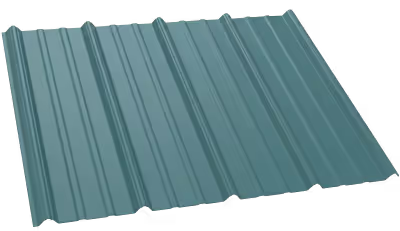
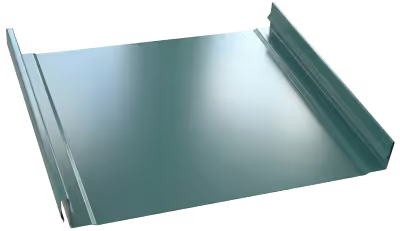
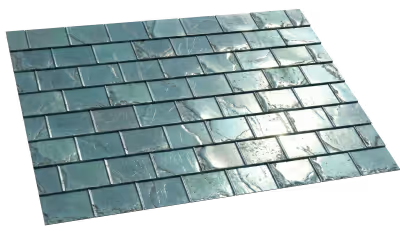

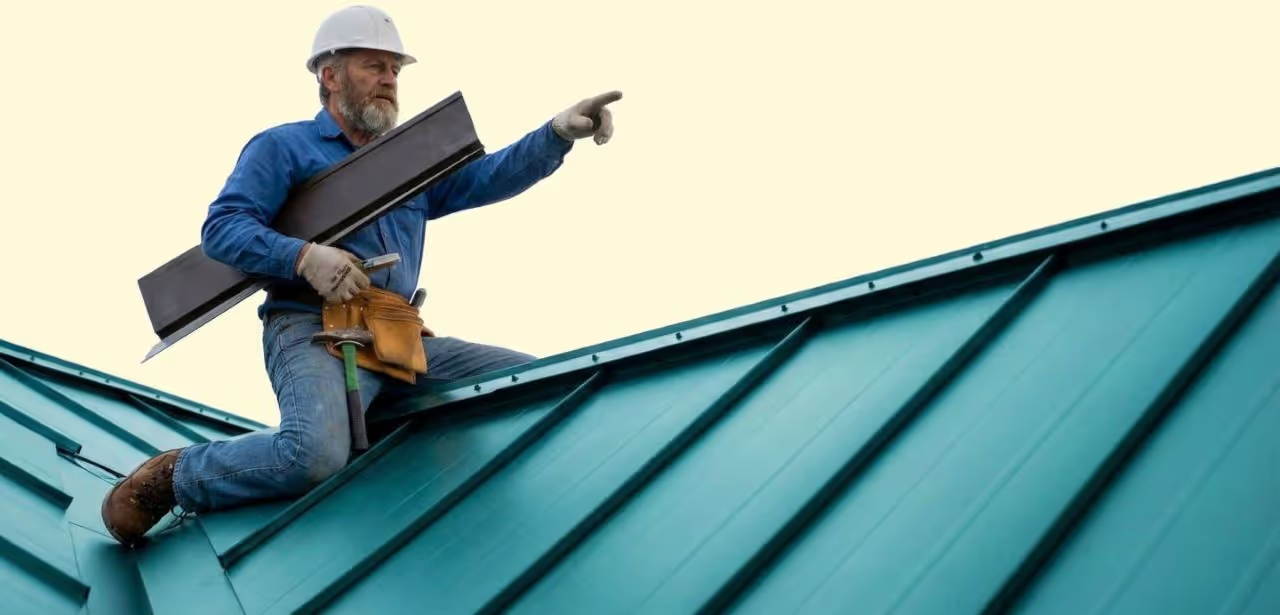
Nashville’s climate puts consistent pressure on residential roofing systems. Long, hot summers combined with sudden thunderstorms, heavy rain, and seasonal humidity create conditions that can quickly wear down traditional roofing materials. Homes in neighborhoods like Green Hills, Belle Meade, and along West End Avenue experience prolonged sun exposure, while properties near Percy Warner Park, Radnor Lake, and Shelby Bottoms deal with higher moisture levels from surrounding trees and green space.
.avif)
.avif)
A properly designed metal roofing system addresses this by incorporating balanced intake and exhaust ventilation, paired with high-performance underlayment. This setup helps regulate attic temperatures, reduce moisture accumulation, and protect the roof structure year-round. For homes near Radnor Lake, Richland Creek Greenway, or shaded areas of Belle Meade, moisture control is a key advantage of metal roofing when installed correctly.
A common misconception among Nashville homeowners is that metal roofs are loud during rain or storms. In reality, when installed over solid decking with modern underlayment, standard in most Nashville homes, metal roofing is no louder than asphalt shingles. Even during heavy rain events or fast-moving storms typical of Middle Tennessee, interior noise levels remain minimal. Beyond sound control, metal roofing also improves indoor comfort by reflecting solar heat, helping homes stay cooler during Nashville’s peak summer months, particularly in exposed areas like West End and Green Hills.
.avif)

Most Nashville homes are designed around ~115 mph wind guidance, but exposure varies a lot from Belle Meade hills to the open corridors near I-24 by Antioch. Homes near Percy Priest Lake, the ridge pockets around Forest Hills, and higher elevations in West Meade can see stronger uplift than shaded lots in Sylvan Park. We spec panel profiles and clip/fastener schedules to the manufacturer’s tested uplift ratings based on roof height, pitch, and the exact exposure of your street and lot.
With solid decking and modern underlayments, rain noise is comparable to architectural shingles. Adding attic insulation and balanced ventilation helps even more, especially for homes in East Nashville near Shelby Park and in older neighborhoods like Lockeland Springs where roof assemblies vary from house to house.
No, metal doesn’t attract lightning. If a strike occurs, metal disperses energy across the surface. For taller homes near 12 South or multi-story builds around The Gulch, we can coordinate code-compliant grounding details when your electrician recommends it.
Severe hail can cause cosmetic dimples, but standing seam and interlocking systems stay watertight. We offer impact-rated Class 4 options and reinforce valleys and penetrations, important for rooflines common in Green Hills, Brentwood-adjacent areas, and steep transitions in Germantown renovations.
Ice damming is limited, but shaded eaves and north slopes benefit, especially where mature trees shade roof edges in Belmont-Hillsboro, Richland-West End, and parts of Inglewood. We often install high-temp self-adhered membrane at eaves/valleys and around skylights for added security.
Most replacements require a roofing permit through Metro Nashville / Davidson County. We pull permits, schedule inspections, and provide close-out documentation for your records and future insurance needs.
Typical lead times run 2–4 weeks (season/HOA dependent). A 1-story ranch (25–35 squares) installs in 2–4 days; a two-story complex roof (40–55 squares) typically runs 4–6 days, with weather contingency built in.
Yes. PVDF “cool roof” colors reflect solar heat; paired with balanced soffit + ridge ventilation, attics run cooler in July/August, especially on west-facing roof planes near Charlotte Pike, Harding Pike, and the Nolensville Pike corridor.
In most homes, no. Signal enters through windows and openings; mesh networks or a window-adjacent router fixes weak spots in larger homes, common in Belle Meade and newer builds near Music Row.
Upfront, usually yes. Over time, metal’s 2–3× lifespan, minimal blow-off risk, and potential energy/insurance advantages often lower total cost of ownership in Nashville’s storm cycles.
Absolutely. Standing seam is solar-friendly, clamps attach to seams with no new roof penetrations. We coordinate layout and service clearances with your solar installer.
We use mechanical seams on lower slopes, high-temp underlayment, and solid decking to quiet impact. Insulated porch lids and tongue-and-groove assemblies with rigid foam reduce sound, popular on back porches in Sylvan Heights and West End.
Clear debris from valleys/gutters, inspect after major storms, and schedule a 5-year check (fasteners, flashings, sealant touch-ups). Exposed-fastener roofs need periodic re-screw/washer service; standing seam is largely low-maintenance.
Yes, when profile and color match the streetscape. In places like Germantown, 12 South, and Green Hills, we provide cut-sheets, color chips, and mockups; many boards prefer slate-look metal shingles or low-gloss standing seam in charcoal, dark bronze, or galvalume.
Favorites include matte charcoal, dark bronze, deep black, and galvalume. We’ll review samples in your daylight and coordinate with brick, siding, and gutter colors common across East Nashville, West Meade, and Green Hills.
Not when installed correctly. The “tin roof” noise reputation usually comes from metal installed over open framing, barns, or older builds with little insulation and no solid roof deck. Most Nashville homes have a solid roof deck, attic insulation, and interior drywall, which already dampen sound significantly. When a metal roof is installed over that deck with the proper underlayment and fastening method, sound levels in living spaces are typically comparable to asphalt shingles during heavy rain and wind. If anything sounds louder than expected, it’s usually tied to installation details (panel attachment, attic insulation gaps, or ventilation openings), not the metal itself.
You may lower the risk your home presents to an insurance company in Nashville when you replace an old asphalt shingle roof with a new metal roof. Many carriers reward the lower risk of metal roofing with premium discounts that can reach up to about 30%, especially when you use impact-resistant or fire-resistant materials. You have to ask your agent what roof types they credit, use a licensed metal roofing contractor, and provide documentation of the materials and completion date so the discount may be applied.