
Talk With A Metal Roof Expert
Call (615) 649-5002


.avif)
-min.avif)



.avif)
.avif)
.avif)
White House is built around open corridors, not just cul de sacs. Many neighborhoods back up to fields, tree lines, and drainage paths that funnel wind. Homes near Highway 76 and Raymond Hirsch Parkway sit in spots where storm lines tend to track. Houses along 31W and Tyree Springs Road often have long roof runs that are fully exposed on at least one side. Even in tighter subdivisions near White House Heritage schools and business districts, there is usually more open sky and less surrounding structure than there would be inside a denser city.
Typical roof setups in White House include older homes around the original center of town, with multiple additions and a patchwork of rooflines, mid era ranches with long, low slopes facing west or south, and newer two story homes with complicated gables and valleys. On top of that, many properties have detached garages, shops, or small barns on the same drive.
Shingles can technically cover those roofs, but they struggle with a few recurring patterns. Wind comes across open ground and lifts shingles along eaves and ridges. Hail storms hammer the same side of the house over and over. Tree debris piles into valleys and against lower roofs. Gutters fill with granules after every hard season. When you combine that with the cost of interior finishes, flooring, cabinets, and furnishings, the risk of a roof leak is not something you take lightly. Metal roofing changes that equation.
On most White House properties, metal roofing makes the most sense in three zones: the main home, the working buildings, and the connectors.
The main home is where you want the best combination of strength and appearance. This is the roof you see from Highway 76 when you pull in, and it is the one that protects bedrooms, kitchens, and living areas. Standing seam is usually the right choice when you have strong roof planes and visible gables, for example in newer neighborhoods around Raymond Hirsch, Sage Road, and Tyree Springs. Metal shingles are often ideal on more traditional houses near the older core of town, or on homes where you want a familiar shingle look with metal performance behind it.
Working buildings, such as detached garages, small barns, hobby shops, and storage buildings, need durable, easy to maintain roofs. Here we usually use ribbed structural metal, installed properly as a system, not just as panels screwed to boards. On rural edges of White House where homeowners keep equipment, livestock, or additional vehicles, this lets you walk roofs, check vents, and maintain the structure without worrying about loose shingles and exposed felt.
Connectors and secondary roof areas include porch roofs, breezeways between house and garage, small pool houses, sheds, and lean to structures. When these small roofs are included in the metal roof plan instead of patched later with leftover materials, the entire property looks like one deliberate project and water moves off the building in a cleaner way.
We begin by looking at your property as a whole. If you live close to Highway 76 and the commercial area, we pay attention to wind tunnels between buildings and tree lines. If your house is farther out toward New Hall Road, Union Road, or palmers Chapel, we look at field exposure, tree coverage, and the way storms have historically run along your stretch of road.
Roof side, we inspect how the current roof has behaved. We look for missing shingles in predictable places, usually along the west and south exposures, and check valleys that collect water from large upper roofs into small receiving areas. We examine flashing at chimneys, wall intersections, and where upper roofs dump onto lower porch or garage roofs, because in White House those spots tend to be where leaks appear first. From the attic, we inspect decking for staining or softness, nail rust, and any areas where moisture has been lingering.
We also pay attention to how you use the property. Some White House owners commute to Nashville and want a roof that can manage weather while they are away. Others work from home or run small businesses from a shop on site. Families with kids in White House schools have different traffic patterns than empty nesters on acreage near the county line. All of that affects how we think about access, maintenance, and the way the roof interacts with porches, decks, and outdoor spaces.
Out of that evaluation, we develop a written scope and layout that explain:
The point is to create a plan that matches White House conditions and your specific lot, not just a generic list of metal panel sizes and a price.
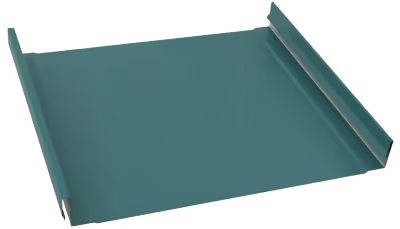
Standing seam is the clean, vertical panel style many people associate with modern metal roofs. Panels run from eave to ridge and lock together along raised ribs that hide the fasteners. On White House homes, standing seam is usually the best fit when you have open exposure and roofs that play a big role in the look of the house.
On two story homes near Raymond Hirsch Parkway, on newer builds around 76 and 31W, and on rural homes with long drives off Tyree Springs or Palmers Chapel, standing seam gives you a smooth shell that resists wind uplift and sheds water quickly. We install these systems by cutting panels to length, fastening them with concealed clips or fasteners that allow for expansion and contraction, and closing seams according to the requirements for your roof slope and exposure.
We choose panel widths and rib heights that match both engineering needs and the visual scale of the home. A wide, low profile panel can make a simple ranch look more polished, while a narrower profile might suit a steeper, more complex roof. Colors are selected to sit comfortably with brick, siding, stone, and trim. In White House we often see darker charcoals, medium grays, and bronzy browns that define the roofline without pulling all of the attention away from the house itself.
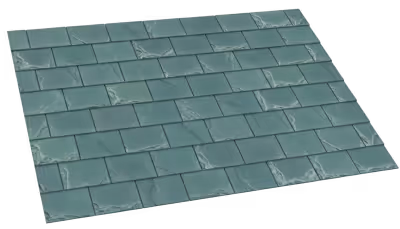
Metal shingles are smaller, interlocking metal panels shaped to resemble slate, wood shake, or architectural shingles. From the street, especially at White House distances, a metal shingle roof often looks like a very crisp, high end version of a typical roof.
We recommend metal shingles on homes in older White House neighborhoods where a classic roof texture fits better than vertical ribs, or on houses where the roof is cut up with dormers, short ridges, and intersecting gables. The smaller panel size makes it easier to follow tight geometry and maintain straight lines around bays, chimneys, and wall intersections.
On the Robertson County and Sumner County sides, we see a lot of brick and siding combinations that are perfect for this approach. A metal shingle roof can keep the familiar look of the street while providing a steel weathering layer that will not curl, crack, or shed granules into your gutters. This is especially helpful near tree lines and in areas where gutters have historically clogged with asphalt grit every time a storm season hits.
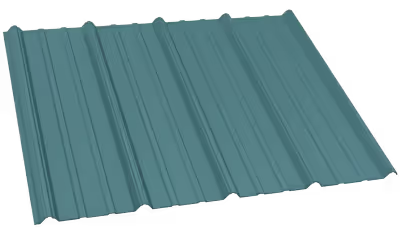
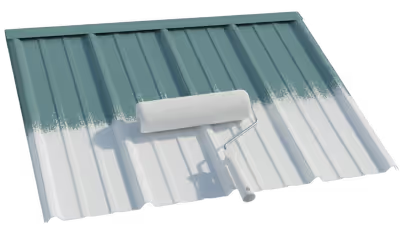
Ribbed or classic metal panels, with raised ribs and exposed fasteners, are often the best choice for barns, workshops, utility buildings, and some simpler houses on the outskirts of White House. When installed correctly, these systems are durable, easy to maintain, and cost effective.
We install ribbed metal on barns and shops throughout the White House area by first confirming that the supporting structure is adequate. We either use purlins spaced to support the panel or install over solid decking. Underlayment is applied where condensation or air leaks could cause problems. Closure strips at eaves, ridges, and wall intersections are used to keep wind driven rain, insects, and small animals from entering through rib openings. Fasteners are driven straight and snug, not over tightened, and placed in clean, consistent rows. Trim is designed to move water away from the building instead of acting as decoration only.
Because many properties in White House combine a home and one or more working buildings, we often coordinate panel colors so that barns, shops, and houses feel like they belong together even when they use different metal profiles.
White House gets its share of severe weather. Storm lines run along I 65, cells roll in from the west, and wind can come across open fields with very little to slow it down. A properly designed metal roof interacts with that weather differently than a shingle roof.
In hail, metal panels generally resist impact better than asphalt shingles. Smaller hail may leave cosmetic marks long before any functional damage occurs, and because metal roofs do not depend on a layer of loose granules, you do not see the same pattern of granule loss and bald spots when storms hit. In wind, standing seam and interlocking metal shingles are mechanically attached to the deck or structure with defined clip spacing and fastener patterns, and edge trim is sized to meet uplift requirements for your exposure.
We do not control your insurance policy, but we can evaluate your current roof, document storm related issues, and design a metal system that will serve you well through future seasons. If you are moving from a storm claim on shingles to an upgraded metal roof, we can help you understand what is covered as replacement and what portion is an upgrade that you are choosing to invest in.
On site, our work follows a clear pattern. We protect your property, remove the old roof to the deck, repair what needs to be repaired, then build the new assembly from the base up. You see crews that show up on time with materials staged in agreed locations, not scattered randomly across your yard.
Tear off is done down to the decking so that we can see the real condition of the roof. Soft or damaged decking is replaced or reinforced. We do not layer metal over unknown material. Underlayment is installed across the roof with special attention to valleys, eaves, and roof to wall transitions where water and debris have caused trouble in the past. Ventilation is corrected while the roof is open so hot attic air and moisture have a clear path out.
Metal panels or shingles are then installed according to the layout we reviewed with you. Seams, ribs, and panel edges are placed where they support water flow and reduce joints in critical areas. Flashing at chimneys, sidewalls, and lower roofs is rebuilt into the system, not just cocked and covered. Trim is installed to finish edges and protect against wind and rain, but always with the underlying function in mind.
At the end of the job, we clean up thoroughly, run magnets for nails, clear gutters of debris from the work, and walk the property with you. We review the roof from the ground so you can see lines, transitions, and how the different parts of the system tie together. You receive documentation of the products used, the areas of repair, and the terms of your lifetime workmanship warranty.
How long does a metal roof last in White House
When installed on sound or repaired decking with a proper underlayment system and a metal profile matched to your roof slope and exposure, you can reasonably plan on a forty to sixty year service window for a residential metal roof in White House. That assumes basic care, trimming trees away where possible, keeping gutters clear, and having the roof inspected after significant events.
Will a metal roof look out of place in my White House neighborhood
Not if it is chosen correctly. Many White House neighborhoods already have metal roofs in place. On more traditional streets near the town center, metal shingles can keep the look very consistent with surrounding roofs. In newer areas and on rural lots, standing seam in a measured color often makes the house look more finished without screaming for attention.
Can you roof my house and my detached garage or shop together
Yes. Many White House properties include multiple structures. We can design one plan that roofs the house in standing seam or metal shingles and uses ribbed metal on shops, garages, and barns, coordinating colors and trim so everything feels like part of one project. We can do this in one phase or over time, depending on your budget and priorities.
Will a metal roof be loud in storms
On a properly built residential assembly, with solid decking, underlayment, attic or insulated cavities, and finished ceilings, most homeowners do not find metal roofs to be excessively loud. The classic “loud metal roof” sound comes from open framed barns where rain hits panels with nothing behind them but air. In a White House home, the sound is softened by multiple layers before it reaches your rooms.
What if my current roof has multiple layers of shingles
We remove existing roofing down to the deck so that we can understand and address the real condition of your structure. If there are two layers of shingles, we take them off. We then repair or replace any damaged decking before installing underlayment and metal. This gives your new roof a solid base and reduces the risk of hidden problems causing issues later.
Do you work on both sides of the White House county line
Yes. We regularly work in both the Sumner County and Robertson County portions of White House. We treat each project as a White House project first and adjust details as needed for specific code or inspection requirements on each side of the line.
If you are ready to stop thinking about your roof every time a line of storms comes through and to start treating it as a long term part of your White House home, we can walk your property, build a metal roof plan that fits, and install it in a way that makes sense for how you actually live here.