
Talk With A Metal Roof Expert
Call (615) 649-5002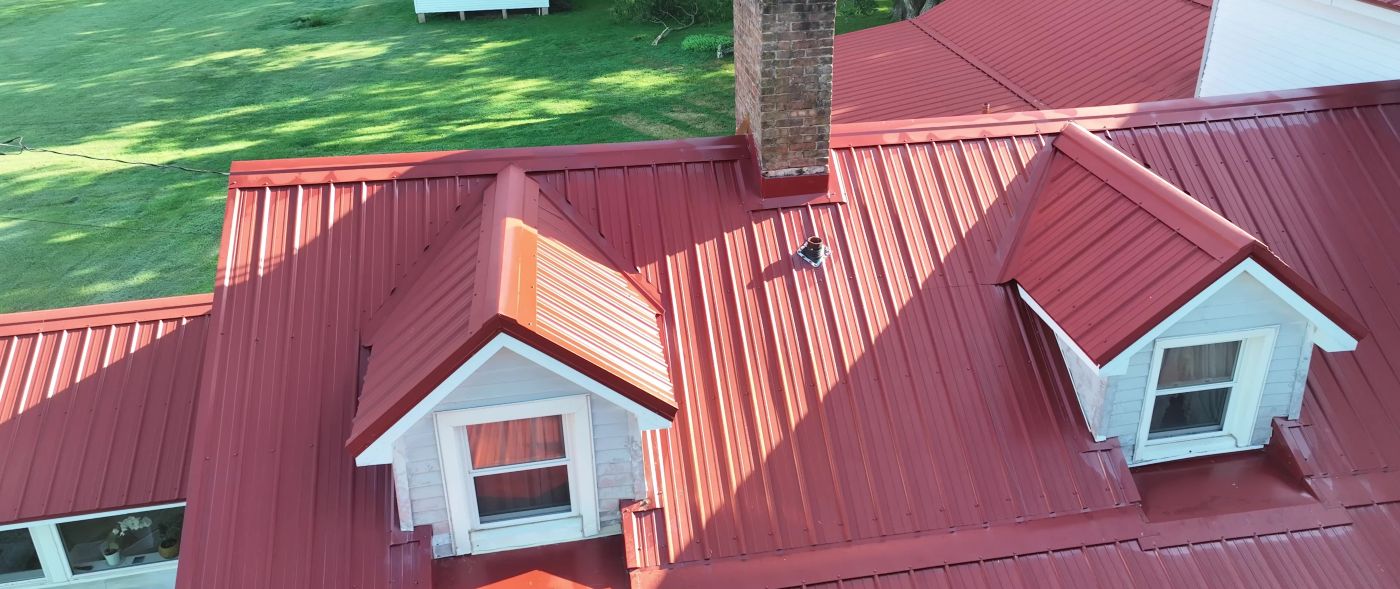


.avif)
-min.avif)



Metal roofing is an excellent option for Lynchburg homes, but only when installed with local conditions in mind. That means accounting for valley humidity, temperature swings, and heavy rain common in Moore County using proper ventilation, air sealing, and underlayment. When installed correctly, a metal roof helps protect homes and performs consistently in Lynchburg’s historic and rural setting.
Lynchburg’s climate places ongoing pressure on residential roofing systems. Long summers, sudden thunderstorms, heavy rainfall, and lingering humidity can shorten the lifespan of traditional roofing materials. Homes near Downtown Lynchburg, along Highway 55, and around Main Street experience prolonged sun exposure, while properties near Mulberry Creek and rolling hills retain moisture longer after storms. Metal roofing helps by shedding water quickly and resisting moisture-related deterioration.
.avif)
.avif)
A properly engineered metal roofing system manages these conditions through balanced intake and exhaust ventilation paired with durable underlayment. This setup helps stabilize attic temperatures, reduce condensation, and protect roof decking year-round. For homes near shaded areas or properties with limited sun exposure, metal roofing helps prevent moisture buildup that commonly leads to premature roof failure.
A common misconception among Lynchburg homeowners is that metal roofs are loud during rain. In reality, when installed over solid decking with modern underlayment—standard in Lynchburg homes—metal roofing is no louder than asphalt shingles. Beyond sound control, metal roofing reflects solar heat, helping homes stay cooler during Lynchburg’s peak summer months and improving overall comfort.
.avif)
A roof in Lynchburg has to live with three things at once: hills and hollows, humidity that hangs in the air, and a town that never really sleeps because of the distillery.
First, the land. Houses are tucked on slopes above town, down low along creeks like Mulberry Creek, scattered along Tullahoma Highway, and sitting on high points that take all the wind that comes off the rolling farm ground. That means roofs see very different exposures even within a few miles. Some are fully exposed to west facing storms, others sit under heavy trees that drop limbs and leaves directly into valleys.
Second, the climate. The combination of creek bottoms, wooded slopes, and distillery moisture means roofs see more dampness and temperature swings than in drier parts of the state. Shingles that might hold for a while in a hot, open area can break down faster when they stay damp in the shade behind Lynchburg houses or in hollows where the air does not move.
Third, the use of the property. You are not just roofing a bedroom community. You might be roofing a home you plan to keep for decades, a short term rental that books out during every distillery event, a family farmhouse that holds generations of furniture and photographs, or a small commercial building that needs to look right on the Square. Reliability matters. If you owe paying guests a dry stay or you have a business downstairs, a leak is more than an annoyance.
A metal roof does not change the weather, but it does change how your property deals with it and how often you need to think about the roof at all.
Lynchburg is small, but the building types are varied. We see and work on:
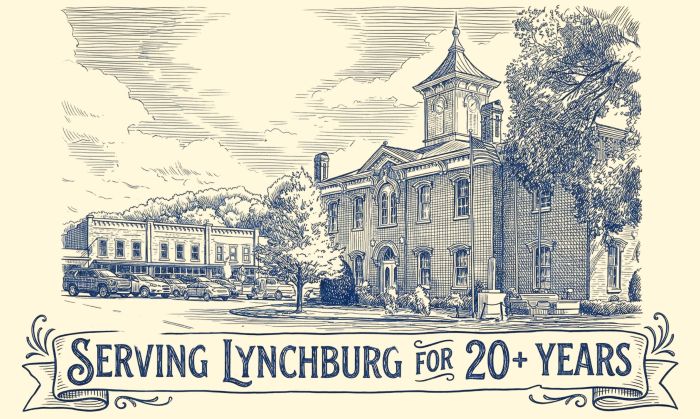
Homes around the Lynchburg Square and in the blocks radiating out from the courthouse, often older wood or brick houses with porches and additions that have changed the roofline over time.
Houses along Tullahoma Highway, Fayetteville Highway, and Highway 55, many of them one or two story homes with strong rooflines that are highly visible from the road.
Farmhouses and homesteads out toward Lois, Mulberry, Marble Hill, and back roads that skirt the county line, where barns and sheds sit within sight of the house and everything faces open field or treeline.
Cabins and short term rentals that serve distillery tourism, often with mixed rooflines, porches, and decks added as the property evolved.
Barns, workshops, detached garages, and small business buildings that have to keep equipment, vehicles, and inventory dry, not just look tidy from the street.
We treat each of these as part of one roof plan. On a Lynchburg property it rarely makes sense to think of the house roof in isolation. Roofs on barns and shops matter too, especially when they flank the drive or sit directly behind the home.
We do not start with panel color. We start with where you are and how the building has been living.
On a site visit, we walk the house, the yard, and if you have them, the barns or shops. We look at how your property sits relative to the square, the distillery area, the hollows, and the road. A house just up from the Square in sight of the warehouses has a very different feel and exposure than a house on a hilltop above Mulberry or a home tucked down a one lane road toward Tims Ford country.
We go up on the roof and into the attic when possible. From above, we look for:
shingles that have been patched repeatedly in valleys and around chimneys
metal that was laid over old layers without fixing the base
soft spots near porch tie ins and previous additions
signs that water has been running hard onto undersized lower roofs
From inside, we look for dark decking, rusted nails, and staining that shows where moisture has been sneaking in, even if it has not yet turned into visible drywall damage. We pay particular attention to areas under trees, along north facing slopes where sun is limited, and wherever rooflines step down.
We also talk about why you are roofing now. Are you planning to stay long term. Are you getting the house ready for sale. Are you converting a property into a rental. Are you trying to protect contents that would be hard to replace, like old hardwood floors, hand built cabinetry, or barrel room equipment. That shapes whether we push for certain system choices or phase work across multiple buildings.
Out of that we build a plan that matches the structure, the land, and the way you use the property, and then we talk about which metal system belongs on which roof.
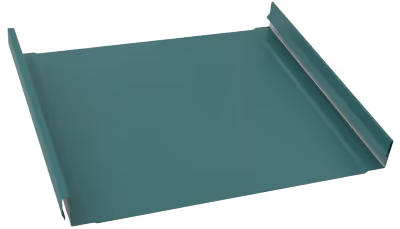
Standing seam is the continuous panel style with vertical ribs. It works well on Lynchburg roofs that are highly visible and directly face wind and rain. On houses along Tullahoma Highway and Fayetteville Highway, on hilltops, and on newer custom builds, standing seam gives you a clean roofline that sheds water quickly and has very few exposed fasteners.
We install standing seam by cutting panels to the exact length of each run, fastening them with clips or concealed screws that allow for movement as temperatures change, and closing seams according to the slope and exposure requirements. On lower slopes or long, wind exposed faces, we may use mechanically locked seams that are folded tighter and sealed in line with manufacturer guidelines.
Panel width and rib height are chosen to look right with your building and to satisfy structural needs. In Lynchburg, where many roofs are best seen from ground level across a yard or from the road, proportional panel sizing makes a big difference in how “finished” the house feels.
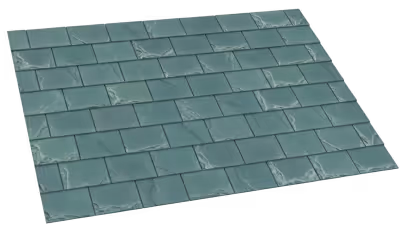
Metal shingles are stamped metal panels that lock together on all sides but resemble slate, wood shake, or dimensional shingles from the street. They are ideal for older Lynchburg homes around the Square and along established streets where the architecture calls for a traditional roof texture.
We use metal shingles on houses with dormers, hip and valley roofs, front porches, and complex shapes, because the smaller panel size can follow the geometry and keep lines clean around chimneys and wall intersections. From a distance, the house keeps its familiar look and does not suddenly read as “industrial” or “modern” in the wrong way, but behind the look is a steel system that is far more resistant to curling, cracking, and granule loss than asphalt shingles.
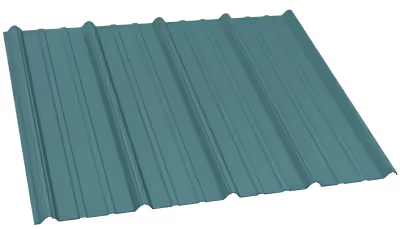
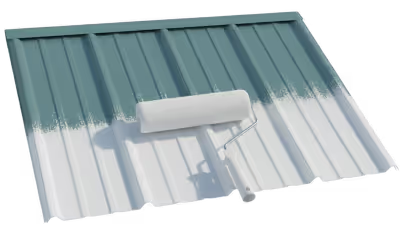
Ribbed metal panels, with exposed fasteners and regular ribs, show up on barns and working buildings all over Moore County. When installed correctly, they are tough and straightforward to maintain on:
barns and sheds behind homes on the outskirts of town
light commercial buildings with simple roof shapes
detached garages and workshops where function comes first
We make sure ribbed metal roofs in Lynchburg are not just “screwed on.” We confirm that purlins or decking are adequate, add underlayment where appropriate, install closure strips at eaves and ridges to keep rain and pests out, and tighten fasteners consistently. Trim at edges is bent and placed to move water away from walls and entrances, which matters when heavy rain blows across a field and slams into a gable end.
Coordinating ribbed metal on the barns and shops with standing seam or metal shingles on the house gives you a property that feels like one consistent project rather than a cluster of different ages and styles.
Lynchburg weather can jump from quiet to rough quickly. Thunderstorms can roll right through Moore County with strong downpours, gusts, and occasional hail. Fog and moisture linger in the hollows and near the river. Straight line winds can hit hard because there is often not much to slow them down between your place and open farmland.
Metal roofing behaves differently under those loads than traditional shingles. In hail, metal is more resistant to impact. Smaller hail often leaves only cosmetic dents, and there are no granules to be knocked loose and washed into the gutters. In wind, standing seam and metal shingles are anchored mechanically into the deck or framing. When we design the roof, we pay special attention to clips, screw patterns, and edge details that resist uplift.
Metal does not prevent all damage in all storms, but it gives you a thicker, more stable skin against the weather, one that is much less likely to lose pieces or start leaking because the top layer has worn out. That is especially important if you travel, if you host guests, or if you keep valuable contents under that roof.
We know that roofing work in a small town is noticeable, and that it happens in and around your life, not on an empty lot. Our process on a Lynchburg metal roofing project is straightforward and consistent.
We start by staging materials and protecting the site. That can mean placing pallets where they do not block your driveway, protecting landscaping along front walks, and making sure access to the house and, if relevant, to a business entrance is maintained.
Then we remove the existing roofing down to the deck. We do not put metal over unknown layers. During tear off we collect debris as we go and keep it out of yards, gardens, and walkways as much as possible. If we find damaged decking, such as soft boards, delaminated plywood, or sheathing that was never fastened well, we replace or re fasten it so the new roof has a stable base.
Underlayment is installed over the deck. In Lynchburg we put extra focus on valley protection, roof to wall intersections, and lower roofs that receive water from upper sections. We also use this stage to improve ventilation, opening blocked soffit vents, adjusting ridge venting where needed, and making sure hot air has a way out of the attic.
After that, we install the metal system you chose. Panels or shingles go down according to the layout we planned, seams and ribs are aligned, and flashing is integrated at chimneys, walls, and transitions. Edges are finished with trim that is shaped to direct water away from the building rather than letting it wrap back under.
Finally, we clean up thoroughly. We remove old materials, sweep and magnet sweep the site for nails and screws, and clear gutters of debris from the work. We then walk around with you so you can see the roof from the ground on all sides and ask any questions about the details you see.
You end up with a metal roof fitted to your Lynchburg home or property and with a clear understanding of what was installed and what it is designed to do.
How long can a metal roof last on a Lynchburg home
With repaired or sound decking under it, a proper underlayment system, and a profile chosen for your slope and exposure, it is reasonable to plan for a forty to sixty year service window for a residential metal roof in Lynchburg. You still maintain it, keep trees from grinding on it, and clear gutters, but you are maintaining a long term assembly instead of replacing the roof outright every time the surface ages.
Will a metal roof look out of place near the Square or the distillery
Not if it is chosen well. Around the Square and on older streets, metal shingles that resemble slate or shake can keep a very traditional look. On homes with a more updated farmhouse style or newer architecture, standing seam in a restrained color can enhance the building without making it look out of place in a small Tennessee town. There are already plenty of metal roofs in and around Lynchburg, especially on barns and shops, so the material is not unusual here.
Can you roof my house and my barn or rental cabin as one plan
Yes. Many Lynchburg properties include a home, one or more barns, a shop, and sometimes a short term rental or family cabin. We can design a metal roofing plan that coordinates all of them, either in a single project or in phases. That way, when you look across the property, the roofs feel like they belong together rather than showing three different ages and styles.
What if my current roof has several layers or old metal under new shingles
We remove existing roofing down to the deck so we can see what is really there. That includes taking off multiple shingle layers and any older metal that has been covered. We then repair damaged decking and re fasten weak areas before installing new underlayment and metal. Covering over old problems tends to lead to new ones, so we do not do that.
Is a metal roof very noisy in Lynchburg storms
On a properly built roof assembly, with solid decking, modern underlayment, attic space or insulated cavities, and interior ceilings, most homeowners do not describe metal roofs as overly noisy. The loud sound people associate with metal roofing usually comes from open barns where rain hits thin metal with air behind it. In a finished Lynchburg house, the sound of rain on a metal roof is typically a calm, steady noise, not something that makes rooms uncomfortable.
Do you work all over Moore County or just inside the city limits
We work on metal roofs throughout Lynchburg and the rest of Moore County, including homes and properties on back roads between Lynchburg and Tullahoma, Shelbyville, Fayetteville, and Winchester. If your address is Lynchburg or you are in Moore County, we treat you as part of our normal service area.
If you want your next roof in Lynchburg to be something you install once and then simply look after, not something you replace again in fifteen years, we can walk your property, design a metal roof system that fits, and install it to match the way you actually live and work here.