
Talk With A Metal Roof Expert
Call (615) 649-5002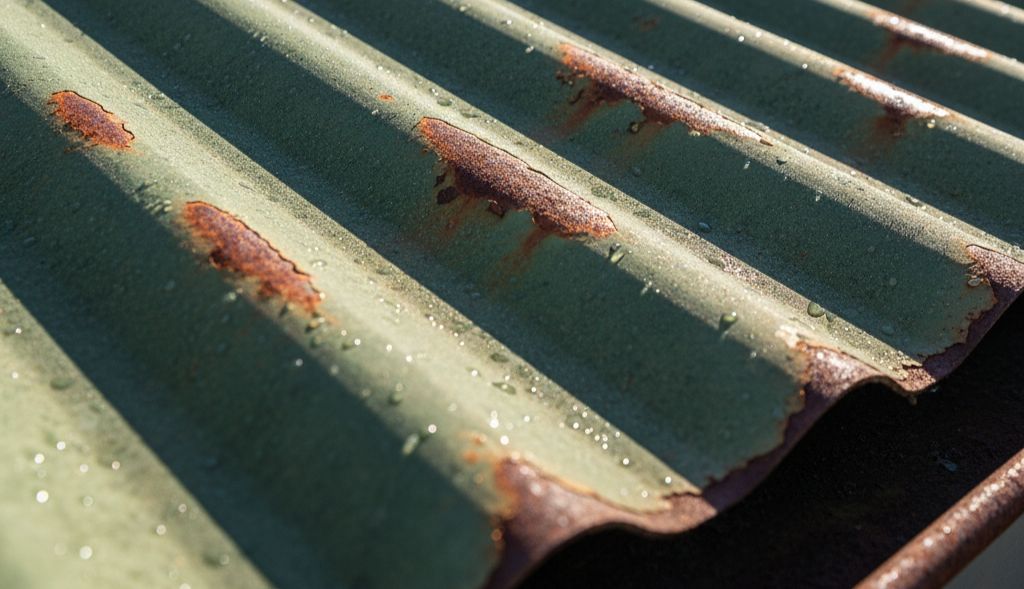
When we visit older metal roofs around Nashville, Franklin, Brentwood, Hendersonville, Murfreesboro, and Mt. Juliet, we hear the same question over and over: is it still worth repairing this, or am I just delaying the inevitable? The honest answer is that a properly designed and installed metal roof in Middle Tennessee should stay watertight for decades. When it starts leaking well before the end of its life, the metal itself is rarely the main problem. More often, the leak is a sign that something in the original installation or design was off: the wrong profile for the slope, shortcuts at flashings, or fasteners that were never meant to hold up in our weather.
This guide walks through how we think about older metal roofs in Nashville, when repair is a smart way to protect a good system, and when leaks are your roof’s way of telling you it is time to correct deeper installation decisions with a full replacement.
A well-built metal roof in Nashville is not fragile. With the right gauge, coating, underlayment, and details, it is designed to live through decades of summer heat, thunderstorms, and cold snaps without routine leaks. You should not be chasing new stains every rainy season. In fact, if the roof was properly engineered for your slope and exposure, you should see long stretches of quiet, uneventful performance where you simply do not think about it at all.
In a perfect world, the only time water would start to challenge a metal roof would be far down the road, when coatings have given everything they had and small areas of metal have naturally thinned after many years in the weather. Even then, those issues usually show up as isolated spots, not sudden failures across the house. That is why, when we see a ten-, fifteen-, or even twenty-five-year-old metal roof in Nashville that already leaks in multiple places, our first assumption is not “metal is a bad investment.” Our first assumption is “this system was not given the design and installation it deserved.”
When a metal roof leaks before it is truly old, the cause is usually hiding in the details. The panels themselves may still have good coating and strength, but the way they were used on your specific home did not honor Nashville’s weather or basic building physics.
Sometimes the profile and slope combinations are wrong for Middle Tennessee storms. Snap-lock standing seam shows up on pitches that are too low for the intensity of our rain, or classic rib exposed-fastener panels are stretched over long, shallow runs that invite water to creep under laps. In other cases, the installer treated flashings and underlayment as afterthoughts. Chimneys, skylights, sidewalls, and valleys may rely on caulk where well-bent metal and high-temperature underlayment should have done most of the work.
Fasteners are another quiet culprit. On older exposed-fastener roofs, cheap screws and washers often age quickly in Nashville’s sun and humidity, opening thousands of tiny paths for water even while the panels still look respectable from the street. Some metal roofs were also installed over multiple layers of old shingles without proper leveling or ventilation, which can let trapped heat and moisture shorten the life of underlayment and wood underneath.
When we see leaks on an older metal roof, we treat them as clues. They tell us where the original installation was asking metal to compensate for choices it was never meant to carry.
There are plenty of cases where repair is the right answer, even on an older metal roof. If the metal is structurally sound, coatings are largely intact, and the leaks can be traced to a handful of specific details, a thoughtful repair can give the system many more useful years.
A classic example is a standing seam roof with one or two recurring leaks around a chimney or wall. The pans and seams across the main fields look clean, the gauge and finish are appropriate, and the roof is on a sensible slope. The weak link is the way the previous crew handled flashing and underlayment at that penetration. In that situation, it is worth opening that area carefully, rebuilding the detail with proper layering and high-temperature underlayment, and putting the system back together the way it should have been built in the first place.
On older exposed-fastener roofs, repair can also make sense when the metal itself has life left. If we find a roof where the panels are not rusting through, but many screws and washers have clearly aged out, a methodical re-screw with quality ZAC fasteners and fresh EPDM washers can tighten the assembly back up. Paired with improvements at valleys and eaves, that kind of repair treats the underlying metal as the asset it was meant to be instead of throwing it away prematurely.
In both cases, you are investing in correcting specific installation flaws while preserving a roof that still has years to give. The key is that the problems are concentrated in known areas, not spread across the entire assembly.
There is another category of older metal roofs where, no matter how much we may wish otherwise, repair is no longer the wise choice. The leaks you see in the house are just the most visible symptoms of a system that is tired from the inside out or was mismatched to the home from day one.
One red flag is broad, deep corrosion. A little surface rust at fastener heads or along a cut edge can often be managed. Widespread flaking, thinning, and pinholes across panels and laps tell us the metal has given you most of what it has to offer in Nashville’s climate. In those cases, patching individual leaks is like patching a worn-out tire; another weak point is not far behind.
Another warning sign is a long history of leaks in many different places. If you can list a chimney leak from five years ago, a valley leak from three years ago, and a mysterious stain in a new room last winter, all on the same roof, the pattern is usually not bad luck. It is a sign that the original profile, slope choices, fasteners, and ventilation never worked comfortably together. That kind of systemic mismatch cannot be truly cured with scattered repairs.
We also pay close attention to structure. If years of hidden leaks have softened decking over wide areas, or if we see consistent movement when we walk panels, the roof is no longer sitting on the solid base it needs. At that point, the honest road is to strip back to sound decking, correct slope and ventilation issues where possible, and design a new metal roof that will not repeat the same story in another decade.
The “repair or replace” decision does not live in a vacuum. Your neighborhood, roof design, and plans for the home all belong in the conversation. A steep, complex standing seam roof in Green Hills with chronic detail issues, a long leak history, and mature tree exposure tells a different story than a simpler classic panel roof in Mt. Juliet that only struggles at one chimney.
If you plan to stay in your Nashville home for the long term, it often makes sense to use the next major leak as the moment to reset the entire assembly with a properly engineered metal roof. That means choosing profiles that respect slope, specifying 24-gauge PVDF standing seam or appropriate 26-gauge SMP where it fits, upgrading underlayment, and setting clip and fastener patterns that match tested uplift ratings for your roof’s height and exposure. You correct the original missteps so the new system can behave the way a metal roof is supposed to in Middle Tennessee.
If your plans are shorter-term, or the roof’s problems are truly localised, a well-executed repair can be the more rational move. The important thing is seeing the trade-offs clearly. We will tell you when a repair is genuinely shoring up a good system and when it is more like putting a fresh coat of paint on something you already know you will replace.
When we come out to look at an older metal roof, the first goal is not to argue for one outcome. It is to understand what kind of roof you actually have. We look at the profile, gauge, coatings, slope, fasteners, underlayment where we can see it, and the history you describe. We walk the roof and, where possible, the attic. We want to see where water has moved, how often, and for how long.
By the end of that visit, we usually end up with three clear paths. One is focused repair that makes sense right now on a roof that still has plenty of life. Another is a bridge repair meant to buy you time on a system we both know is close to retirement. The third is a full replacement plan that corrects installation and design issues so you do not repeat this conversation a decade from now.
You will not get a vague answer like “it is just old.” You will get specific reasons tied to what we saw on your Nashville home, and you will be able to weigh the options against how long you plan to stay, what you want the house to be worth, and how comfortable you are living with the current roof as it ages.
If my older metal roof is leaking, does that mean it was installed wrong?
In many cases, yes. A well-designed and properly installed metal roof in Nashville should stay watertight for decades. Early leaks usually point to installation or design issues at details, fasteners, or slope, not a fundamental flaw in the idea of metal roofing.
How old is “too old” to repair a metal roof in Nashville?
There is no single cutoff, but once we see widespread rust, repeated leaks in different areas, and underlayment or decking that is clearly tired, we treat the roof as near the end of its practical life. At that stage, money spent on repeated repairs often makes more sense pointed toward replacement.
Can repairing an older metal roof still be a good investment?
Absolutely, when the metal and structure are still sound and the problems are concentrated in specific details. In those cases, repairing and upgrading those details can protect many years of remaining life and give you time to plan bigger decisions on your own schedule.
Will a new metal roof actually last longer than my current one did?
If your current roof struggled because of profile choice, slope, fasteners, or ventilation, a properly engineered replacement can meaningfully outlast it. Modern 24-gauge standing seam and well-specified classic panels, installed to current best practices, are built to deliver the kind of quiet, long service life metal roofing is known for.
If you are living with an older metal roof on a Nashville home and wondering whether another repair is worth it, you do not have to guess. A clear, contractor-led assessment can show you whether you are protecting a good system, buying a little time, or simply delaying a replacement that would finally put the issue to rest.
To see where your roof stands and what your real options are, request a Nashville metal roof assessment or call The Metal Roofers at (615) 649-5002. We will walk the roof, show you what we see, and help you choose the path that makes the most sense for your home and your plans.